

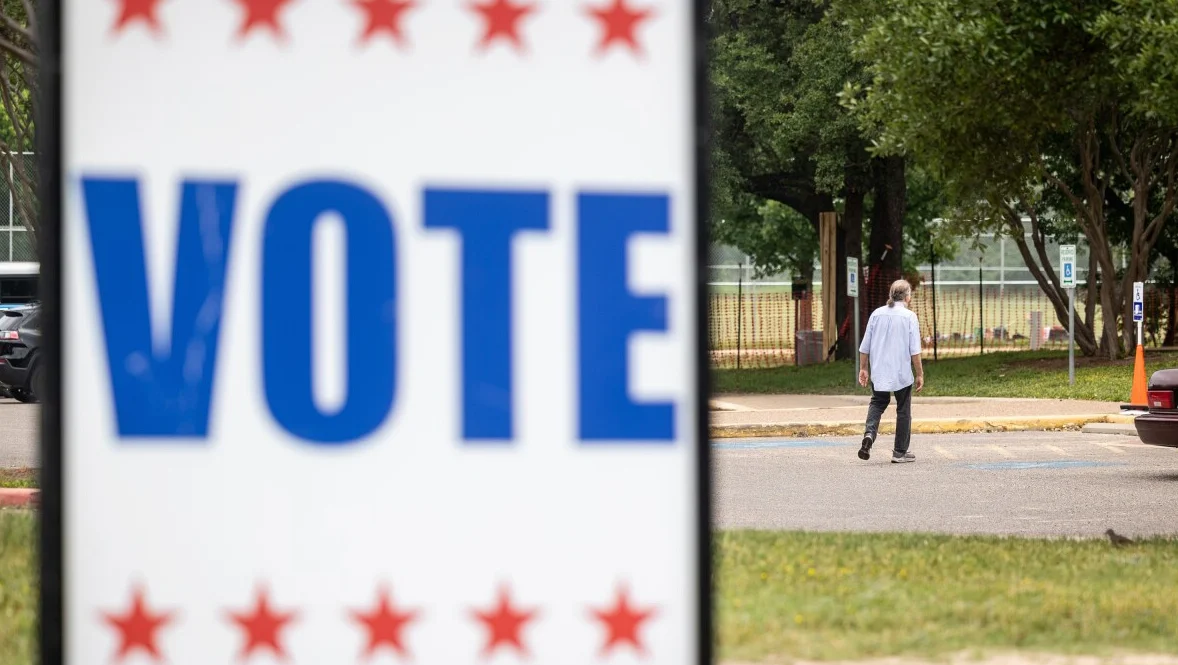
Texas voters have until 7 p.m. CST on Tuesday, March 3, to cast their ballots in the state’s primary elections, a critical step in shaping the November general election landscape. Polls close at 7 p.m. MST in El Paso, while early voting numbers have already exceeded expectations, indicating a more engaged electorate than usual.
Senate Battles Reflect National Trends
The U.S. Senate primaries in Texas are drawing significant attention, as the results could signal broader national trends heading into the 2026 midterm elections. On the Republican side, the race is a three-way contest between incumbent Sen. John Cornyn, Attorney General Ken Paxton, and U.S. Rep. Wesley Hunt. Hunt, a first-time candidate, has enough support to potentially force a runoff between Cornyn and Paxton, according to recent polls from the University of Houston Hobby School of Public Affairs and the University of Texas’ Texas Politics Project.
Paxton currently leads in polling, likely due to his perceived alignment with more extreme positions in the party. Meanwhile, the Democratic race features U.S. Rep. Jasmine Crockett and State Rep. James Talarico, with Crockett showing a 12-point lead in the latest survey, although she trailed Talarico by 9 points in an earlier poll.
Redistricting Reshapes Congressional Races
The primary elections come amid the first contest in newly redrawn congressional districts following a controversial mid-decade redistricting plan passed by the Texas legislature last summer. The plan, influenced by pressure from former President Donald Trump and current Governor Greg Abbott, reshaped all 38 U.S. House districts, giving Republicans five additional seats.
Critics argue that the redistricting effort involved racial gerrymandering, which dilutes the voting power of non-white communities in major urban areas like Houston and Dallas-Fort Worth. Democrats and civil rights groups challenged the plan, but the U.S. Supreme Court allowed the new map to be used for the 2026 elections.
In Houston, the 9th Congressional District has been transformed from a Democratic stronghold into a likely Republican pickup. The race includes candidates like former Harris County judge candidate Alex Mealer and State Rep. Briscoe Cain, with a runoff expected. Meanwhile, former Rep. Al Green is competing in the 18th District, where much of the Democratic base from the former 9th District has been consolidated.
Early Voting Shows Strong Democratic Participation
Early voting numbers suggest heightened Democratic participation, with more than 1.3 million ballots cast in the Democratic primary by the end of the early voting period, compared to just under 1.2 million in the Republican primary. In North Texas, Democratic turnout in Tarrant and Dallas counties outpaced Republican participation, a pattern also observed in San Antonio and Austin.
Matthew Wilson, a political science professor at Southern Methodist University, noted that the increased Democratic engagement may reflect a shift in party dynamics. ‘Democrats have generally not perceived that they had that great of a chance to win statewide office, and they haven’t had especially interesting primaries,’ Wilson said. ‘But those two things aren’t true this time.’
However, political analyst James Henson of the University of Texas at Austin cautioned against overinterpreting the early voting numbers. ‘Higher turnout among partisans in one party’s primary election or the other doesn’t necessarily mean that that party will have an advantage or be victorious come the fall election,’ he said.
Henson pointed to past examples where Democratic turnout in primary elections did not translate to general election success, citing the 2008 and 2020 cycles. In both cases, despite strong Democratic primary participation, the majority of Texans voted for Republican presidential candidates, and incumbent Sen. John Cornyn won reelection.
With the March 3 primary results still pending, the outcomes in Texas could have significant implications for the national political landscape, especially in the Senate and House races. The redistricting effects and voter turnout patterns may provide early indicators of how the state’s political dynamics are evolving ahead of November.






Comments
No comments yet
Be the first to share your thoughts