

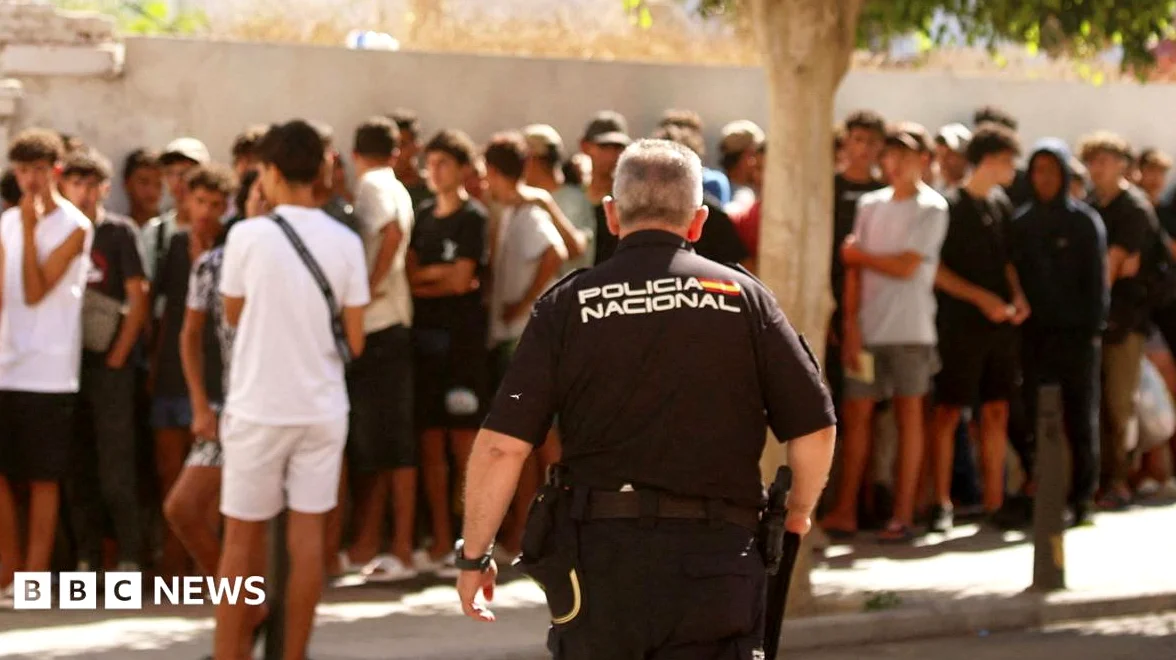
Ceuta’s leader, Juan Manuel Vivas, has reported that at least 100 migrants died in a border surge that saw up to 5,000 remaining in the Spanish enclave, according to Al Jazeera. The crisis, which occurred last Thursday and Friday, saw approximately 72,000 migrants cross into Ceuta by swimming or on foot, one of the largest movements into EU territory in recent years. Vivas described the influx as an “invasion,” noting that the number of migrants was roughly equal to the enclave’s population of over 80,000.
Border Security and Legal Complexities
European Union migration commissioner Magnus Brunner highlighted that the crisis exposed a critical weakness in Europe’s border security, which relies heavily on the cooperation of a single neighboring country. “As long as control depends on the goodwill of one neighboring state, we remain … vulnerable,” he said, while Spain’s government did not attend the hearing, with the European Commission representing the country.
The surge followed a Spanish Supreme Court ruling that ended the automatic return to Morocco of migrants intercepted while swimming into Ceuta and Melilla, according to theolivepress.es. Only those who cross by scaling the land border fence can be turned back immediately — Anyone who swims in must now go through the standard deportation process, which can take months and allows them to apply for asylum.
Official Figures and Discrepancies
Spain’s Interior Ministry classified almost all of Ceuta’s arrivals this year as having come by land, even though witnesses describe people swimming ashore most nights. Ministry figures show 2,826 irregular land entries in Ceuta between January 1 and July 15, up 149% on the 1,133 recorded in the same period of 2025, while officially logging zero arrivals by sea all year. The Guardia Civil’s officers’ union, the AUGC, has disputed this classification, arguing that most of those people are swimmers being intercepted on the coast rather than migrants scaling the fence.
Guardia Civil sources linked a surge in July 2026 to the same Supreme Court ruling, according to theolivepress.es. On July 27, four people had died and around 20 were feared missing after a single weekend crossing attempt near Castillejos, a Moroccan coastal town facing Ceuta across the border.
International Reactions and Ongoing Searches
Morocco rejected suggestions it was responsible for the surge, saying Spain should have anticipated the consequences of the court ruling, according to Al Jazeera, though Security forces in Ceuta have still not been deployed with the required intensity, Vivas noted. Meanwhile, the death toll from the crisis is likely to rise, according to 경향신문, while Spanish daily El Pais reported that bodies continue to be found in waters near the El Tarajal border in Ceuta. Citing police sources, El Pais said “there are more dead in the sea,” and that underwater searches are ongoing. The dive team recovered more than 10 bodies just in the morning, and depending on currents and wind, some bodies are believed to have drifted toward Morocco. Moroccan authorities are also retrieving bodies in their waters.
Vivas warned that local officials had previously alerted Madrid to rising crossing numbers before the surge, but their warnings were not acted on — Moroccan authorities refused to engage with Ceuta throughout the crisis. Vivas also said Ceuta’s two reception centres, for adults and unaccompanied minors, had “collapsed” under the strain, and that authorities have not disclosed the exact number of migrants still in the city due to a lack of resources.






1 Comment