

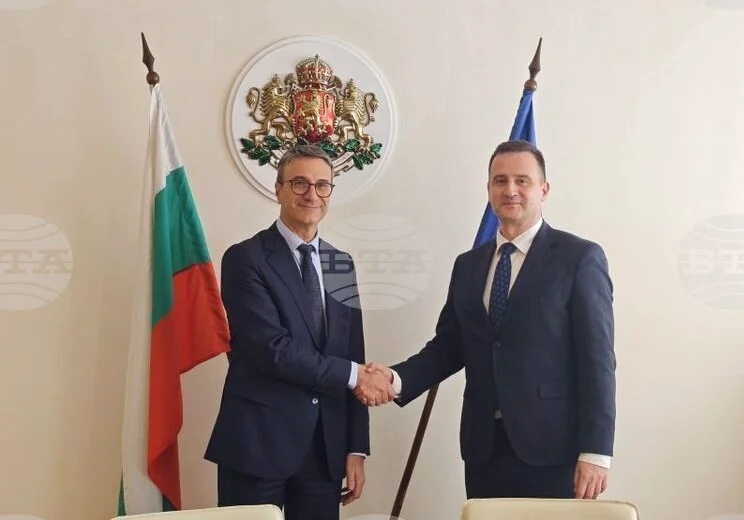
Sofia — Traicho Traikov stepped into the role of Bulgaria’s caretaker Energy Minister Thursday, vowing to prioritize national interests with a focus on building a stable, competitive and sustainable energy sector.
The ministry confirmed Traikov took over from Zhecho Stankov during a formal ceremony at its Sofia headquarters. Stankov outlined the ministry’s major challenges and accomplishments from the past year to his successor.
Key achievements included negotiating an exemption from U.S. sanctions for Bulgarian subsidiaries of Russia’s Lukoil, the ministry said. This move ensured uninterrupted operations at the Lukoil Neftochim Burgas refinery, a critical facility for the country’s fuel supplies.
Stankov also highlighted Bulgaria’s role as an investor in oil and natural gas exploration projects in the Black Sea. Progress on the Vertical Gas Corridor construction emerged as another milestone, aimed at enhancing regional energy connectivity.
Traikov, appointed to the post in Prime Minister Andrey Gurov’s caretaker cabinet, promised continuity. “The Energy Ministry team will keep protecting the national interest and push forward a stable, competitive and sustainable energy sector,” he stated after the briefing.
Before this appointment, Traikov served as mayor of Sofia’s Sredets District. He previously held the position of minister of economy, energy and tourism from 2009 to 2012, bringing decades of experience in energy policy and local governance.
The handover comes amid Bulgaria’s ongoing energy security efforts. Securing the Lukoil exemption last year prevented potential fuel shortages and price spikes. Black Sea exploration deals, signed with international partners, target new domestic gas reserves to reduce reliance on imports.
The Vertical Gas Corridor project, linking Greece, Bulgaria and Romania, advances under European Union funding. Officials expect it to boost natural gas supplies across the Balkans by late 2025.
Traikov faces immediate tasks. Household electricity prices remain a hot topic after recent subsidy adjustments. Negotiations with the European Commission on renewable energy targets continue, with Bulgaria aiming to hit 27% green energy share by 2030.
Industry groups welcomed the leadership transition. The Bulgarian Industrial Capital Association called for swift action on grid upgrades to support growing solar and wind capacity. “Stability in energy supply underpins our competitiveness,” association head Vasil Velev said in a statement.
Traikov’s tenure will last until a new government forms following elections. Gurov’s cabinet, installed in late June, handles day-to-day operations during the political impasse.
Energy remains central to Bulgaria’s economy. The sector employs tens of thousands and powers heavy industry in regions like Burgas and Varna. Recent geopolitical tensions, including the war in Ukraine, have sharpened focus on diversification and resilience.
Traikov inherits a ministry handling complex international ties. Balancing relations with the U.S., EU partners and Russian suppliers tests diplomatic skills. His prior ministerial stint during the global financial crisis offers relevant perspective, analysts note.
Stankov departs after steering the ministry through turbulent times. His team managed winter gas shortages and championed interconnections with neighboring grids. “We’ve laid solid foundations,” Stankov told reporters post-ceremony.


Comments
No comments yet
Be the first to share your thoughts