

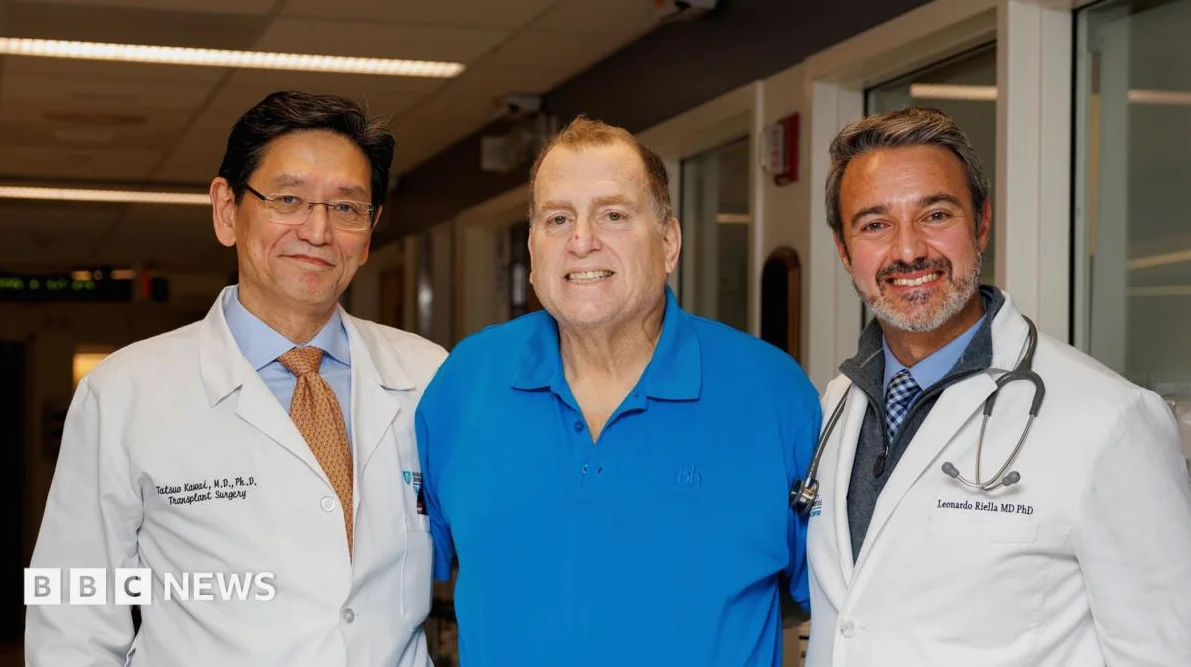
Tim Andrews, a 66-year-old from New Hampshire, became the first person to receive both a pig and human kidney transplant, he underwent the procedure on January 25, 2025, at Massachusetts General Hospital in Boston, according to the Daily Mail. The pig kidney, named Wilma, functioned immediately and remained viable for 271 days,the longest recorded duration for a pig kidney in a human body, according to the Lancet medical journal.
Challenges of Organ Transplants
Andrews had end-stage kidney disease caused by type 2 diabetes and spent six months on dialysis, during which he suffered a heart attack. ‘I knew I was going to die,’ he said. ‘I thought there’s got to be another way,’ according to the Daily Mail. In the US, around 100,000 people are waiting for a kidney, while only 25,000 transplants occur each year — In the UK, more than 7,000 people are on the kidney transplant list.
Andrews learned about xenotransplantation after reading about Richard Slayman, a 62-year-old from Boston who received a genetically modified pig kidney in 2024, as Although initially successful, Slayman died two months later after an unexpected cardiac event. Doctors at the time said there was ‘no indication’ his death was related to the transplant, according to the Daily Mail.
Genetic Modifications for Compatibility
To reduce the risk of rejection, researchers developed Yucatan miniature pigs that have undergone 69 genomic modifications, but these modifications strip out features of pig cells that the human immune system identifies and attacks. They also add human DNA to help hide the pig tissue from the immune system and disable viruses that could cause infection, according to the BBC.
Andrews spent several months in physical therapy to strengthen his body before the procedure; After the transplant, he was on 51 different medications to prevent rejection. ‘At first it was great, which I realized was the steroids. They made you feel real good, like I’m Superman,’ he said, he spent a week in the hospital before being discharged.
Hope for the Future
Andrews described the pig transplant as ‘hope’ and the ‘light at the end of the tunnel.’ ‘Hope is the biggest thing, the chance to be free from the [dialysis] machine and live your life,’ he said. The procedure has only been performed a handful of times in the US, but the success of the 271-day pig kidney transplant offers a potential solution to the organ shortage crisis.
The pig kidney was only one of the transplants,Andrews also received a human kidney during the same operation. ‘I had a little bit of a shortage of time… it becomes very depressing,’ he said, referring to the average five-year survival time on dialysis. The procedure represents a significant step forward in xenotransplantation research, which could one day provide organs for patients who would otherwise remain on lengthy waiting lists.






Comments
No comments yet
Be the first to share your thoughts