

 The Washington Post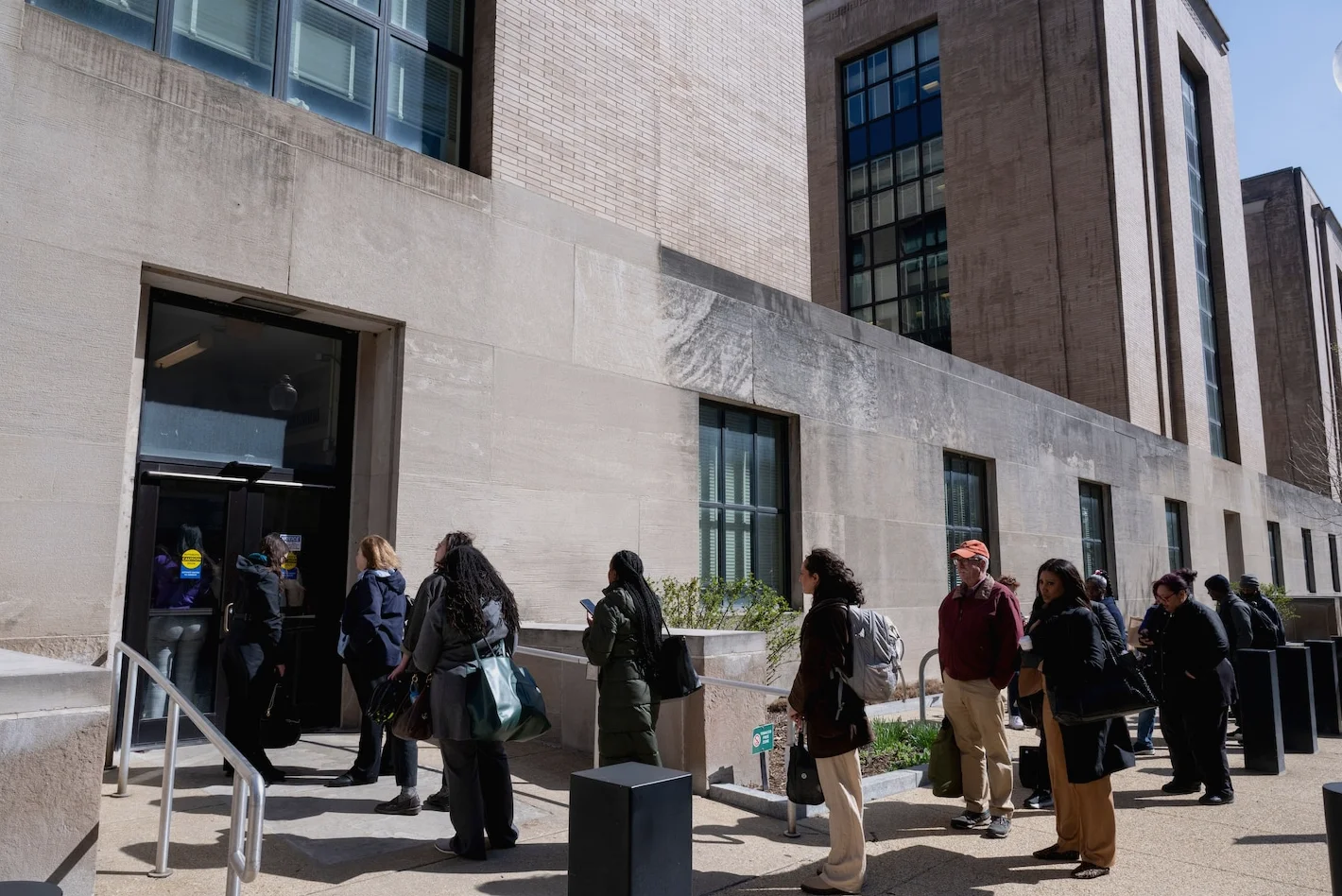
The Trump administration, which once aggressively slashed federal jobs through the Department of Government Efficiency (DOGE), is now reversing course with a new hiring push, signaling a shift in its approach to changing the federal workforce. The move comes as the administration seeks to address growing concerns over operational gaps and staffing shortages that have emerged in key agencies.
Operational Gaps and Staffing Shortages
According to data from the Office of Personnel Management (OPM), the Trump administration has fired, laid off, or accepted buyouts from more than 387,000 employees since the president’s inauguration. During that same period, the administration hired roughly 123,000 workers, leaving a net reduction of 264,000 positions.
Current and former officials warn that the reductions have created operational blind spots, particularly in agencies responsible for critical national security and public services. The Cybersecurity and Infrastructure Security Agency (CISA), for example, lost nearly 40 percent of its workforce last year. This reduction in capacity has raised concerns about the agency’s ability to detect and respond to cyberthreats from nation states such as China, Russia, and Iran.
A former CISA official, who spoke on condition of anonymity to avoid retribution, said the agency’s ability to defend against cyberattacks is now severely diminished. ‘With the loss of hundreds of experts, CISA’s ability to detect threats from the most significant adversary, China, as well as others like Russia and Iran, is severely diminished, and now is not the time for the U.S. to let down its guard,’ the official said.
Rebuilding the Workforce
Scott Kupor, the head of the Office of Personnel Management, has acknowledged that the administration is now seeking to rebuild parts of the federal workforce. In an interview with The Washington Post, Kupor said the administration is focused on hiring back some of the skills it previously cut, though he noted that ‘sometimes you over-restructure, sometimes you under-restructure.’
Kupor said the hiring push is taking place under new rules designed to give the White House greater influence over the government’s 2-million person civilian workforce. The administration has lifted restrictions imposed during last year’s reductions and created job classifications that make it easier to hire and fire employees aligned with the president’s priorities.
Kupor, who was sworn in last July, said the administration hopes to rebuild in part by rebranding the government as a launchpad for college graduates and early-career professionals. He emphasized the need to focus on recruitment for health care, program management, and technology roles.
The administration has also moved to centralize hiring decisions and expand the role of political appointees in recruitment. These changes, according to supporters, will make the government more responsive to elected leadership. However, critics warn that they could erode long-standing protections meant to keep the civil service nonpartisan.
Controversial Hiring Practices
Some job postings now reflect an ideological framing that aligns with Trump’s agenda. For example, an immigration services officer position titled ‘Homeland Defender’ urges applicants to be ready to ‘protect your homeland and defend your culture.’ Prospective hires must explain how they would advance Trump’s executive orders and policy priorities.
Kupor said there are more ‘opportunities to reshape’ agencies this year, suggesting additional staff reductions could come in some departments, though he declined to specify which ones. He also declined to release agency hiring plans submitted to OPM under Trump’s executive order, calling them ‘predecisional.’
Other agencies are struggling to stabilize basic services or recruit enough applicants to fill vacancies. At the Department of Veterans Affairs, job applications for all positions, including nurses, are down 50 percent so far in fiscal year 2026 compared with the previous year, according to the agency’s workforce dashboard.
At the Social Security Administration, employees in IT, policy, and other offices have been reassigned to answer phones and handle customer inquiries as call volumes surge. Some agency heads have said they can manage with a leaner staff. Internal Revenue Service CEO Frank Bisignano told the House Ways and Means Committee that he believes the agency is sufficiently staffed. ‘I feel good about the number of employees I have right now,’ he said.
However, the agency’s inspector general reported that the IRS had onboarded only 50 of the roughly 2,200 employees it expected to hire to help process tax returns for the 2026 filing season—about 2 percent of its target as of the end of last year.
Kupor said the administration remains committed to building a leaner, more effective government, noting that just 7 percent of the federal workforce is under 30—a demographic imbalance he said he intends to address. With White House backing, he launched ‘Tech Force,’ a two-year program partnering with companies including OpenAI and Meta to deploy teams of software engineers and data analysts across federal agencies. Participants will have simplified pathways to private-sector roles after completing the program.
Kupor said his goal is to demonstrate that not only can you do great public service here if you’re a part of Tech Force, but you will learn and develop skills that are going to be translatable no matter what industry you decide to go into.
Senior White House officials have been personally involved in shaping the rebuild. Deputy Chief of Staff Stephen Miller has been active in hiring discussions, according to two people familiar with the process. He has emphasized recruiting young staffers and ensuring that new hires are aligned with Trump’s agenda.
At the U.S. Agency for International Development (USAID), which was one of the hardest-hit agencies during last year’s cuts, the agency is now hiring again for contractors to wind down aid programs. However, those who were pushed out are not welcome back. Agency leaders are seeking to preclude a contractor from hiring anyone who used to work there to avoid the risk of impaired objectivity—a conflict of interest that occurs when former personnel are tasked with auditing, closing, or settling actions they may have previously initiated or overseen, according to an internal memo obtained by The Post.
The administration’s efforts to rebuild parts of the federal workforce come as it moves away from the DOGE agenda, which was launched with the goal of eliminating waste, fraud, and abuse from the federal government. However, no large-scale evidence publicly emerged to support these claims, and the government spent more in 2025 than it had the previous year.
Musk later split with the president over his signature tax and domestic policy bill, and DOGE quietly dissolved, its members dispersing inside and outside government. A White House spokesman, Davis Ingle, said the president has made ‘significant progress in making the federal government more efficient to better serve the American taxpayer.’



Comments
No comments yet
Be the first to share your thoughts