

President Donald Trump and his senior advisers miscalculated Iran’s response to the recent military strikes, resulting in a significant disruption of global oil markets and a crisis in the Strait of Hormuz. The administration had initially downplayed the risks to energy markets, but the situation has now escalated as Iran threatens to target commercial oil tankers in the strategic waterway, causing oil prices to spike and triggering a scramble for solutions within the Trump administration.
Impact on Energy Markets and Global Trade
The United States and Israel launched military strikes against Iran in June, and despite initial assurances from Energy Secretary Chris Wright that oil prices would not be significantly affected, the situation has deteriorated. Wright told an interviewer on February 18 that he was not concerned about the potential for oil supply disruptions in the region, stating, ‘Oil prices blipped up and then went back down.’ However, recent developments have shown that Iran’s response has been far more severe than anticipated.
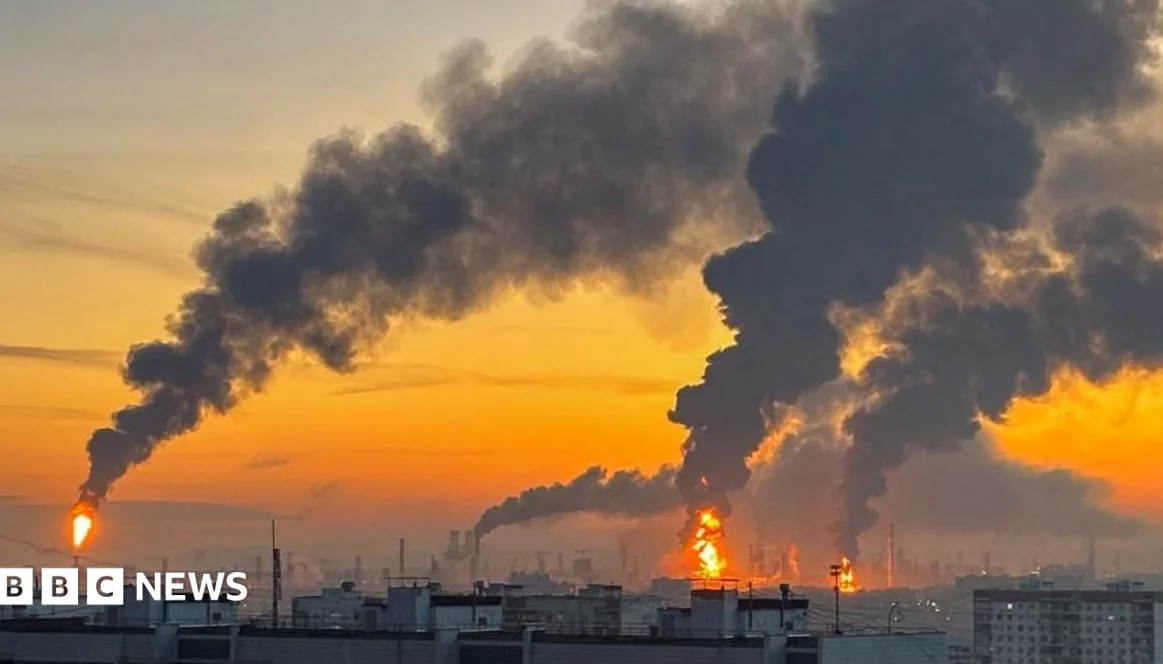
Iran has now threatened to fire at commercial oil tankers transiting the Strait of Hormuz, a critical chokepoint for global oil shipments. As a result, commercial shipping has come to a standstill in the Gulf, causing oil prices to surge and leading to higher gasoline prices for American consumers. The Trump administration has been forced to scramble to find ways to mitigate the economic crisis that has ensued.
The situation has highlighted a significant miscalculation by Trump and his advisers, who had previously dismissed warnings that Iran might engage in economic warfare by closing shipping lanes carrying approximately 20 percent of the world’s oil supply. The administration’s failure to anticipate Iran’s aggressive response has led to a series of last-minute adjustments, including the hasty evacuation of embassies and the development of policy proposals to reduce gas prices.
Misjudging Iran’s Response
The episode highlights how much Trump and his advisers misjudged Iran’s potential response to the conflict, which the Iranian government views as an existential threat. Iran has responded far more aggressively than it did during last June’s 12-day war, firing barrages of missiles and drones at US military bases, cities in Arab nations across the West Asia, and on Israeli population centers.
According to a senior Democratic senator, Christopher S. Murphy, the administration had ‘NO PLAN’ for the Strait of Hormuz and did ‘not know how to get it safely back open.’ This admission highlights the lack of a clear strategy to manage the crisis, despite the administration’s insistence that the military operation is a complete success.
Inside the administration, some officials have grown pessimistic about the lack of a clear strategy to finish the war. However, they have been careful not to express this directly to the president, who has repeatedly declared that the military operation is a complete success. Trump has set maximalist goals, such as insisting that Iran name a leader who will submit to him, while Secretary of State Marco Rubio and Defense Secretary Pete Hegseth have described narrower and more tactical objectives that could provide an off-ramp in the near term.
Challenges in Managing the Crisis
Karoline Leavitt, the White House press secretary, claimed the administration ‘had a strong game plan’ before the war broke out and vowed that oil prices would drop after it ended. However, the reality has proven more complex, with the administration struggling to manage the economic fallout from the conflict.
Defense Secretary Pete Hegseth acknowledged that Iran’s response caught the Pentagon somewhat off guard, though he insisted that Iran’s actions were backfiring. ‘I can’t say that we anticipated necessarily that’s exactly how they would react, but we knew it was a possibility,’ Hegseth said at a Pentagon news conference. ‘I think it was a demonstration of the desperation of the regime.’
Trump has expressed frustration over the disruption of oil supply, telling Fox News that oil tanker crews should ‘show some guts’ and sail through the Strait of Hormuz. Despite warnings from military advisers about the potential for an aggressive Iranian response, some within the administration remained confident that killing Iran’s senior leadership would lead to more pragmatic leaders taking over and ending the war.
When Trump was briefed about the risks of rising oil prices in the event of war, he acknowledged the possibility but downplayed it as a short-term concern that should not overshadow the mission to decapitate the Iranian regime. He directed Wright and Treasury Secretary Scott Bessent to work on developing options for a potential spike in prices, but did not speak publicly about these options until more than 48 hours after the conflict started.
Wright’s social media post about the Navy successfully escorting an oil tanker through the Strait of Hormuz caused a market commotion, driving up stocks and reassurring oil markets. However, when he deleted the post after administration officials clarified that no escorts had taken place, markets were once again thrown into turmoil.
Efforts to resume shipments have been complicated by intelligence that Iran was preparing to lay mines in the strait. The Iranian operation was only in its earliest stages, but the preparatory efforts spooked the Trump administration. The US military said on Tuesday evening that its forces had attacked 16 Iranian mine-laying vessels near the strait.
As the conflict has roiled global markets, Republicans in Washington have grown concerned about rising oil prices damaging their efforts to sell an economic agenda to voters ahead of the midterm elections. Trump has been arguing that Venezuelan oil could help solve any shocks coming from the Iran war. The administration announced a new refinery in Texas that officials said could help increase oil supply, ensuring that Iran does not cause any long-term damage to oil markets.
The confidence that White House officials had that the shipping lanes could stay open is surprising given that Trump authorized a military campaign last year against the Houthis, a Yemeni group backed by Iran, that had used missile and drone attacks to bring maritime commerce in the Red Sea to a halt. In a social media post last March announcing he had authorized military strikes against the Houthis, Trump said that the attacks had cost the global economy billions of dollars and that ‘no terrorist force will stop American commercial and naval vessels from freely sailing the Waterways of the World.’
Since the start of the war in Iran, Trump has not offered a consistent message. In private, his aides have expressed frustration over his lack of discipline in communicating the objectives of the military campaign to the public. Trump has said both that the war could go on for more than a month and that it was ‘very complete, pretty much.’ He also said the United States would ‘go forward more determined than ever.’
Rubio and Hegseth, however, appear to have coordinated their messaging on three discrete goals that they began laying out in public remarks on Monday and Tuesday. ‘The goals of this mission are clear,’ Rubio said at a State Department event on Monday before Trump held his own news conference. ‘It is to destroy’


Comments
No comments yet
Be the first to share your thoughts