

Trump’s Hard-Right Allies Gain Ground in Britain
Nigel Farage. A prominent U.S. ally of Donald Trump and leader of Reform UK, delivered a high-energy campaign rally in Merthyr Tydfil, Wales, where he called for a political revolution and the dismantling of the Labour Party. Speaking to a crowd of 700. Farage criticized undocumented immigration and advocated for a hard-right agenda focused on tax cuts and reindustrialization. His efforts are projected to result in significant gains for Reform UK in upcoming local elections in England, Wales, and Scotland, where the party could alter regional governance over health, education, and transport. The economically deprived South Wales Valleys, where barely 70% of working-age adults are employed, represent a key battleground for Farage’s platform.
Farage’s alignment with Trump has drawn attention amid the broader political area in Britain, where traditional left-wing strongholds are shifting; Polls suggest that his anti-immigration and anti-green policies may resonate with voters frustrated by economic stagnation and perceived cultural shifts.
Greenland Tensions Spark Fears of Eroding Alliances
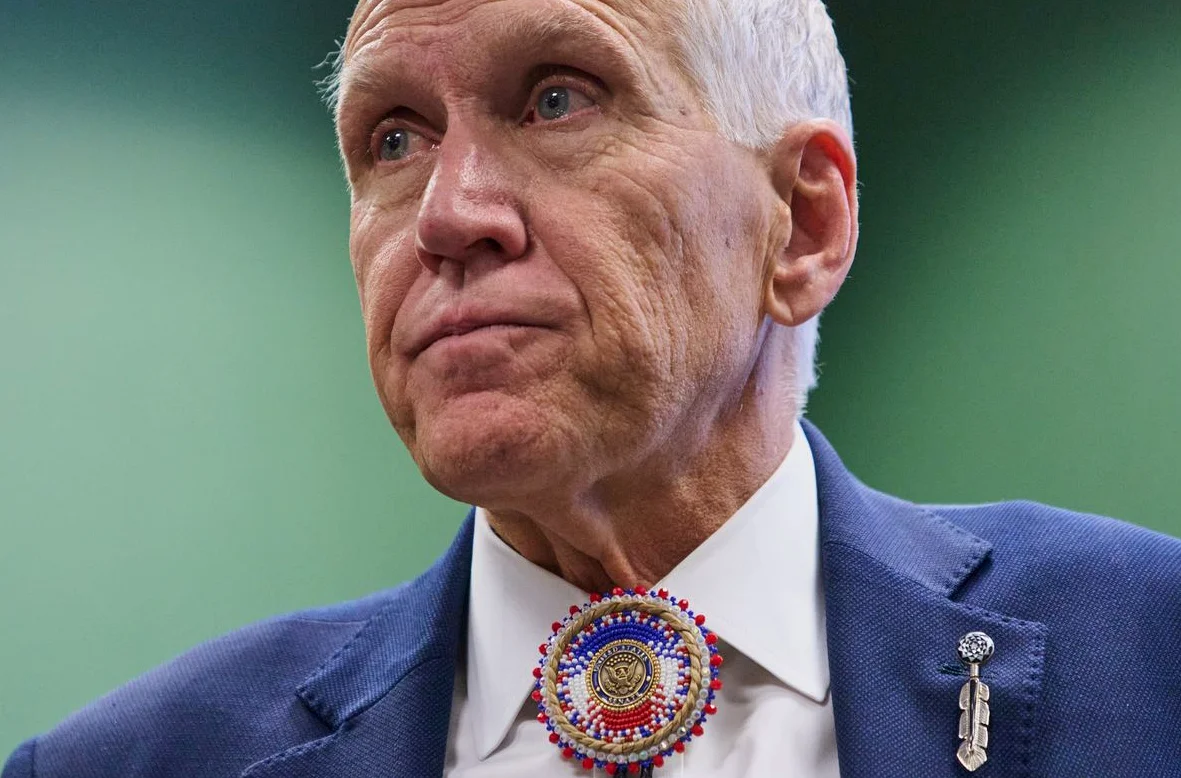
U.S. Senator Thom Tillis. A Republican from North Carolina. Expressed concerns that Trump’s repeated calls to acquire Greenland are damaging long-standing transatlantic relationships; Speaking on CNN, Tillis warned that the proposal could push European allies toward “worst case scenarios,” including de-risking strategies that weaken the U.S.’s global influence. He also speculated that adversaries like China and Russia were likely observing the discord with satisfaction.
Trump’s recent speech at the World Economic Forum emphasized his belief that the U.S. should control Greenland, despite European opposition. “We want strong allies, not seriously weakened ones,” he said, criticizing NATO members for not contributing enough to the alliance’s defense. Tillis described the speech as an “opportunity missed,” arguing that it reinforced concerns about allies distancing themselves from the U.S.
First Ladies and the Political Backlash Against Women’s Rights
As Trump’s international alliances face scrutiny, the role of first ladies worldwide is also under examination, particularly in the context of a global backlash against women’s rights. According to SPIEGEL, many first ladies have become the most visible female leaders in countries where elected women face intimidation and marginalization. Despite this visibility, the role lacks formal power—many first ladies operate without budgets, staff, or offices, relying instead on family members or informal networks.
“The societal expectations are enormous, but the structural support is nonexistent,” said Petra Neumann, an expert on first ladies. She noted that this dynamic reflects a deeply sexist system, where women are expected to deliver tangible results without institutional backing. The role is further complicated by the fact that first ladies are not elected, yet they are expected to represent the public interest directly. Their effectiveness often depends on whether the president allocates resources for their initiatives.





Comments
No comments yet
Be the first to share your thoughts