

 Deutsche Welle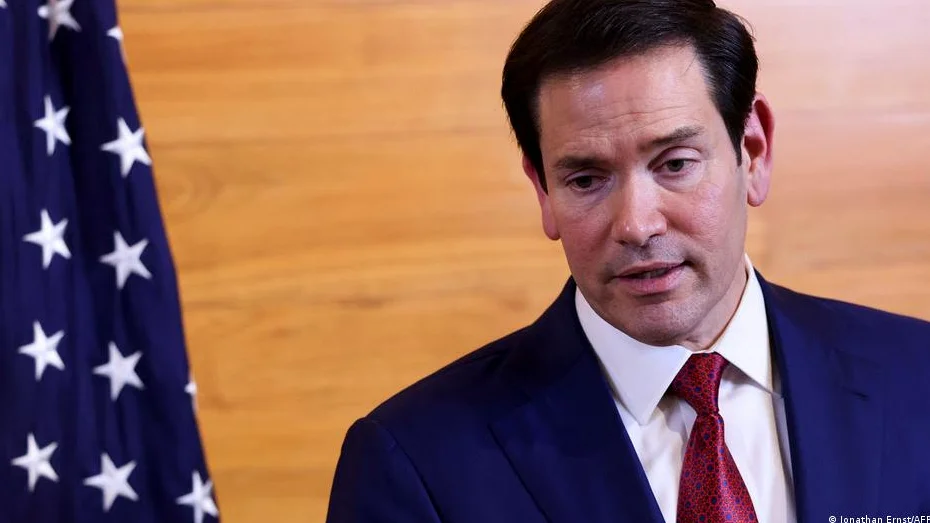
In the early hours of Wednesday, a speedboat carrying 10 Cuban exiles was intercepted by Cuban coastguard forces near the island’s shores. The vessel, which appears to have departed from Florida, was involved in a violent exchange of fire that left four people dead and six injured. Cuban officials described the group as planning a ‘terrorist infiltration,’ citing their possession of assault rifles, explosives, and ballistic vests.
Escalating Hostilities and U.S. Response
U.S. Secretary of State Marco Rubio condemned the incident as ‘highly unusual’ but affirmed that the United States would investigate the matter independently. He emphasized that the operation was not an official U.S. initiative and that no government personnel were involved. ‘We are prepared to respond accordingly,’ Rubio said, hinting at possible retaliation if the investigation confirms the U.S. involvement.
The incident occurs amid heightened tensions between the U.S. and Cuba, fueled in large part by Rubio’s hardline policies. A native of Florida, Rubio has long advocated for regime change in Cuba, stating in January that ‘we would like to see the regime there change.’ He added that while the U.S. would not actively orchestrate such a change, it would be ‘a great benefit’ if Cuba no longer operated under an ‘autocratic regime.’
Economic and Political Pressure on Cuba
The U.S. has intensified its pressure on Cuba through both economic and political measures. In January, Trump declared a national emergency, accusing Cuba of hosting Russia’s largest overseas signals intelligence facility and of collaborating with China. The U.S. has also placed Cuba on a list of state sponsors of terrorism, citing alleged ties to groups like Hamas and Hezbollah, despite a lack of public evidence to support these claims.
Cuba has been grappling with severe power outages and fuel shortages, which have disrupted daily life. The government has had to reduce working hours, halt public transportation, and cut back on essential services. The United Nations has warned of a potential ‘humanitarian collapse’ due to the lack of refrigeration, medical supplies, and clean water.
Rubio has recently announced a limited easing of restrictions on oil exports to Cuba’s private sector, provided that the fuel is not used by the government or military. This move comes as the U.S. continues to threaten punitive tariffs on any country supplying oil to Cuba.
Historical Context of U.S.-Cuba Relations
The conflict between the U.S. and Cuba dates back to the 1959 Cuban revolution, when Fidel Castro overthrew the U.S.-backed regime of Fulgencio Batista. The subsequent nationalization of U.S. assets led to a failed Bay of Pigs invasion in 1961 and the Cuban Missile Crisis in 1962, when the U.S. and Soviet Union came dangerously close to nuclear war.
The economic embargo imposed by the U.S. during the missile crisis remains in place, and diplomatic relations have remained strained. While former President Barack Obama initiated a tentative rapprochement, the Trump administration tightened sanctions, and the Biden administration has not reversed these policies.
With Trump’s return to office and Rubio’s appointment as secretary of state, the U.S. has ramped up pressure on Cuba. ‘If the Cuban people are suffering, it is because the regime is standing in the way of help,’ Rubio said in a recent statement. He reiterated that the U.S. would only ease its pressure if Cuba guarantees ‘political and economic freedom’ for its citizens.
The recent incident has only deepened the divide. The U.S. has accused Cuba of supporting ‘hostile states and actors,’ and the Cuban government has condemned the actions of the exiles as a ‘provocation.’ As the situation unfolds, the world watches closely to see if this will lead to a broader conflict or a potential diplomatic resolution.






Comments
No comments yet
Be the first to share your thoughts