

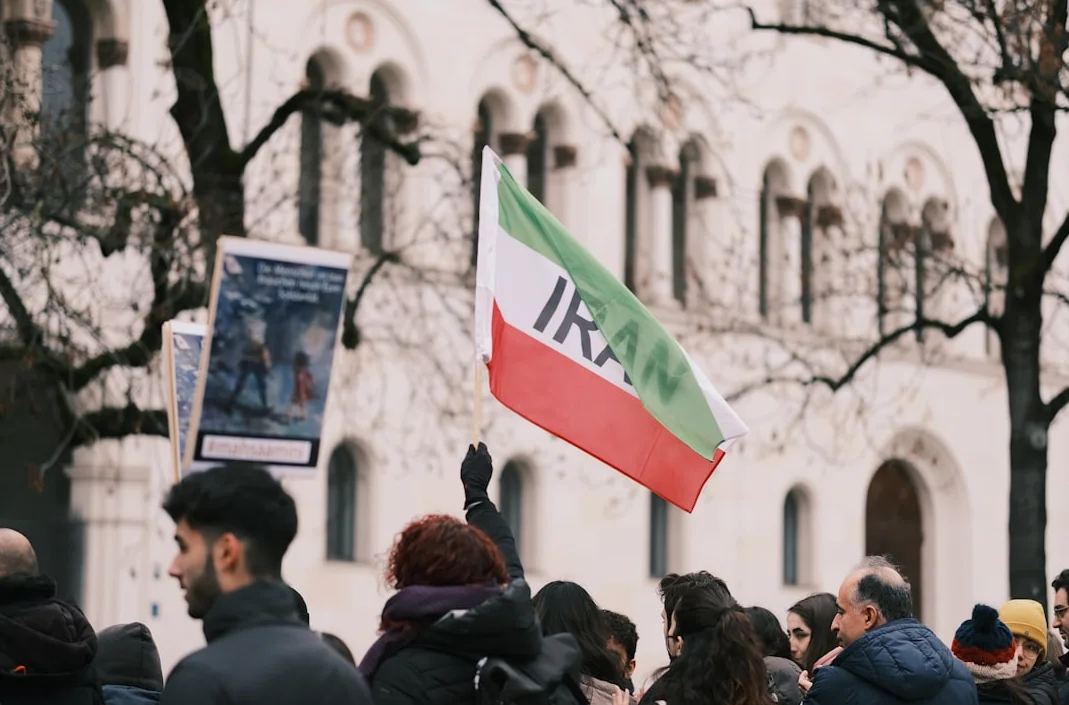
President Donald Trump announced that hostilities with Iran have “terminated,” according to letters sent to Congress on Friday, May 1, as the 60-day deadline under the 1973 War Powers Resolution neared. The conflict. Which began on February 28. 2026, has raised questions about the constitutional authority of Congress to declare war and the executive’s power to initiate military action.
War Powers and Congressional Authority
The War Powers Resolution. Enacted in 1973. Requires the president to notify Congress within 48 hours of military action and to terminate hostilities within 60 days unless Congress approves an extension. The 60-day clock began on March 2, when Trump first notified lawmakers of the conflict — With the deadline now passed, the White House faces pressure to seek legislative approval or face potential legal and constitutional challenges.
Trump wrote in nearly identical letters to House Speaker Mike Johnson and GOP Sen. Chuck Grassley that “there has been no exchange of fire between United States Forces and Iran since April 7, 2026,” indicating a de facto cessation of direct military engagement. However, the administration has maintained a naval blockade of Iranian ports in the Strait of Hormuz, a move it argues is necessary to counter the “threat posed by Iran.”
Escalating Tensions and Casualties
During the conflict, at least three U.S. soldiers were killed in Kuwait, the first American casualties in the war with Iran — According to reports, at least nine people were killed in Israel and at least four in the United Arab Emirates, Kuwait, Qatar, Bahrain, and Oman. On Saturday, the joint U.S.-Israeli military operation succeeded in killing Iran’s Supreme Leader, Ayatollah Ali Khamenei. Trump has also called for the Iranian people to take control of their government.
U.S. Central Command reported that on Sunday, the United States launched a series of attacks targeting Iran’s ballistic missile program and navy. Stealth bombers armed with 2,000-pound bombs targeted Iran’s “reinforced” ballistic missile facilities, destroying the headquarters of the Islamic Major Guard Corps and sinking at least one warship.
Energy Markets and Diplomacy
Energy markets reacted to the ongoing tensions, with May WTI crude oil rising 2.81% and May RBOB gasoline up 2.98%. The Strait of Hormuz, a critical global energy chokepoint, remains closed to Iranian-linked vessels under a U.S. blockade. About 20% of global oil and liquefied natural gas transits through the strait. The U.S. military is reportedly preparing to board and seize commercial ships in international waters to pressure Iran into reopening the strait.
Iran has been able to export crude during the conflict, exporting about 1.7 million barrels per day in March. However, Persian Gulf oil producers have been forced to cut production by roughly 6% due to the closure of the strait as local storage facilities reach capacity.
Trump reiterated at a rally in The Villages, Florida, that oil prices would “come crashing down” when the war ends. Meanwhile, the Islamic Republic proposed a new peace plan, but Trump said he was “not satisfied” with the offer. The administration also extended its deadline for the reopening of the Strait of Hormuz to April 6, 2026, while Iran rejected a 15-point U.S. proposal as “one-sided and unfair,” though it left the door open for potential adjustments.
Analysts suggest that the U.S. is employing a two-pronged strategy: continuing military pressure while engaging in diplomatic outreach. This approach, however, has led to skepticism in Teheran, where officials interpret it as a form of psychological warfare or a game of assigning blame.
With the ceasefire set to expire at the end of Wednesday, Trump stated it is “highly unlikely” he will extend it. The U.S. is also reportedly considering sending an additional 10,000 troops to the region. This military escalation, combined with stalled diplomatic efforts, suggests the conflict is far from over, despite the administration’s claims of termination.






Comments
No comments yet
Be the first to share your thoughts