

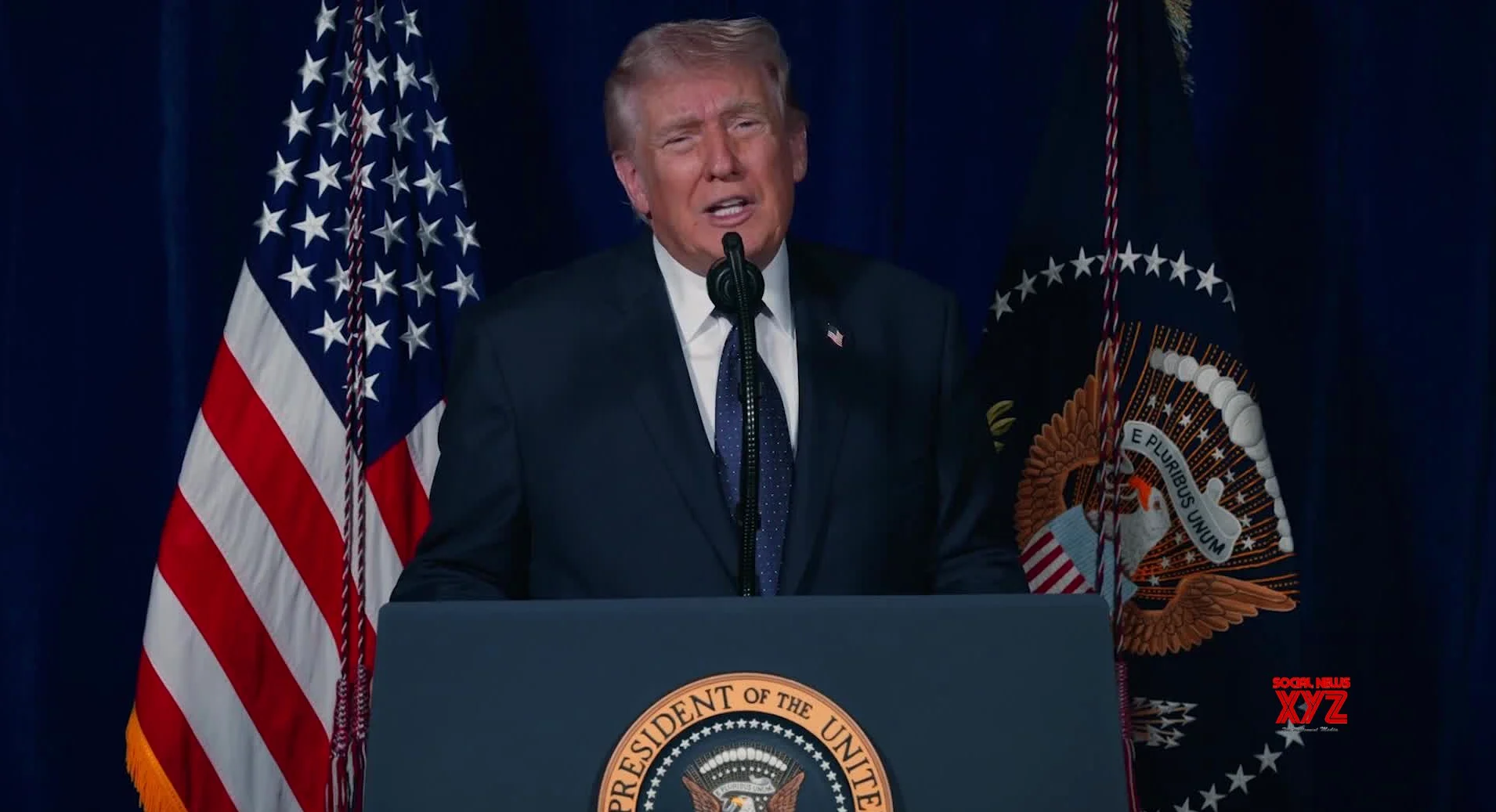
Washington — U.S. President Donald Trump may delay his planned visit to China as the war with Iran continues, according to the White House, though officials said the meeting with Chinese President Xi Jinping is still expected to take place. White House Press Secretary Karoline Leavitt confirmed Monday that the trip remains important to both leaders but acknowledged the timing could change depending on developments in the conflict.
Timing of the Trip in Question
Leavitt, speaking to reporters outside the White House, said, ‘Yes, so the President looks forward to meeting with President Xi in China. This is a trip I know he’s long been looking forward to, and I know President Xi has been looking forward to welcoming President Trump.’ She added that ‘there’s a possibility the trip could be delayed,’ saying the administration would provide updates once new dates are determined.
During an interview on Fox News, Leavitt said, ‘I don’t think the meeting is in jeopardy, but it’s quite possible the meeting could be delayed.’ Trump’s visit to China had been scheduled for March 31 through April 2, during which he was expected to meet President Xi in Beijing. The meeting would mark Trump’s first visit to China since 2017.
Iran War Takes Priority
The White House has signaled that the war with Iran is now the U.S. President’s top priority. Leavitt added, ‘The President looks forward to visiting China. The dates may be moved.’ She emphasized, ‘As Commander-in-Chief, it’s his number one priority right now to ensure the continued success of this operation, Epic Fury. So we’ll keep you posted on the dates as soon as we can.’
Speaking to reporters aboard Air Force One on Sunday night, Trump said discussions with global powers — including China — are continuing as Washington seeks support to safeguard shipping routes through the Strait of Hormuz amid the ongoing conflict. ‘China’s an interesting case study. They get most of their oil, as you know, by far, they get a lot, about 90 per cent through the strait,’ the U.S. President added.
‘So I’ve said, ‘Would you like to come in?’ And we’ll find out. Maybe they will, maybe they won’t,’ Trump said. He added, ‘They should come in, in my opinion.’
Efforts to Secure International Support
President Trump also said the U.S. has contacted several countries about helping police the strategic waterway, through which a large share of global oil shipments pass. ‘We are talking to other countries about working with us on the policing of the strait,’ Trump said, adding that Washington had spoken with about seven countries on the issue.
‘We’ve had some positive response. We had a few that would rather not get involved,’ he said. The White House has emphasized that President Trump is closely overseeing the military campaign. ‘Of course, the President’s utmost responsibility right now as Commander-in-Chief is to ensure the continued success of Operation Epic Fury, as he is doing 24/7 here at the White House, here at home,’ Leavitt said.
Trade Talks Continue Despite Possible Delays
U.S. Treasury Secretary Scott Bessent, who is currently leading trade discussions with Chinese Vice-Premier He Lifeng in Paris, said any adjustment to the President’s itinerary would likely reflect operational priorities rather than diplomatic tensions. ‘If the meetings are delayed, it wouldn’t be delayed because the President demanded that China police the Strait of Hormuz,’ Bessent said in an interview with CNBC.
‘If the meeting, for some reason, is rescheduled, it would be rescheduled because of logistics,’ he added. He noted that such a decision could reflect Trump’s preference ‘to stay in the White House or to stay in the United States while this war is being prosecuted.’
Analysts have suggested that the potential delay could impact U.S.-China trade relations, particularly with the ongoing discussions on tariffs and trade imbalances. However, Bessent emphasized that the trade talks are ongoing and not directly tied to the potential delay in Trump’s visit.
The uncertainty surrounding the trip has raised questions among diplomats and international observers about the U.S. strategy in the region. Some analysts believe that the delay could allow Trump to focus more on the military operation in the Middle East before engaging in high-level diplomacy with China.
As the situation unfolds, the White House has maintained that any changes to the schedule will be communicated promptly. ‘We will keep you posted on the dates as soon as we can,’ Leavitt reiterated, signaling that the administration is closely monitoring the situation in Iran and adjusting its priorities accordingly.

Comments
No comments yet
Be the first to share your thoughts