

 Associated Press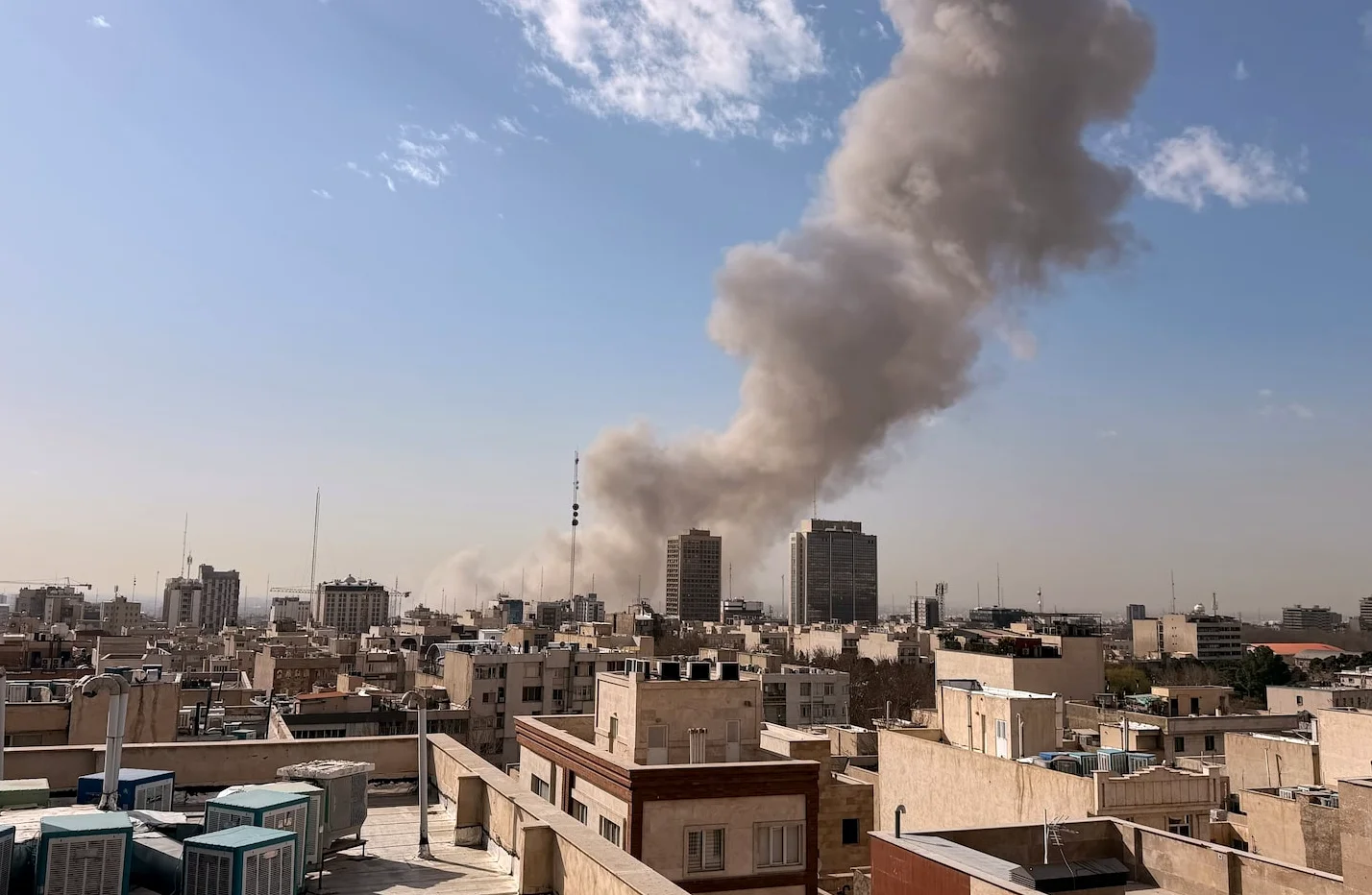
Smoke rises over the Tehran skyline following an explosion on Saturday, as the U.S. launched military strikes in Iran under the codename ‘Operation Epic Fury.’ According to a U.S. official, the operation began at approximately 1 a.m. Eastern time with a barrage of Tomahawk cruise missiles and air-launched munitions from U.S. Air Force and Navy jets. In a brief phone interview shortly after 4 a.m., Trump stated his primary objective is ‘freedom’ for the Iranian people, emphasizing that he wants ‘a safe nation’ for the United States.
Operation Epic Fury and Immediate Reactions
The U.S. military operation against Iran, dubbed ‘Operation Epic Fury’ by the Trump administration, has been accompanied by swift counterstrikes from Iran. According to Iran’s state-run news service, multiple U.S. military bases were targeted, including the support facility for the 5th Fleet in Bahrain. Despite the ongoing conflict, no U.S. service members have been injured, according to the anonymous U.S. official who provided the information.
Israel also launched attacks on Iran on Saturday, according to reports, indicating a broader regional involvement in the conflict. The U.S. official confirmed that the operation is ongoing, but did not provide further details on the scope or casualties.
Trump’s Rationale and Legacy
In a taped video message released around 2:30 a.m., Trump outlined the justification for the military action, stating that the goal is to ‘defend the American people by eliminating imminent threats from the Iranian regime.’ He accused Iran of a range of offenses, including efforts to develop a nuclear weapon, roadside bombs, and a campaign of ‘mass terror’ against the U.S. for 47 years.
Trump referenced historical incidents involving Iran, including the 1979 hostage crisis and the 1983 bombing of U.S. Marine barracks in Beirut. He also claimed Iran was ‘probably involved’ in the 2000 al-Qaeda attack on the USS Cole in Yemen. In the video, Trump emphasized that he has ‘built and rebuilt our military’ and that it is ‘no military on Earth even close to its power, strength or sophistication.’
Trump, speaking from Mar-a-Lago, his home in Palm Beach, Florida, stated that he is ‘willing to do what no other president was willing to do’ to help the Iranian people ‘seize control’ of their ‘destiny’ with U.S. support. He urged Iranians to ‘take over your government,’ calling it ‘probably your only chance for generations.’
Trump acknowledged the risks involved, saying, ‘The lives of courageous American heroes may be lost and we may have casualties,’ but argued that the mission is ‘noble’ and for the ‘future.’
Contradictions and Evolution of Policy
Trump’s stance on U.S. involvement in the Middle East has evolved over time. He initially supported the Iraq War in the early 2000s, but later criticized it as a ‘terrible mistake.’ He built his political brand on an ‘America First’ platform, opposing overseas adventures and pledging to ‘stop the endless wars and return to peace in the Middle East.’
In his November 2024 election night victory speech, Trump highlighted his administration’s success in defeating the Islamic State ‘in record time’ without starting a new war. ‘They said, he will start a war. I’m not going to start a war. I’m going to stop wars,’ he said.
Vice President JD Vance, speaking to The Washington Post on Thursday, assured that any operation initiated by Trump in Iran would not lead to a prolonged U.S. involvement in the Middle East. ‘The idea that we’re going to be in a Middle Eastern war for years with no end in sight — there is no chance that will happen,’ Vance said.
However, foreign policy experts have warned that a wider conflict with Iran could drag the U.S. into a protracted war, unlike the limited strikes conducted against Iranian nuclear sites in June. The potential for escalation remains high as both sides continue their military operations.
Trump’s declaration of ‘freedom’ as the goal of the operation has sparked debate over the real-world implications for ordinary Americans and Iranians alike. The conflict could lead to economic instability, increased security risks, and further regional tensions. As the situation unfolds, the world watches closely for any signs of de-escalation or further military action.






Comments
No comments yet
Be the first to share your thoughts