

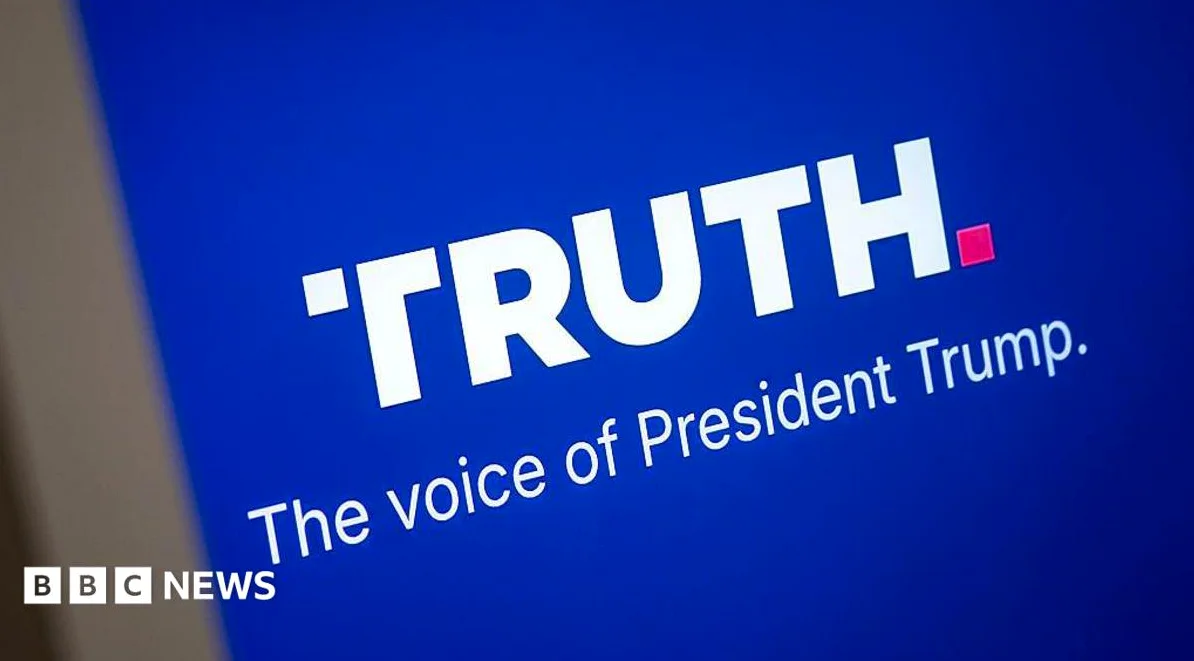
Trump Media & Technology Group (TMTG) has launched a paid data feed called Truth API, offering institutional investors fast access to posts from high-profile accounts on its Truth Social platform. The service, anticipated to go live on 1 August, could cost as much as $100,000 a month for high-speed access, according to the Financial Times, but TMTG has not confirmed the figure. The platform’s most influential user, with 13 million followers, is widely assumed to be the president himself.
Fast Access for High-Frequency Traders
According to TMTG, the Truth API provides real-time access to posts from the platform’s most followed accounts in “milliseconds.” The service is primarily aimed at high-frequency and algorithmic trading firms, which rely on speed to execute automated trades at a scale and pace beyond human capability. Charles Schwab described this as a matter of “blink, and you’ll miss it” in the fast-moving financial market.
The company hopes the service will become a steady source of new revenue, as it currently operates at a loss. TMTG has not directly stated whether the president’s account is included in the service, but given his status as the most-followed user on the platform, it’s reasonable to assume his posts would be among the most influential in the feed.
Ethical and Legal Concerns
The launch of Truth API has sparked a series of legal and ethical questions — Critics argue that it is questionable for a company in which the president’s family remains a majority shareholder to profit from his public statements. The arrangement raises concerns about potential conflicts of interest and whether the company is using its position to monetize politically influential content.
Some analysts have also questioned how countries would be able to prove they have addressed claims of forced labour, which has been a basis for other trade restrictions. Alex Capri, a business lecturer at the National University of Singapore, told the BBC that the lawsuit against Trump’s new tariffs could be a “formidable challenge,” and that he expects “carve outs and walk-backs to gradually take the bite out of these tariffs.”
Broader Trade and Legal Context
This move by TMTG coincides with a broader set of trade policies introduced by the Trump administration. Earlier this year, a temporary 10% levy on all global imports expired in July, and the president has indicated that new tariffs could be on the horizon as investigations into 16 countries over claims of manufacturing overcapacity continue.
China’s foreign ministry has described the latest tariffs as an “excuse for political manipulation,” while New York Governor Kathy Hochul noted that the Supreme Court has made it clear the administration cannot ignore the law to impose sweeping tariffs. The ongoing legal challenge to the tariffs highlights the complex intersection of trade policy, legal constraints, and political strategy under the current administration.





Comments
No comments yet
Be the first to share your thoughts