

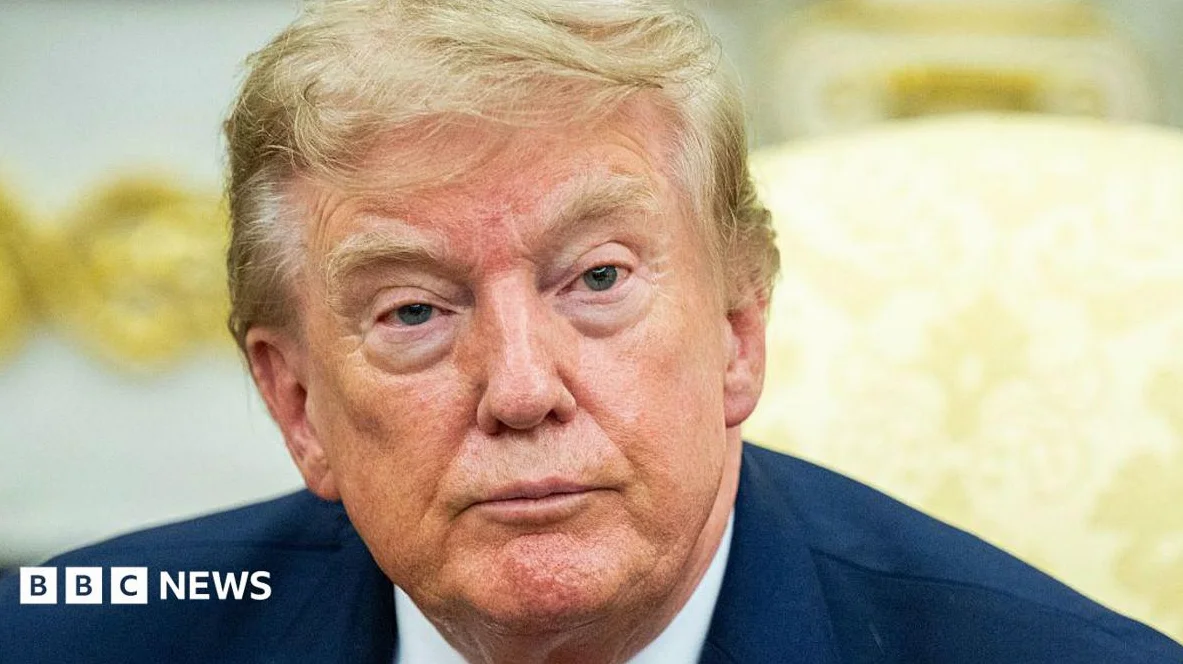
U.S. President Donald Trump announced that he has paused new 50% tariffs on Canadian goods for a three-day period while negotiations between the U.S. and Canada continue, according to CBS News. The tariffs were scheduled to take effect on Tuesday but have been delayed as the two nations work toward a final agreement.
Trade Dispute and Negotiations
Canada had threatened to retaliate against the proposed tariffs, which would have impacted $20 billion worth of Canadian products, including hockey sticks and tongue depressors. Canada and the U.S. had $880 billion in bilateral trade last year, and the potential for a trade war raised concerns about economic repercussions on both sides of the border.
Canadian Prime Minister Mark Carney stated that “substantial progress has been made,” though “important work still needs to be done.” Carney added that the U.S. agreed to delay the implementation of the tariffs under Section 338 of the U.S. Tariff Act of 1930 until the end of the day on August 21.
Carney and Trump had spoken twice in the past two days, with a call on Tuesday afternoon highlighting the urgency of finalizing a deal, as “The negotiations are very intense and delicate. This is not the time to talk about negotiations in public,” Carney told reporters on Monday, according to CBS News.
Broader Trade Dynamics
While the immediate focus is on U.S.-Canada trade, the Atlantic Council highlighted the broader context of trade relations in North America. The United States–Mexico–Canada Agreement (USMCA) is currently under review, and the Trump administration has pursued a strategy of imposing tariffs on trade partners to negotiate more favorable terms. Mexico and the U.S. are each other’s largest trading partners, with much of their trade involving intermediate goods in complex supply chains.
The USMCA is set for a mandatory review, and if the three countries do not agree to renew the pact by July 1, they will be required to meet annually for the next ten years to resolve differences. Should no agreement be reached by 2036, the USMCA will automatically terminate; However, any of the three countries can also withdraw from the agreement with six months’ notice.
Although Bloomberg reported that Trump has considered ending the USMCA, the Atlantic Council noted that this remains unlikely due to the economic interdependence between the three nations. The U.S. automotive industry and states like Texas, which rely heavily on trade with Mexico, would be significantly affected by such a move.
Domestic Economic Focus
In his statement, Carney emphasized Canada’s commitment to building a “stronger, more independent, and more competitive economy at home,” according to CBS News — the delay of the tariffs gives both countries time to finalize an agreement that could prevent a trade escalation. Carney’s office confirmed that the U.S. and Canada have been in close contact to resolve outstanding issues.
Trump’s announcement on Truth Social noted that the pause is “based on the fact that Canada and the U.S.A., subject to the finalization of documents, have a DEAL!” The three-day extension suggests that a deal is close but still being finalized.
Canada’s approach to the negotiations has been cautious, with officials avoiding public statements during the process. The delay of the tariffs reflects the high stakes of the negotiations and the desire to avoid a trade war between two of North America’s largest economies.






Comments
No comments yet
Be the first to share your thoughts