

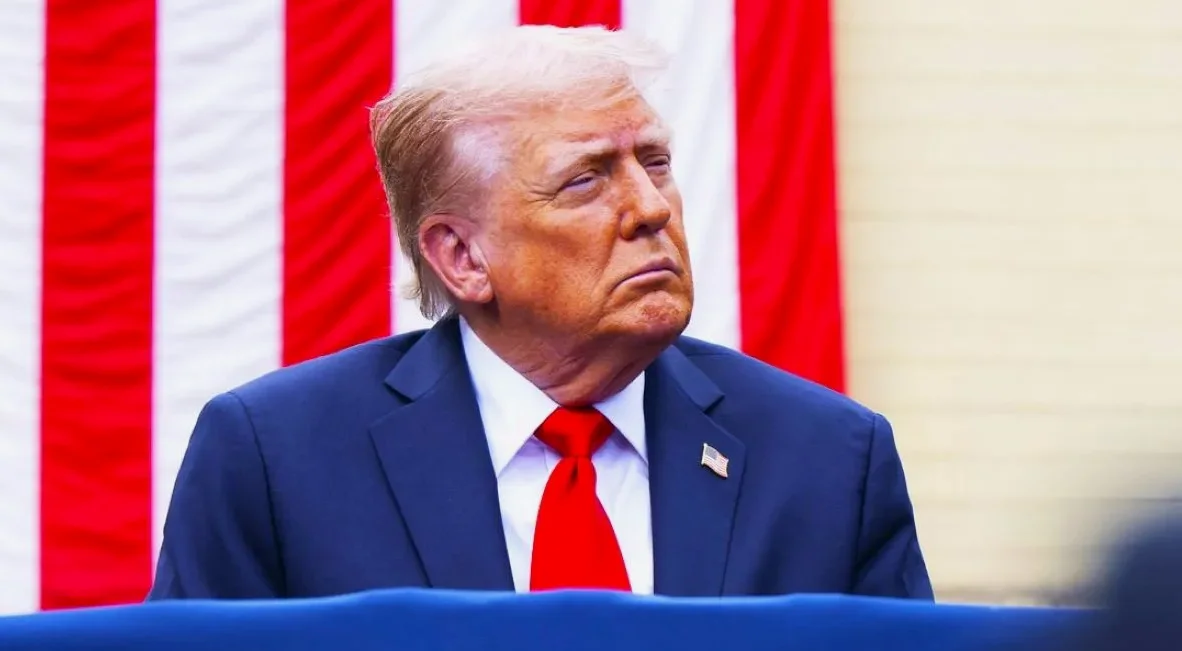
President Donald Trump has intensified pressure on Congress to extend the Section 702 surveillance program, a controversial foreign intelligence initiative that has drawn criticism over its implications for American privacy. According to multiple sources, Trump has directly communicated his demand to key Republican leaders, including Speaker of the House Mike Johnson, House Intelligence Committee Chair Rick Crawford, and Judiciary Committee Chair Jim Jordan, urging them to push for a “clean” extension of the program.
Section 702 and Its Privacy Concerns
Section 702 of the Foreign Intelligence Surveillance Act (FISA) authorizes the government to collect communications from non-U.S. persons located outside the United States. However, American citizens’ communications are often inadvertently swept up in this data collection process, leading to significant privacy concerns.
Over the years, bipartisan efforts have sought to impose stricter safeguards on the program, including requiring a warrant before intelligence agencies can search through data that includes Americans. These restrictions were implemented in 2022, but the program is set to expire on April 20, 2024, unless extended by Congress.
Senate Intelligence Committee Chair Tom Cotton has publicly endorsed Trump’s push for a “clean” extension, stating, “President Trump has requested a simple, clean extension and I support the commander-in-chief on this vital national-security decision.” This support from a key Republican leader has added momentum to Trump’s campaign to extend the program without additional restrictions.
White House and Intelligence Community Support
White House senior advisor Stephen Miller has also been lobbying for the extension, according to a congressional aide familiar with the discussions. Some members of the intelligence community have even suggested a potential three-year extension, further signaling support from within the administration.
However, despite Trump’s backing, the path to a clean extension remains uncertain. A bipartisan group of lawmakers, often referred to as “privacy hawks,” has consistently pushed for sweeping reforms to the surveillance program. These lawmakers argue that the current structure of Section 702 grants too much power to intelligence agencies without sufficient oversight.
According to sources close to the vote-counting process, a clean extension would require a two-thirds majority in the House, a threshold that many GOP lawmakers believe their party may struggle to meet. The challenge lies not only in uniting Republicans behind the procedural measure but also in overcoming skepticism from some within the party about the feasibility of such a vote.
Democratic Concerns and Political Challenges
While Trump’s support may rally some Republicans, it has raised concerns among Democrats. House Intelligence Committee Ranking Member Jim Himes noted that many Democrats might be hesitant to back the program, given their perception of Trump’s “disdain for the law” and for Congress itself.
Himes highlighted the political dilemma, stating, “The administration has a very good story to tell about how previous changes made to Section 702 two years ago have helped curb privacy concerns.” However, he also pointed out that the current political climate could make it difficult to build cross-party support for the program.
Some Democratic lawmakers are questioning whether it is prudent to extend surveillance powers to a president they view as a threat to democratic norms. The fear is that such an extension could further empower a leader seen as willing to bypass legal and constitutional boundaries.
The debate over Section 702 reflects a broader tension between national security and individual privacy. With the program set to expire on April 20, the coming weeks will be critical in determining whether the law is extended with or without new restrictions. The outcome could have lasting implications for how the U.S. government conducts surveillance and how Congress balances security with civil liberties.






Comments
No comments yet
Be the first to share your thoughts