

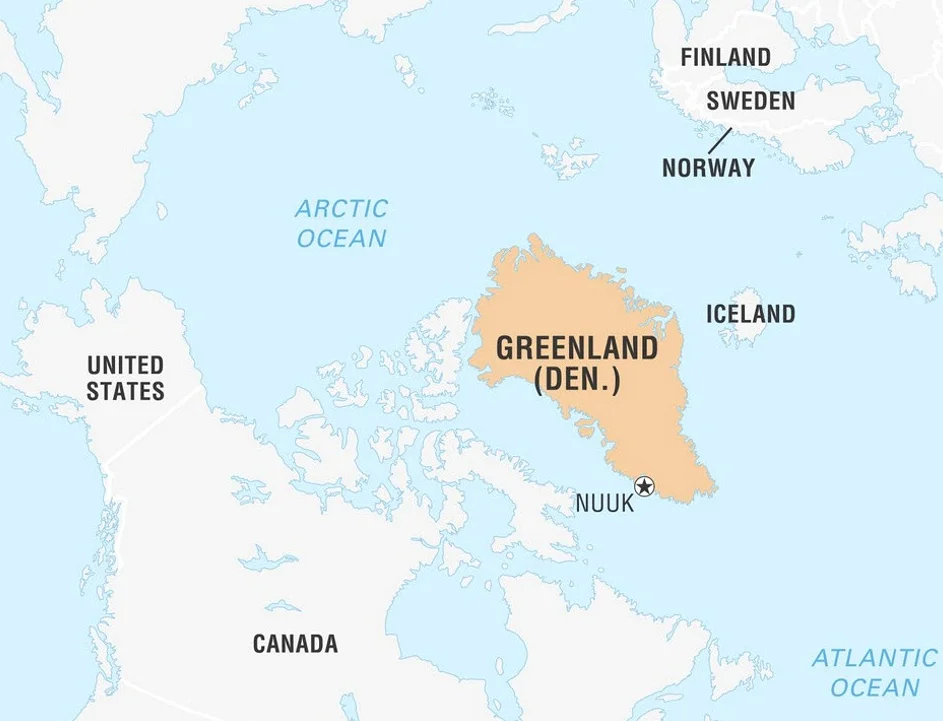
President Donald Trump’s repeated calls to control Greenland have triggered diplomatic unease among European allies, with the White House employing tactics that include threats of trade retaliation and the leaking of private messages. According to CNN, Trump’s efforts to acquire the Danish territory have intensified in recent weeks, despite pushback from Republicans and European leaders.
Trump’s escalating pressure tactics
Trump has responded to growing criticism by ratcheting up his pressure on Denmark and other European nations. As reported by CNN, he has threatened significant new tariffs on European countries unless a deal is reached to purchase Greenland. These threats have raised fears of an escalating trade war, further straining transatlantic relations.
Trump has also sent a controversial letter to Norway’s prime minister, linking a perceived snub from the Nobel Peace Prize committee to a shift in his focus from peace to what he deems “what is good and proper for the United States of America.” According to CNN, the letter was leaked, and Trump has since shared private communications from NATO’s secretary general and French President Emmanuel Macron.
European countermeasures and NATO preparations
Germany is reportedly preparing to propose a joint NATO Arctic mission, informally called Arctic Sentry, in response to Trump’s Greenland rhetoric. According to investingLive, the initiative is modeled after NATO’s Baltic Sentry operation and aims to strengthen the alliance’s presence in the Arctic amid growing concerns over Russia and China’s ambitions in the region.
UK Prime Minister Keir Starmer has also called for a stronger NATO presence in the Arctic, emphasizing the need to deter Russian aggression. He has held talks with French President Macron and German Chancellor Friedrich Merz. Starmer has even spoken directly with Trump, urging a more measured approach to foreign policy.
Denmark, the current governing authority of Greenland, is seeking to de-escalate tensions through diplomatic channels. According to investingLive, an upcoming visit to Washington is intended to address what Denmark views as exaggerated security claims by the Trump administration.
Legal and political challenges at home
Trump’s domestic agenda faces legal headwinds as well. According to Reuters, the U.S. Supreme Court has struck down Trump’s signature “reciprocal tariffs” as unlawful, ruling that the International Emergency Economic Powers Act (IEEPA) does not grant the president authority to unilaterally impose broad-based tariffs. The 6-3 decision, issued on Feb. 20, invalidates Trump’s 10% baseline tariff on trading partners and several country-specific duties.
This ruling undermines a key component of Trump’s trade policy and could have political ramifications ahead of the November midterm elections, as analysts suggest it weakens his ability to push economic policies without congressional approval.
In a separate move, Trump is signaling his intent to ease cost-of-living pressures on American households, including stabilizing the housing market and capping credit card interest rates. According to 경향신문, he has already reached out to Democratic Senator Elizabeth Warren to discuss these measures. These actions are seen as part of a broader strategy to rally his base ahead of the midterms.
Meanwhile, a bipartisan effort in the Senate has succeeded in passing a bill that restricts Trump from ordering additional military attacks on Venezuela. According to 경향신문, the Senate approved the ‘War Powers Resolution’ on the 8th with a vote of 52 to 47, including five Republican defectors. This marks a rare but significant shift in the chamber, where Republicans hold a 53-seat majority.






Comments
No comments yet
Be the first to share your thoughts