

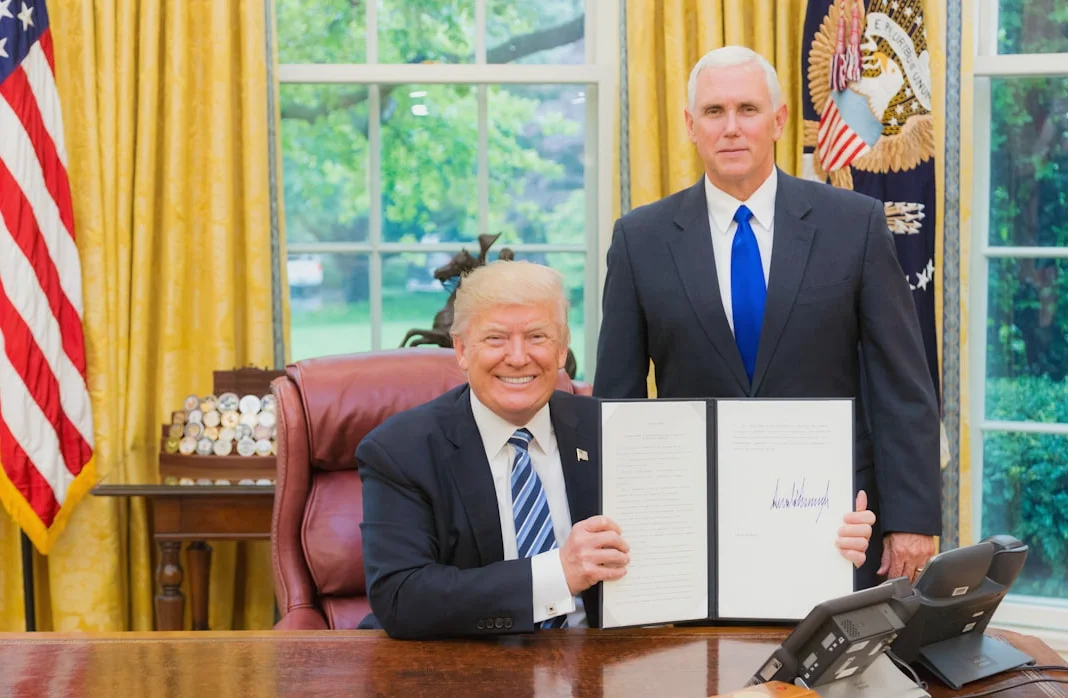
President Donald Trump signed a $70 billion immigration funding bill on Wednesday at the Oval Office, vowing to provide critical support to immigration and border enforcement agencies. The legislation passed Congress via a budget reconciliation process after months of partisan delays and a $1.8 billion “anti-weaponization” fund proposal caused internal rifts — the House passed the bill 214,212, and the Senate 52–47, with no Democratic support in either chamber.
Partisan Struggles and Border Security
Democrats had withheld funding from two Department of Homeland Security subagencies since January, following an immigration surge in Minneapolis that led to the deaths of two U.S. citizens at the hands of federal agents. Republicans used budget reconciliation. A procedural tool that allows passage with a simple majority, to push the bill through. Sen. Lindsey Graham. R-S.C., praised the move, stating the bill would fund border agencies through Trump’s second term and transform the border from its “weakest point to its most secure point in less than two years.”.
Trump had originally expected the bill to reach his desk by June 1, but progress was delayed after the controversial “anti-weaponization” fund was proposed, but most Republicans opposed the measure, though none could agree on a replacement. Despite frustrations, the bill ultimately passed along party lines.
Crypto Regulation Stalls as Senate Reopens Talks
Separately, U.S. Senate Democrats are preparing to restart discussions on the CLARITY Act, a long-awaited piece of legislation aimed at regulating the crypto market and clarifying the roles of the SEC and CFTC. According to journalist Eleanor Terrett. The closed-door meeting marks the first formal Democratic engagement since the bill’s markup was delayed last month; the meeting aims to resolve internal disagreements before the legislation moves forward.
The CLARITY Act seeks to establish a clear legal framework for digital assets, but progress has been hindered by ongoing debates over regulatory scope, enforcement authority, and compliance rules. The White House has reportedly increased pressure on lawmakers and industry groups to settle disputes by the end of February — While parts of the bill have already passed through committees, key unresolved issues continue to stall broader passage.
Trump’s Crypto Move Seen as Boost for Cardano
In a separate development, German-based publication Coin Edition reported that a U.S. analyst has highlighted Cardano as a major beneficiary of a newly passed crypto-related bill. The analyst argued that the legislation creates a favorable environment for Cardano, positioning it at the center of a multi-chain and multi-billion-dollar industry boom; According to the report, Cardano’s security and decentralized attributes make it well-suited for DeFi innovation.
The bill also overturned the recently introduced DeFi-Broker Rule, which had been implemented in the final days of the Biden administration. That rule required DeFi platforms to comply with traditional IRS reporting standards, a move many in the crypto community viewed as overly burdensome and potentially stifling. The analyst noted that the new legislation could trigger positive momentum across the crypto industry, with Cardano playing a central role.






Comments
No comments yet
Be the first to share your thoughts