

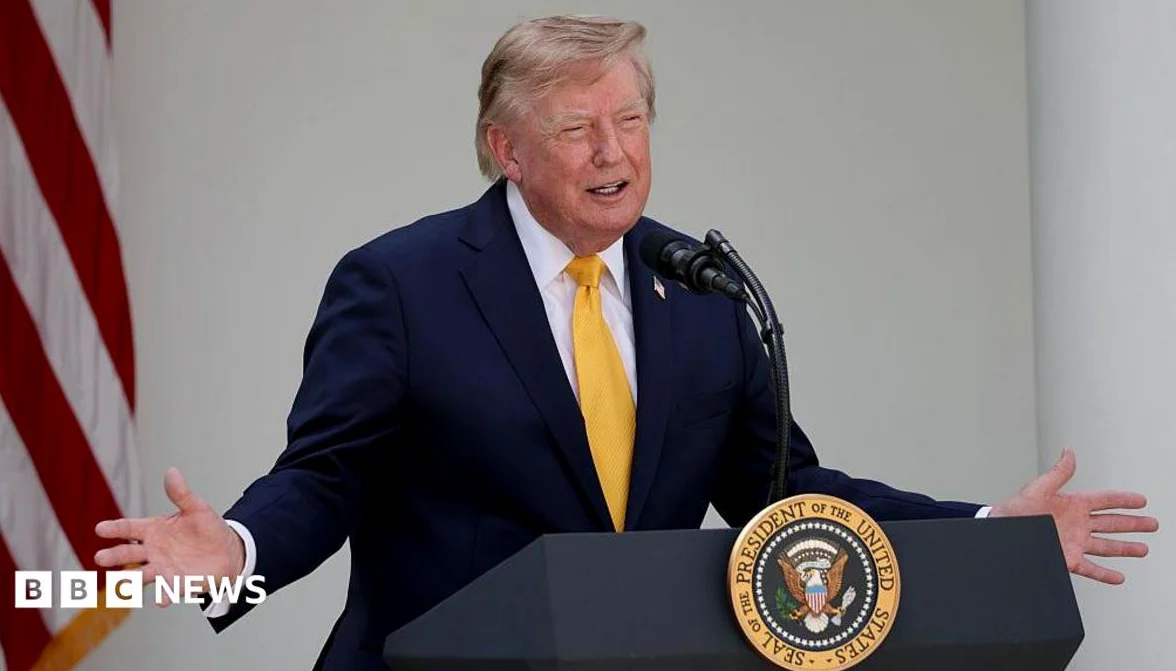
U.S. President Donald Trump on Monday said the U.S. will raise tariffs on imports of cars, trucks, and auto parts from Canada to 50% on Jan. 1, 2027, according to CNBC. This follows a breakdown in trade negotiations last week. ‘Canada has been ripping off the United States of America for years,’ Trump wrote in a Truth Social post, accusing the longtime trading partner of hurting U.S. farmers through its own tariff policies. ‘On January First, 2027, Tariffs on all Cars, Trucks, both large and small, Automotive Parts, and Steel, will be increased to 50%.’
Trump Criticizes Ontario Premier for Retaliation
Trump also returned to Truth Social to criticize Ontario Premier Doug Ford, who threatened to escalate the trade war by cutting off America’s access to electricity and critical minerals. ‘Someone should get these clowns to ‘fall in line’ or, the consequences for Canada will be far WORSE!’ Trump wrote, calling Ford a ‘Flunky’ of Canadian Prime Minister Mark Carney. Ford later responded by calling Trump a ‘bully’ and a ‘dictator.’
Current Tariffs and Retaliation Measures
Trump’s latest tariff threat would double the current top-line U.S. duties on Canadian auto imports, which stand at 25%. Canada had sought to lower those tariffs as part of a new trade deal with the U.S., which appeared to be close to completion before falling apart on Friday night. U.S. tariffs on Canadian steel imports are already at 50%. On Saturday, the U.S. imposed 50% tariffs on about $20 billion of Canadian goods, including wine, cement, and hockey sticks, according to CNBC. These duties were in retaliation for alleged Canadian trade discrimination against U.S. cars, alcohol, and dairy.
Canadian Dollar Reacts to Escalation
The Canadian Dollar (CAD) fell on Monday as trade negotiations between the U.S. and Canada collapsed, according to tmgm.com. USD/CAD extended its advance, trading around 1.3830 at the time of writing, up 0.52% on the day. The U.S. Dollar (USD) gained strength amid the prospect of a fresh tariff escalation. Canadian Prime Minister Mark Carney vowed to retaliate ‘dollar for dollar’ starting September 8, according to tmgm.com. Carney stated that his government prefers to walk away from the negotiations rather than accept a bad deal.
Trump encourages affected Canadian companies to move production to the U.S. to avoid tariffs, adding to concerns about the outlook for the Canadian economy, which is heavily dependent on trade with the U.S. Uncertainty surrounding trade relations between the two countries represents an additional headwind for the Canadian Dollar. Meanwhile, geopolitical developments in the Middle East could provide some support to the Canadian currency through oil prices. According to Reuters, the U.S. Department of the Treasury is expected to announce on Monday a broader scope for secondary sanctions targeting countries and entities that continue to do business with Iran.






Comments
No comments yet
Be the first to share your thoughts