

 New York Times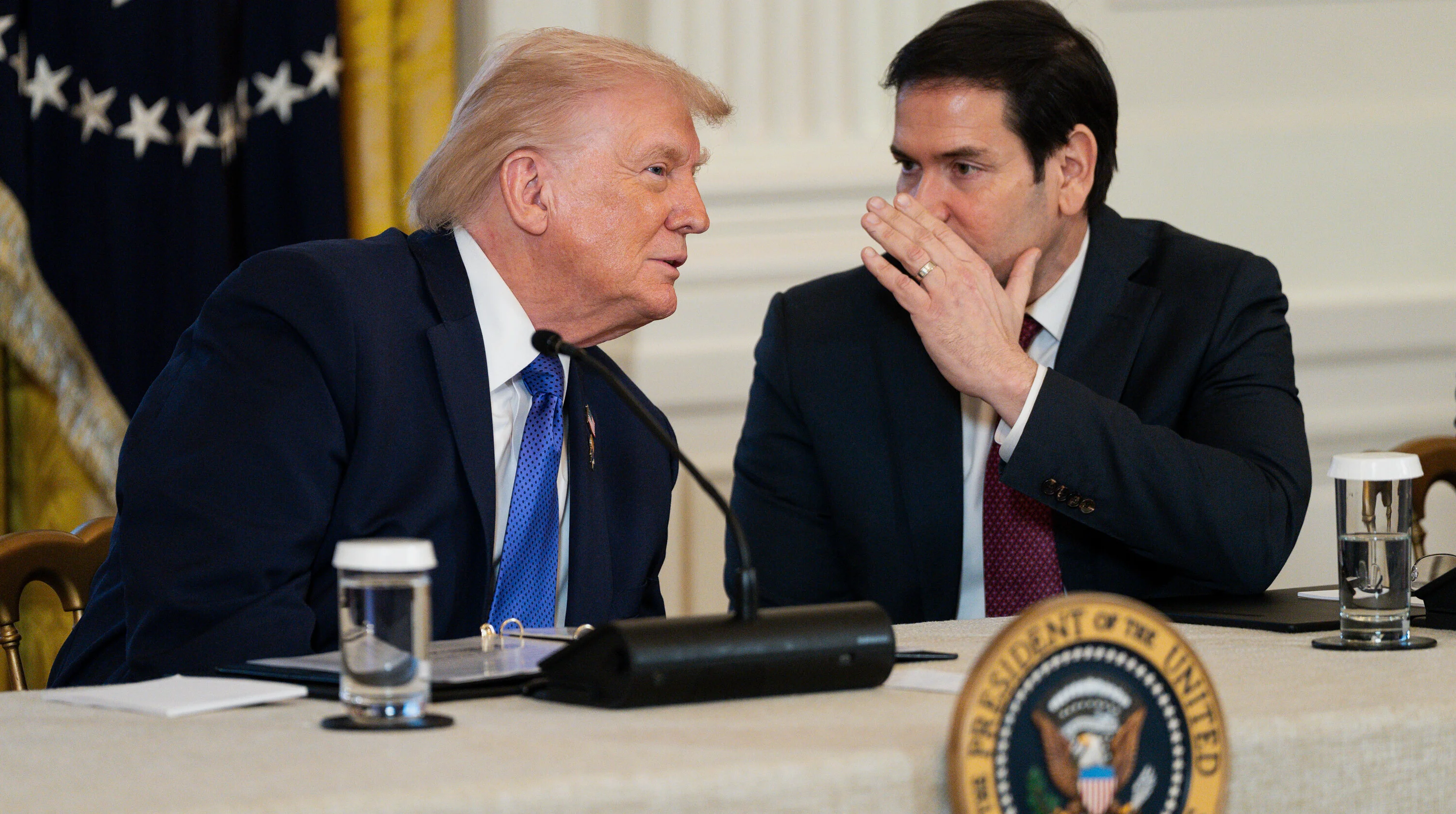
President Donald Trump’s foreign policy, characterized by a series of aggressive actions and rhetoric, has drawn comparisons to the imperial ambitions of the 19th and early 20th centuries, according to analysts and officials. The administration has taken a hardline stance on several international issues, including actions in Venezuela, Cuba, and the Arctic, as well as the buildup of military forces in the Middle East.
Resurgence of Imperial Rhetoric
Trump has consistently emphasized his ‘America First’ doctrine, which he defines as a focus on U.S. interests. This approach, however, has not been one of isolation but rather a push for dominance, with some analysts suggesting it echoes the imperialist policies of past Western powers.
At the Munich Security Conference earlier this month, Secretary of State Marco Rubio delivered a speech that resonated with imperialist themes. He described the West’s historical expansion and lamented its decline after World War II, suggesting that the Trump administration seeks to reverse this trend.
“For five centuries, before the end of the second World War, the West had been expanding—its missionaries, its pilgrims, its soldiers, its explorers pouring out from its shores to cross oceans, settle new continents, build vast empires extending out across the globe,” Rubio said.
He condemned anticolonial independence movements, linking them to Communist ideology and blaming them for eroding Western power. “The great Western empires had entered into terminal decline, accelerated by godless communist revolutions and by anticolonial uprisings that would transform the world and drape the red hammer and sickle across vast swaths of the map,” he said.
Reactions and Reactions from Analysts
Stephen Wertheim, a historian at the Carnegie Endowment for International Peace, noted that Rubio’s speech accurately reflected the direction of Trump’s foreign policy. “Despite widespread fears that Trump might pull back from the world, he is working to reinvigorate U.S. military dominance across the board. It’s America First globalism. Far from exiting alliances, Trump is weaponizing them as platforms for coercion,” he said.
Wertheim also remarked that the celebration of empire would have been normal in Europe in the early 20th century but is now out of place in a decolonized and democratized world. “It’s out of place in a world that has decolonized and democratized,” he said.
Nader Hashemi, a scholar at Georgetown University, warned of the consequences of Trump’s imperial policies. “The consequences for international relations will be enormous, especially in the Global South, where the political identity of most nation-states was formed in the context of a decolonization struggle against Western imperialism,” he said.
Historical Parallels and Contemporary Reactions
John Delury, a historian who has written about U.S. and East Asian foreign policies, noted that celebrating the U.S. as heir to Western civilization is nothing new but that since Franklin D. Roosevelt, presidents and diplomats have spoken of the United States as an enemy of empire and imperialism.
“Textbooks have been updated to acknowledge how ‘explorers’ enslaved people as chattel labor, ‘missionaries’ erased Indigenous cultures and religions, and ‘pioneers’ dispossessed native peoples of their homes and livelihoods,” Delury said.
Constanze Stelzenmüller, the director of the Center on United States and Europe at the Brookings Institution, said that the speech at the Munich conference was particularly striking to officials from former colonized nations. “They were saying, ‘This is astounding,'” she said. Some officials, however, took the attitude that the U.S. was reverting to type, and at least being honest about its imperial past.
Michael Kimmage, the director of the Kennan Institute, said that Rubio was activating a counter-tradition of foreign policy. “He was trying to reassert a vision of America as a global leader, one that is not afraid to use force to maintain its dominance,” Kimmage said.
The State Department did not respond to an email requesting comment on the implications of Rubio’s speech or the broader implications of Trump’s foreign policy.






Comments
No comments yet
Be the first to share your thoughts