

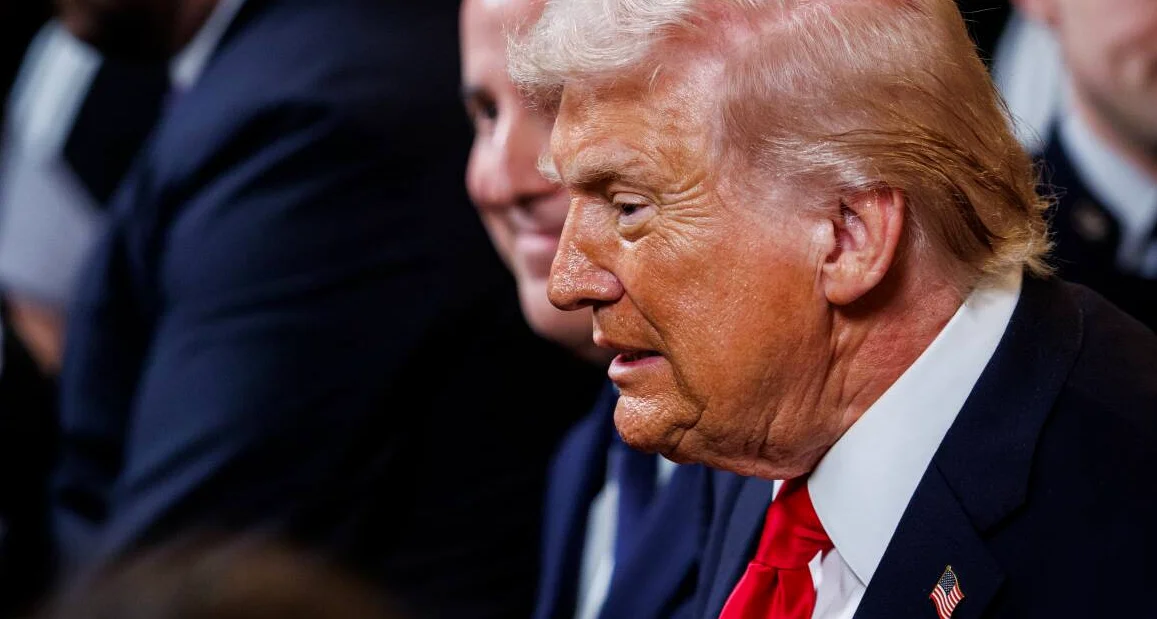
US President Donald Trump has described the recent military strikes against Iran as ‘our last best chance to strike,’ despite his campaign promises to avoid ‘endless wars.’ The administration’s decision to launch attacks on Iran, however, has raised questions about the consistency of Trump’s foreign policy and the broader implications for US involvement in the Middle East.
The Paradox of Military Action
Trump’s rationale for attacking Iran is rooted in the belief that the country poses an imminent threat to the United States. However, analysts argue that Iran’s military and proxy groups have been weakened in recent years, making the justification for the strikes less clear. The administration has also taken military action against other groups, such as Islamic State and Venezuelan President Nicolas Maduro’s regime, despite similar claims of non-imminent threats.
Trump ran for president in 2016 on a platform that criticized ‘forever wars,’ yet his administration has not shied away from military strikes. He even supported the elimination of the Islamic State caliphate, which was initiated under the Obama administration. The assassination of Iranian commander Qassem Soleimani in 2020 further illustrates Trump’s willingness to use military force in the region.
A War of Choice, Not Necessity
According to US Defence Secretary Pete Hegseth, the current conflict with Iran is not an ‘endless war’ like the one in Iraq under George W. Bush. However, the administration faces significant domestic opposition to the strikes. Only 55% of Republicans support the operation, despite Trump’s high approval rating within his party. Democratic lawmakers have condemned the attacks as unconstitutional and in violation of international law.
The administration has provided multiple justifications for the strikes, including stopping an imminent Iranian attack, destroying ballistic missiles, and preventing Iran from acquiring nuclear weapons. Recently, the administration claimed it was compelled to join Israel’s offensive against Iran due to the potential of being drawn into the conflict anyway. Trump has also refused to rule out the deployment of US troops in Iran, adding to the confusion surrounding the administration’s messaging.
Domestic and Regional Implications
The United States, Israel, and their regional allies face the challenge of sustaining military operations against Iran, which has a much cheaper and more accessible arsenal of drones and missiles. The potential for a prolonged conflict could strain resources and escalate tensions in the region. Meanwhile, Iran’s internal security forces and the regime’s resolve may give the country a strategic advantage in the short term.
Domestically, public support for the war remains low, with the American public more preoccupied with economic issues than foreign policy. This is a stark contrast to the early 2000s, when foreign policy played a more prominent role in US elections. The administration’s incoherent messaging and lack of a clear rationale for the strikes have further eroded public confidence.
Despite these challenges, Trump has the constitutional authority to take decisive action in foreign policy, which he has used to implement policies such as ‘Liberation Day’ tariffs and the deployment of federal troops domestically. However, a prolonged war is not feasible, and the administration is likely seeking an exit strategy to avoid a long-term conflict.
The US has a history of engaging in costly military interventions in the Middle East, and the current situation with Iran could follow a similar trajectory. However, the administration’s approach to Iran differs from past conflicts, with a focus on limiting US involvement in the region. Whether this strategy will succeed remains to be seen, as the administration handles the complexities of international relations and domestic politics.
As the situation unfolds, the international community will be watching closely to see how the Trump administration manages the conflict and whether it can achieve its objectives without further escalating tensions in the region.



Comments
No comments yet
Be the first to share your thoughts