

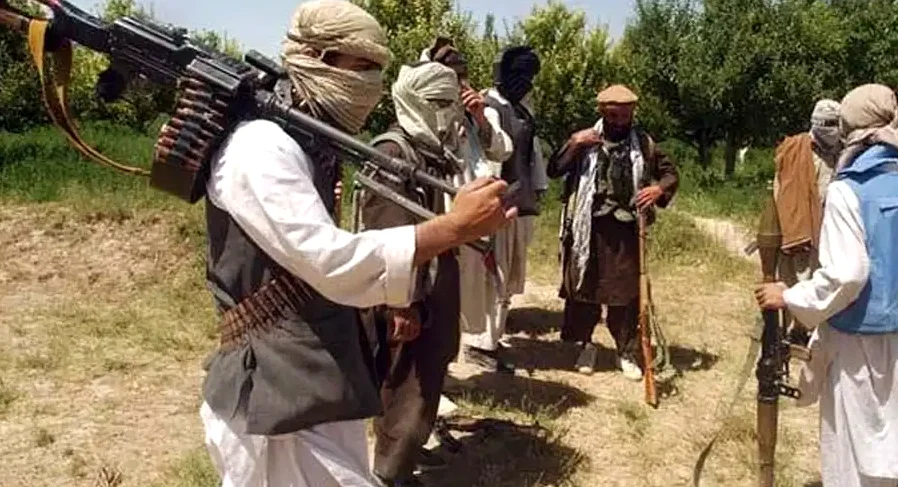
The Tehreek-e-Taliban Pakistan (TTP), a militant group formed in 2007 through the merger of several armed factions in Pakistan’s northwestern regions, has reemerged as a serious security threat. Known for targeting a wide range of civilian and military installations, the TTP has seen a troubling resurgence in recent years, with attacks reported in major cities and border regions.
Historical Context and Ideological Alignment
Founded in 2007, the TTP was created from the merger of various militant groups operating in the tribal areas of Pakistan. These groups had long been involved in conflicts against government forces and foreign troops, particularly during the U.S.-led war in Afghanistan.
The TTP has historically maintained close ties with the Afghan Taliban, fighting alongside them against American forces. While the two groups are distinct, they share ideological, cultural, and linguistic connections that have kept them aligned over the years.
Pakistan has repeatedly accused the Afghan Taliban of providing safe haven to TTP fighters, an allegation that Kabul has consistently denied. Despite this, the proximity of the Afghan border has allowed the TTP to operate with relative impunity, especially in areas like the Khyber and Kurram regions.
Operational Impact and Security Challenges
The TTP has been responsible for numerous high-profile attacks, including bombings in crowded markets, mosques, and military installations. One of the deadliest attacks occurred in 2012 when a suicide bomber killed 250 people at a Peshawar school. Such attacks have left a deep scar on Pakistani society and have raised questions about the effectiveness of government counterinsurgency efforts.
In 2016, Pakistan launched a major military operation against the TTP, known as Operation Zarb-e-Azb. The operation significantly reduced the frequency of attacks and led to the capture or killing of several TTP commanders. However, the group has since staged a resurgence, with reports of increased activity in both border and urban areas.
According to recent intelligence reports, the TTP has managed to seize and hold territory, particularly in the Khyber Pakhtunkhwa province. The group has also been linked to a series of coordinated attacks in 2023, including a suicide bombing in Islamabad that killed at least 12 people and injured dozens more.
Regional and International Implications
The resurgence of the TTP has not only challenged Pakistan’s internal security but also raised concerns among neighboring countries. India, in particular, has expressed alarm over the group’s potential to destabilize the region and use it as a base for attacks against Indian interests.
Analysts suggest that the TTP’s ability to regroup and launch attacks is partly due to the porous border with Afghanistan and the lack of sustained counterinsurgency efforts by the Pakistani military. According to a report by the South Asian Terrorism Portal (SATP), the TTP has been responsible for over 1,500 attacks since its formation, resulting in more than 14,000 deaths.
Pakistan’s government has vowed to continue its military operations against the TTP, but experts warn that without a thorough strategy that includes addressing the group’s ideological appeal and improving governance in border regions, the threat will persist.
According to a recent statement by Pakistan’s National Security Council, the government plans to intensify its efforts to dismantle the TTP network, including increased coordination with Afghan authorities. However, the success of these efforts remains uncertain, given the complex geopolitical dynamics in the region.
The TTP’s resurgence has also drawn attention from the United Nations, which has called for greater international cooperation to address the root causes of extremism in the region. The UN Security Council has reiterated its concern over the potential for the TTP to become a platform for regional instability.
As the TTP continues to pose a security challenge, the situation remains a critical issue for both Pakistan and its neighbors, with implications that extend far beyond the borders of the region.






Comments
No comments yet
Be the first to share your thoughts