

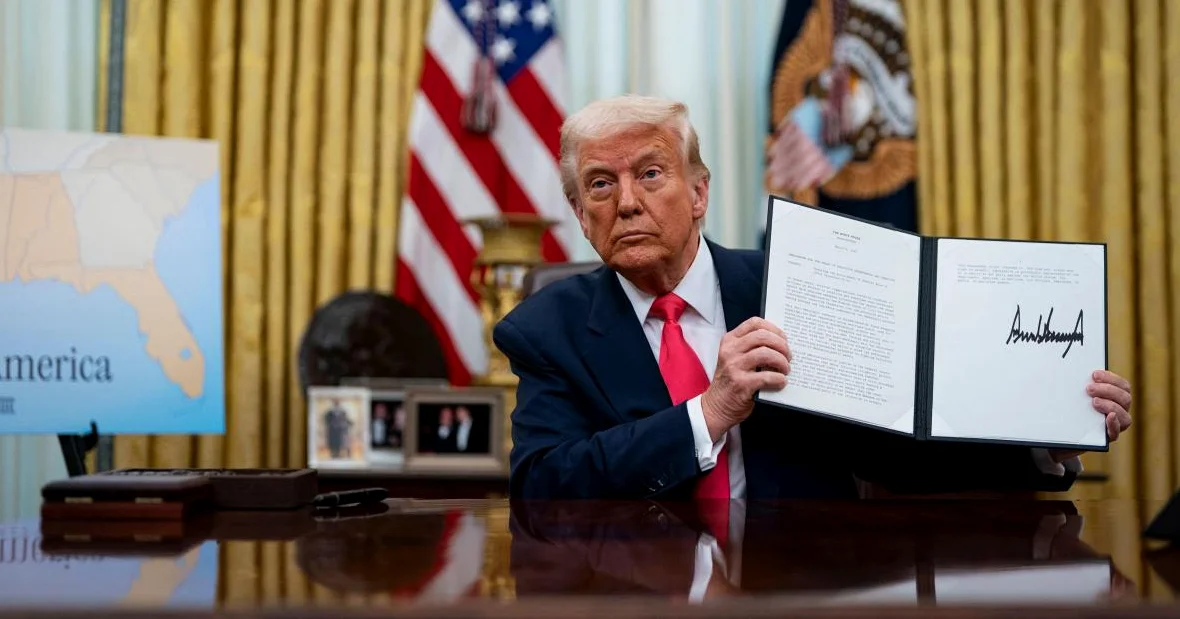
A U.S. trade court has rejected President Donald Trump’s attempt to impose a universal 10% tariff on global imports, marking the second major legal blow to his trade strategy. The ruling found the administration unlawfully used Section 122 of the Trade Act to justify the measure. According to the United States Court of International Trade, the administration’s justification for the tariffs did not meet the legal requirements outlined in the statute.
Executive Overreach and Legal Challenges
President Trump’s second term has been characterized by a series of legally dubious executive orders and actions that have tested the boundaries of presidential authority. The Campaign Legal Center has compiled a running list of notable actions taken by the Trump administration that lack constitutional or legal basis. One such action is the administration’s effort to build a national citizenship database by collecting sensitive voter data through the Department of Justice and the Department of Homeland Security. This data collection violates voters’ privacy and could discourage participation in the democratic process, according to the Campaign Legal Center.
International Criticism of Trump’s Policies
U.S. foreign policy under President Trump has also drawn sharp criticism from international leaders. German President Frank-Walter Steinmeier criticized the Trump administration’s approach, stating that “the world is becoming a den of thieves.” Meanwhile, French President Emmanuel Macron expressed concerns over the U.S. incursion into Venezuela and the ambitions for Greenland, calling it an example of “neo-colonial aggressiveness.” Macron also noted that the U.S. is increasingly turning its back on some allies and moving away from the international norms it once led, according to AFP.
Legal and Ethical Concerns
The Campaign Legal Center has taken legal action in several states—including Maine, Michigan, and New York,to protect voters from the Trump administration’s attempts to retrieve sensitive voter data. The Center also filed an amicus brief in the case League of Women Voters v. DHS to oppose the Department of Homeland Security’s efforts to use voter data to improperly verify citizenship. In its brief, the Center highlighted the separation-of-powers concerns raised by the administration’s actions.
Analysts suggest that the recent court ruling on the global tariff plan could significantly weaken the legal foundation of Trump’s broader “America First” tariff strategy ahead of the U.S. presidential election. The ruling follows earlier legal challenges related to the administration’s use of emergency economic powers. These legal setbacks, combined with growing international criticism, raise questions about the sustainability of Trump’s approach to both domestic and foreign policy.






Comments
No comments yet
Be the first to share your thoughts