

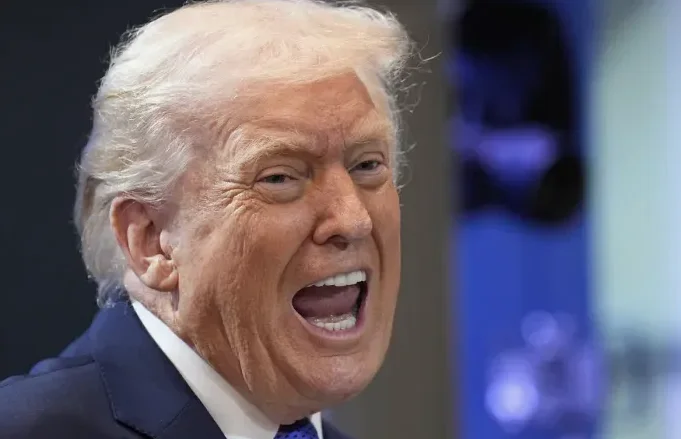
On Tuesday, a U.S. global tariff of 10 percent officially took effect, following a Supreme Court ruling that invalidated most of President Donald Trump’s reciprocal tariff policy. The new global tariff, which Trump signed and announced on Sunday, applies to all countries except for a list of exempt items, starting at 12:01 a.m. U.S. Eastern Time on Tuesday (2:01 p.m. Korea time).
Scope and Exemptions of the New Tariff
The new global tariff applies temporarily to all countries for 150 days, with an initial rate of 10 percent. Exempt from the tariff are certain critical minerals, energy and energy products, natural resources and fertilizers not produced in the United States, certain agricultural products such as beef, tomatoes, and oranges, pharmaceuticals and ingredients, certain electronic products, passenger cars, trucks, buses and their parts, and certain aerospace products. These exemptions are either inputs needed by U.S. industry, products already subject to item-specific tariffs under section 232 of the Trade Expansion Act, or products that could fuel price increases within the United States.
According to the proclamation Trump signed on Sunday, the global tariff remains in effect until 12:01 a.m. on July 24 (U.S. Eastern Time under daylight saving time). This is because section 122 of the Trade Act, the legal basis for imposing the global tariff, recognizes the validity of such tariffs for up to 150 days absent approval by Congress.
Legal Basis and Trump’s Strategy
The Supreme Court ruled that Trump had not been granted authority under the International Emergency Economic Powers Act (IEEPA) to impose and collect reciprocal tariffs (country-specific differential-rate tariffs) and ‘fentanyl tariffs’ (tariffs imposed on China, Mexico, and Canada on the grounds of insufficient cooperation in blocking the inflow of the narcotic fentanyl into the United States). In response, Trump relied on the authority set out in section 122 of the Trade Act, enacted in 1974, which grants the president the authority to impose tariffs of up to 15 percent on trading partners for up to 150 days when the United States has a ‘large and serious’ trade deficit.
Trump has stated that he plans to pursue investigations under section 301 of the Trade Act and section 232 of the Trade Expansion Act to levy additional tariffs on certain trading partners even as he imposes a universal tariff worldwide. This strategy appears aimed at preserving tariff revenues to date while preventing the abrogation or defection of agreements by key trading partners such as South Korea that have newly reached trade understandings conditioned on astronomical-scale investment in the United States.
Section 301 of the Trade Act authorizes the administration to respond to unfair, unreasonable, and discriminatory acts, policies, and practices of foreign governments that restrict or burden United States trade. Section 232 of the Trade Expansion Act grants the president authority to impose tariffs if, based on an investigation by the relevant departments, the importation of particular items is judged to threaten national security.
Implications and Next Steps
Despite the Supreme Court ruling against reciprocal tariffs, Trump, who has decided to maintain the sweeping tariff-collection line that is a signature pledge and policy of his second term, is expected to continue pushing for new investigations and potential tariffs under existing legal frameworks. However, there is a strong likelihood that the new global tariff will lapse after 150 days.
Domestic opinion in the United States on Trump’s tariff policy is largely unfavorable, and the opposition Democratic Party is also publicly stating that approval to extend the tariff’s effect beyond 150 days will not be granted. Analysts suggest that the 150-day window could lead to increased pressure on Congress to act on trade policy, potentially changing the U.S. approach to international trade relations.
On Monday, the day after releasing the proclamation on a 10 percent global tariff, Trump said via social media that he would raise the rate to 15 percent, but he did not disclose when the increase would begin. The move has raised concerns among trade partners and domestic businesses about the potential economic impact of further tariff hikes.
The new global tariff is expected to have significant implications for international trade, affecting supply chains and increasing costs for U.S. consumers and businesses. According to industry analysts, the 10 percent tariff could add up to $100 billion in additional costs annually, with potential for even higher figures if the rate is increased to 15 percent.
As the 150-day period approaches, the focus will shift to whether Congress will approve an extension or whether Trump will seek new legal avenues to maintain the tariffs. The outcome of this period could have lasting effects on U.S. trade policy and its relationships with key trading partners.





Comments
No comments yet
Be the first to share your thoughts