

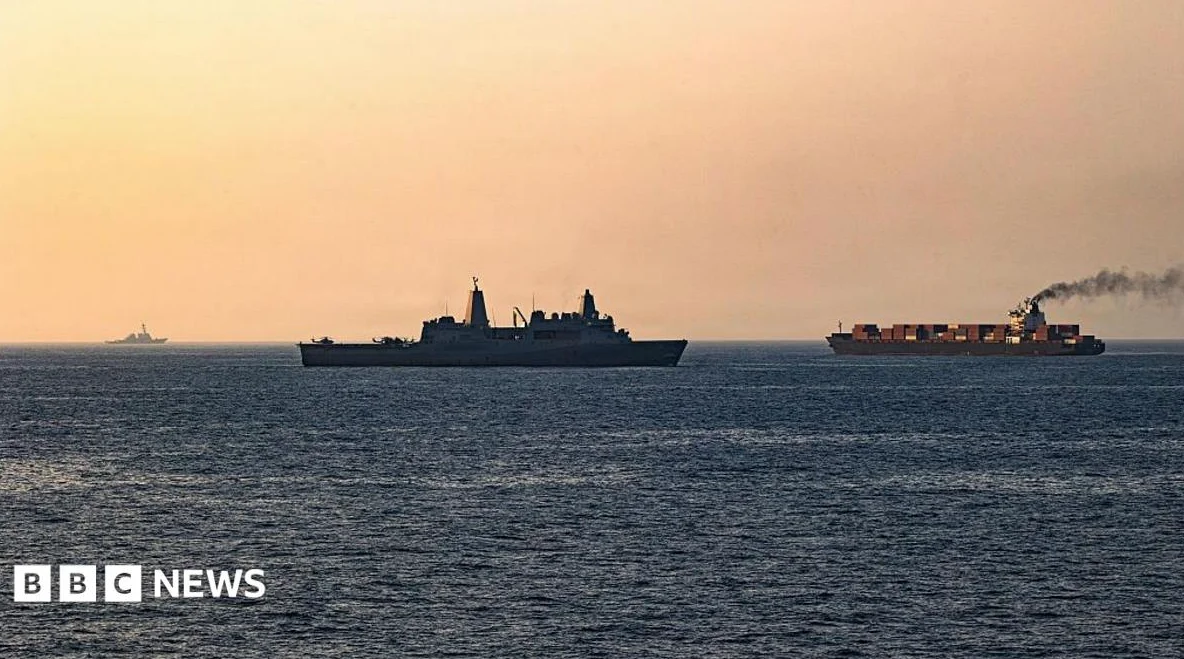
The U.S. launched a ‘heavy wave’ of strikes against Iran at 10 p.m; Wednesday, in response to Iranian missile attacks on American forces, according to U.S. Central Command. The operation targeted Islamic Major Guard Corps (IRGC) facilities and other military sites across Iran, including command centers, missile and drone facilities, coastal defense sites, and maritime capabilities.
Escalating Tensions and Regional Impact
The two-hour strike operation. Described as a ‘powerful response’ to Tuesday’s Iranian missile attack, comes after Iran targeted U.S. forces in the Gulf region with multiple ballistic missiles — all of the missiles were intercepted, according to Jordan’s armed forces, which reported that five of them were stopped by Jordanian air defenses.
This attack broke a pattern of Iran responding to U.S. actions rather than initiating strikes itself. Seth Krummrich, a retired U.S. Army colonel and security expert, noted that the move suggests Iran is willing to restart hostilities and may be moving away from diplomacy, and he warned that critical civilian infrastructure, such as airports, power grids, and desalination plants, could be targeted in future attacks.
Background and Strategic Concerns
According to a CNN global affairs analyst, Brett McGurk, the U.S. is positioning military forces across the Middle East for potential additional strikes into Iran. This would represent a major escalation compared to previous U.S. military actions, which were often time-bound and tied to specific objectives. Unlike earlier operations, this campaign lacks a clearly defined end goal.
McGurk explained that three converging issues have narrowed the space for limited action: Iran’s missile arsenal, its domestic enforcement action, and its unresolved nuclear program. He described a scenario in which Iran launched around 200 missiles toward Israeli cities on October 1, 2024. US Navy destroyers in the Mediterranean and Israeli air defenses intercepted most of them, marking the first direct state-on-state missile attack in the region in decades.
Regional and Global Reactions
Israel responded to the Iranian missile attacks by striking Iranian air defense systems, which have not yet been replenished. The U.S. has not yet confirmed whether further strikes are planned, but the current operation suggests a readiness to maintain pressure on Iran’s military and security capabilities.
United Nations Secretary-General Antonio Guterres warned on Wednesday that a prolonged conflict risks drawing in the wider region. The U.S. has not publicly stated its next steps, but military analysts suggest that the current operation is part of a broader strategy to degrade Iranian capabilities and deter future aggression.






Comments
No comments yet
Be the first to share your thoughts