

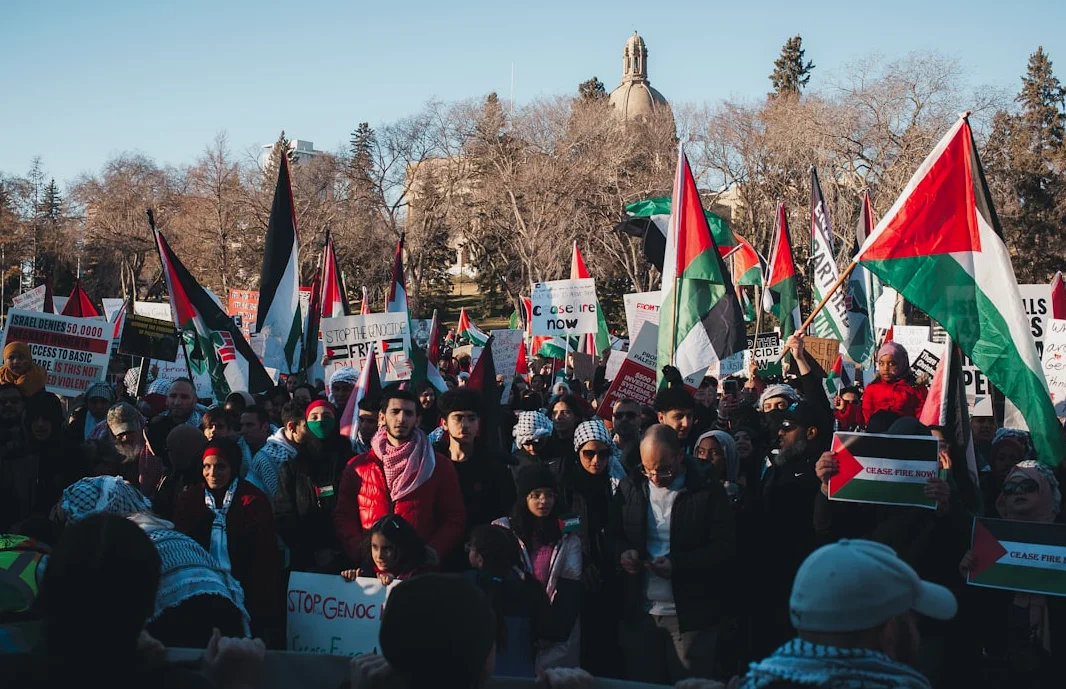
A UK pro-Palestine activist was arrested in central London weeks after being released on bail, according to multiple reports. The arrest occurred during a protest linked to the Israel-Hamas conflict. The individual. Whose identity has not been widely confirmed, was detained under the Terrorism Act for holding a sign that read “I support the Palestine Action,” according to Facebook posts and a local campaign group.
Arrest Under Terrorism Act
The arrest took place at a pro-Palestinian demonstration in central London, where activists have been increasingly vocal about the ongoing conflict in the Middle East. According to reports. The activist was charged under the UK’s Terrorism Act, a legal framework typically reserved for acts of terrorism or extremism, while this charge has raised concerns among human rights advocates and legal experts, who argue that the law is being misapplied in cases involving peaceful protest.
Facebook posts from a UK-based campaign group called “Prisoners for Palestine” stated that the activist was arrested for displaying a sign that read, “I support the Palestine Action.” The group emphasized that the sign was not inciting violence and was a form of peaceful expression. “This is a clear example of how the UK government is using the Terrorism Act to suppress legitimate dissent,” the group wrote in a post.
According to the Facebook post. The activist had been released on bail just weeks prior. This arrest has sparked debates about the use of anti-terrorism laws to target pro-Palestine activists in the UK, with some arguing that the charges are disproportionate and politically motivated.
Local Reactions and Legal Concerns
Local activists and legal experts have expressed concern over the use of the Terrorism Act in this case. A spokesperson for a London-based human rights organization told the Daily Mail that the arrest sends a chilling message to those participating in peaceful protests. “It’s alarming that the UK government is using anti-terrorism laws to silence voices that are advocating for Palestinian rights,” the spokesperson said.
The Daily Mail reported that the activist was “punched by police” during the arrest and accused of biting an officer. This account aligns with reports from local witnesses who described a tense and aggressive interaction between protesters and law enforcement. “The police used excessive force. And the activist was clearly not a threat to public safety,” one witness told the newspaper.
In Spain. The Daily Mail article highlighted the broader international context of the Israel-Hamas conflict, noting that similar protests have been occurring across Europe. The paper also reported that the activist’s arrest has drawn attention from pro-Palestine groups in other countries, who have called for solidarity and support.
Broader Political and Social Implications
The arrest has intensified discussions about the UK’s approach to protests and national security — some legal experts argue that the use of the Terrorism Act in this case could set a dangerous precedent, potentially criminalizing peaceful activism. “If this becomes a pattern. It could have a chilling effect on free speech and the right to protest,” said a legal analyst at a London-based think tank.
According to the Al Jazeera report, the arrest has also drawn attention from international human rights organizations, which have called on the UK government to review its use of anti-terrorism laws in cases involving peaceful protest. “This case highlights the need for greater transparency and accountability in how these laws are applied,” a spokesperson for a human rights group said.
The UK government has not yet commented on the specific charges in this case, but officials have previously emphasized the importance of balancing national security with the right to protest. A spokesperson for the Home Office stated that the government is committed to protecting the rights of all citizens while ensuring public safety.
What’s Next for the Activist and Pro-Palestine Movement
The activist is expected to appear in court in the coming weeks, where the charges under the Terrorism Act will be formally presented. Legal experts suggest that the case could set a precedent for how similar protests are handled in the UK. “This is a test case for the application of anti-terrorism laws in the context of peaceful protest,” said a legal analyst.
Protests are expected to continue, with activists demanding an end to the use of anti-terrorism laws against peaceful demonstrators. The arrest has also sparked renewed interest in the pro-Palestine movement across the UK and beyond. “We will not be silenced,” said a spokesperson for the “Prisoners for Palestine” campaign group.
Meanwhile, the international community is watching closely. The arrest has drawn attention from pro-Palestine groups in other countries, who have called for solidarity and support. The case is likely to be referenced in future discussions about human rights, free speech, and the rule of law in the UK and beyond.
The UK government faces growing pressure to address concerns about the use of anti-terrorism laws in cases involving peaceful protest. With the case now in the legal system, the outcome could have far-reaching implications for how similar protests are handled in the future.






Comments
No comments yet
Be the first to share your thoughts