

 BBC
BBC 
August was a firm month for Ukraine, and Russian aerial attacks increased significantly, launching thousands of drones, while Kyiv was intensely bombarded, as were the southern cities of Mykolaiv and Odesa. Amid the destruction and loss of life, Odesa reported damage to six Unesco-protected sites, including the salmon-pink 19th Century Alexandru Sturdza House. It raised again the question of why it is so hard to hold actors accountable for the destruction of buildings and objects with real cultural significance.
Legal Challenges in Seeking Accountability
In the last month alone, Ukraine’s Ministry of Culture reported that 148 cultural heritage sites were recorded as damaged or destroyed, including in Odesa. Several Ukrainian activist groups have tried to get accountability by lodging complaints with the International Criminal Court (ICC) against Russia over cultural destruction and looting, but no indictments have been issued.
Bijan Rouhani, a senior researcher at the Endangered Archaeology in the Middle East and North Africa project, says that the legal framework may be strong on paper but in practice it almost inevitably falls short. “No state actor has ever been tried for this offence. The obstacle is no longer evidence. We have satellite imagery, remote sensing and monitoring teams. The obstacle is jurisdiction and political will.”
Global Context of Cultural Loss
Looking at the cauldron of conflicts convulsing the world, the question is ever more pressing as to whether effective action is possible to stop the damage being done or ensure accountability when it does. The conflict in Ukraine is just one of the panoply of wars in recent years that have revealed once again the disastrous impact of conflict on cultural heritage.
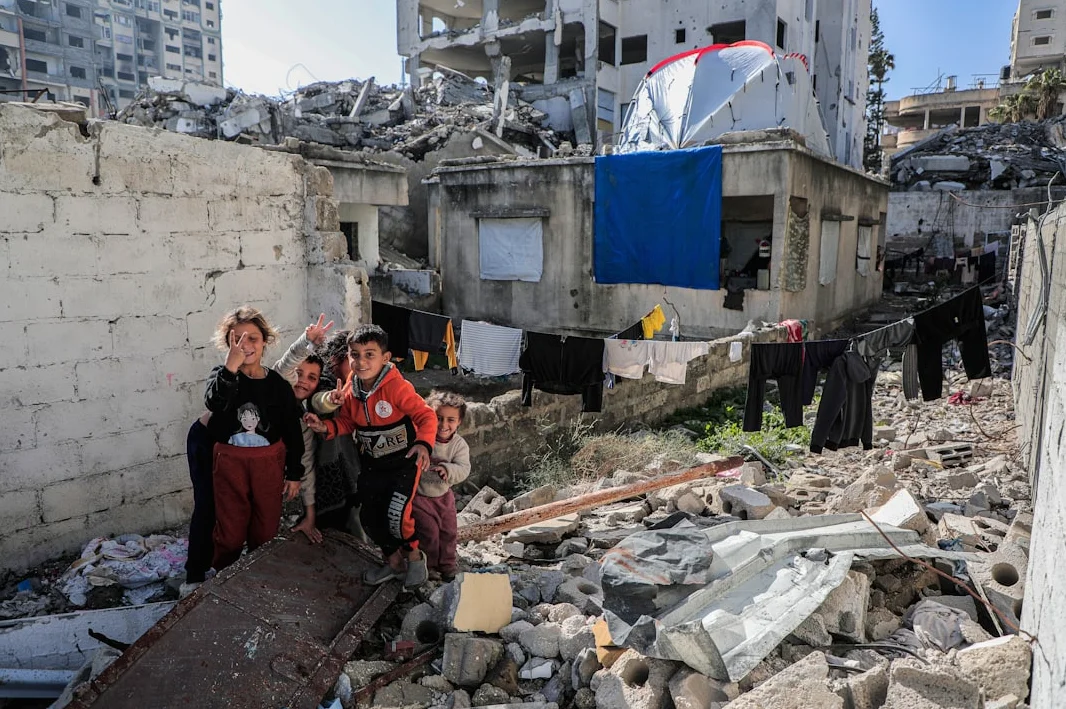
Tareq Abu Dayyeh sells craftwork, souvenirs and antiquities in Gaza; his work reflects the broader issue of cultural treasures being destroyed in conflict zones — the destruction of historical and cultural sites not only erases the past but also disrupts the cultural identity and economy of affected communities.
Parallel Developments in the U.S.
In a separate development, the U.S. Department of Justice (DoJ) announced charges against five men allegedly connected to the Russian Intelligence Services (RIS). The men are accused of paying, or trying to pay, people in the U.S. and overseas to target those “aligned, or perceived to be aligned, with Ukraine.”
It is not clear if the five accused are in the United States, or in a different location; Washington has charged all five men with participating in a conspiracy to finance terrorism, which carries a maximum 20-year prison sentence.
Three of the defendants are “high-ranking members of the RIS network,” the DoJ said, and Among them are Russian father and son Yuri Khrameev, 63, and Kirill Khrameev, 27. Khrameev senior was a colonel in the Russian intelligence services and his son is an officer in the Federal Security Service of Russia (FSB).
The third high-ranking suspect is Oemis Romagoza Durruthy, a 35-year-old Cuban national who the U.S. describe as “an influential member of the Cuban diaspora living in Russia who has coordinated attacks for the RIS network.” Yaidel Delgado Suarez, 35, and Angel Eduardo Castro, 22, are the other two defendants. The pair are accused of recruiting or attempting to recruit U.S.-based individuals to “surveil and attempt to murder a prominent U.S.-based Russian dissident.”
The FBI’s James Barnacle said the group “conspired to intimidate, threaten, or murder people on U.S. soil and around the world.” One of the incidents is as recent as this summer.




Comments
No comments yet
Be the first to share your thoughts