

 BBC
BBC 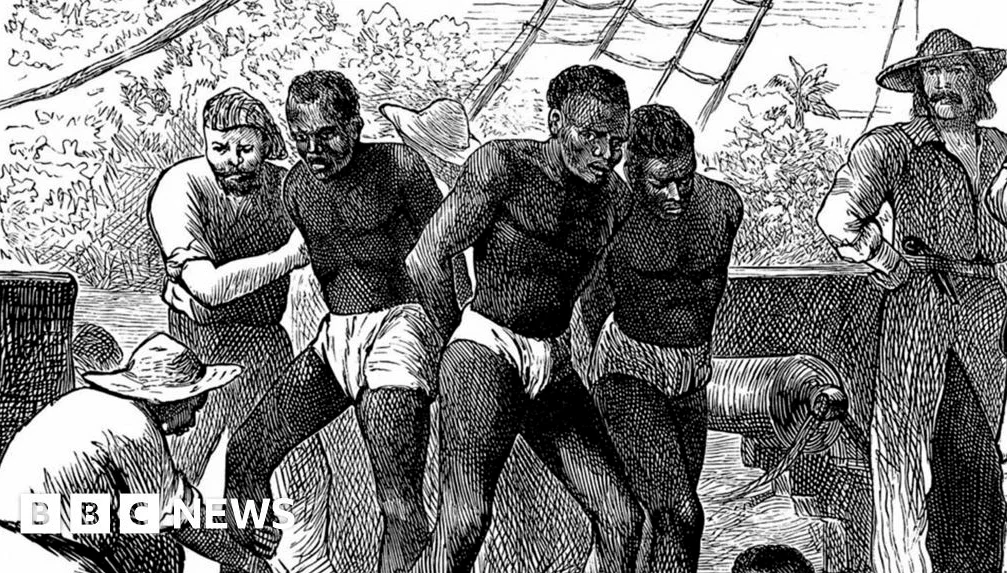
The United Nations General Assembly has voted to recognise the slave trade as ‘the gravest crime against humanity’, according to the BBC, in a resolution backed by Ghana and supported by the African Union. The resolution. Which passed with 123 votes in favour and three against—namely the United States, Israel, and Argentina—calls for the designation of the transatlantic slave trade as a crime against humanity and urges member states to consider apologising and contributing to a reparations fund.
Historical Context and Global Impact
The resolution. Proposed by Ghana. Highlights the lasting consequences of the slave trade, which has left a legacy of racial inequalities and underdevelopment affecting Africans and people of African descent globally. Between 1500 and 1800. It is estimated that 12 to 15 million people were captured in Africa and taken to the Americas, where they were forced into slavery; Over two million of those individuals are believed to have died during the journey.
Ghana, a country historically central to the slave trade, has long advocated for reparations and the return of cultural artefacts stolen during the colonial era — Forts along its coast, once used to hold enslaved Africans under inhuman conditions, remain standing as stark reminders of the trade’s brutality. The resolution explicitly calls for the return of these looted artefacts, which represent the heritage, culture, and spiritual significance of the African people.
Samuel Okudzeto Ablakwa. Ghana’s foreign minister, emphasized that the campaign for reparations is not about personal gain but justice for the victims. ‘We want justice for the victims and causes to be supported, educational and endowment funds, skills training funds,’ he told the BBC’s Newsday programme. The resolution does not specify an amount of money for reparations, but it aims to push for broader support for initiatives that address the long-term effects of the slave trade.
Reparations and Reparatory Justice
The push for reparations has gained momentum in recent years, with ‘reparatory justice’ serving as the official theme for the African Union in 2025. Commonwealth leaders have also called for dialogue on the matter, reflecting growing international attention to the issue. The resolution states that the consequences of slavery persist in the form of racial inequalities and underdevelopment, which ‘affect Africans and people of African descent in all parts of the world.’
Ablakwa further explained that the resolution does not seek to rank one nation’s pain above another but to document a historical fact. ‘We are not ranking our pain above anyone else’s,’ he said. ‘We are simply documenting a historical fact.’
Ghana’s President John Dramani Mahama described the resolution as ‘historic’ and ‘a safeguard against forgetting’ the legacy of the transatlantic slave trade. He also criticized the Trump administration for ‘normalising the erasure of black history’, pointing to policies such as the restoration of Confederate statues and the attempt to dismantle a slavery exhibit in Philadelphia.
‘These policies are becoming a template for other governments as well as some private institutions,’ Mahama said. The resolution reveals the ongoing debate over how to address historical injustices and the responsibilities of modern states in acknowledging and redressing past wrongs.
International Reactions and Next Steps
Fifty-two countries abstained from the vote, including the United Kingdom and European Union member states. The UK has long opposed paying reparations, arguing that modern institutions cannot be held responsible for past wrongs. The resolution does not compel any nation to pay reparations but urges member states to consider apologising and contributing to a reparations fund.
The resolution has sparked discussions among international institutions and civil society groups about the feasibility of reparations and the role of the UN in addressing historical injustices. While the resolution is non-binding, it is expected to influence future diplomatic and legal discussions on the matter.
Experts suggest that the resolution may serve as a catalyst for further dialogue and potential future actions. The African Union and the Caribbean Community, which supported the resolution, have already called for continued advocacy on the issue. The resolution may also be used as a reference in international courts and legal proceedings concerning historical injustices.
As the debate continues, the resolution marks a significant step in the global recognition of the transatlantic slave trade as a crime against humanity. It is seen by many as a symbolic but important move toward acknowledging the enduring impact of slavery and working toward justice for its victims.





Comments
No comments yet
Be the first to share your thoughts