

 WH News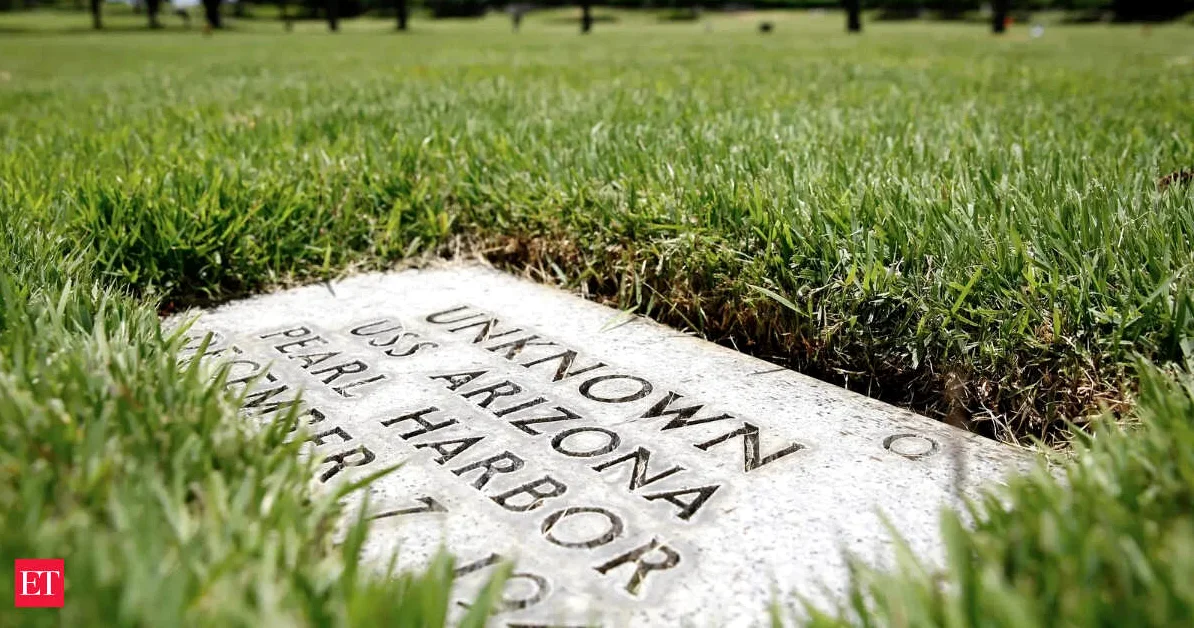
On a quiet morning in November, the National Memorial Cemetery of the Pacific in Honolulu will become the site of a solemn operation. The U.S. military plans to begin the disinterment of 88 remains of sailors and Marines killed in the bombing of the USS Arizona during the Japanese attack on Pearl Harbor. These individuals were buried as unknowns after the attack, and now, with advances in DNA technology, the Defense POW/MIA Accounting Agency (DPAA) aims to give them names, and in doing so, restore a measure of dignity to their memory.
The Legacy of Pearl Harbor
The Dec. 7, 1941, attack on Pearl Harbor remains one of the most defining moments in American history. The Japanese aerial assault destroyed or damaged nearly 20 ships, including the USS Arizona, which sank in just nine minutes after being struck by a 1,760-pound bomb. The Arizona’s loss accounted for nearly half of the 2,403 American military personnel killed that day. Of the 1,177 who perished on the Arizona, more than 900 remain entombed within the sunken hulk of the battleship, resting in the waters of Joint Base Pearl Harbor-Hickam.
The remains of those who were recovered from the Arizona were initially buried in the National Memorial Cemetery of the Pacific, but many of these remains could not be identified at the time. Over the years, the DPAA has worked to identify these unknowns using traditional methods such as dog tags, personal effects, and historical records. However, for many, these efforts were inconclusive.
The Rise of DNA Technology
Advances in DNA technology have transformed the field of identification for the military. The DPAA has been using DNA analysis for over a decade to identify remains from other Pearl Harbor ships, including the USS Oklahoma and USS West Virginia (BB-48). These efforts have yielded hundreds of identifications, bringing closure to families who had long waited for answers.
“The identification of these remains is not just about names on a list — it’s about giving families the closure they have been seeking for decades,” said Kelly McKeague, director of the DPAA. “This is a testament to the power of technology and the enduring commitment of our military to honor those who served and sacrificed.”
The process will involve the careful removal of eight sets of remains every two to three weeks, with DNA samples being compared to those collected from family members of the missing. For families like that of Robert Edwin Kline, a 22-year-old gunner’s mate second class who died on the Arizona, this represents a long-awaited opportunity to finally lay their loved one to rest with a name.
The Human Toll and the Emotional Impact
Kevin Kline, a real estate agent from northern Virginia, learned only recently that his great-uncle’s remains were among those buried as unknowns in the Honolulu cemetery. For years, he believed they were still on the Arizona. “It’s been a mix of emotions — hope and uncertainty,” Kline said. “I don’t have high expectations, but I still believe that this could be the answer we’ve been waiting for.”
For many families, the wait has been decades long. The DPAA has identified hundreds of crew members from the USS Oklahoma, USS West Virginia, and other ships, using DNA analysis to match remains with family DNA samples. These identifications have not only brought closure to families but also highlighted the personal stories behind the numbers — stories of young men who died defending their country, many of whom were never given the recognition they deserved.
The DPAA’s work is not without its challenges. The process is delicate and requires the cooperation of families, the collection of DNA samples, and the use of advanced forensic techniques. It is also a deeply emotional process, as each identification brings with it the weight of history and the responsibility of honoring those who gave their lives.
A Legacy of Service and Sacrifice
The USS West Virginia (BB-48) was one of the most heavily damaged ships during the attack. Unlike the Arizona, which sank immediately, the West Virginia was capsized and later righted, allowing for the recovery of many of its crew members. However, the ship’s remains were later raised and preserved as a memorial, a stark reminder of the devastation of that day.
The efforts to identify the remains of the USS Arizona’s crew are part of a broader effort to honor the service and sacrifice of all those who perished in the attack. The DPAA’s work has brought attention to the human cost of war and the enduring need to remember those who were lost.
“The DPAA is committed to ensuring that no one is forgotten,” McKeague said. “This mission is about more than just identifying remains — it’s about honoring the memory of those who served and ensuring that their families can finally lay them to rest with a name.”
The Future of Identification Efforts
The DPAA’s work is ongoing, and the identification of these 88 remains is just one part of a larger effort to bring closure to families across the country. As technology continues to advance, the agency is hopeful that more remains can be identified in the coming years.
For the families of those who died in Pearl Harbor, the identification of remains is a deeply personal journey. It is a chance to finally say goodbye, to give a name to the unknown, and to honor the memory of those who gave their lives in service to their country.
The process of identifying the remains of those who died in Pearl Harbor is a testament to the enduring power of technology, the resilience of families, and the unwavering commitment of the military to honor those who served and sacrificed. As the DPAA continues its work, the legacy of Pearl Harbor will remain a powerful reminder of the cost of war and the need to remember those who paid the ultimate price.




Comments
No comments yet
Be the first to share your thoughts