

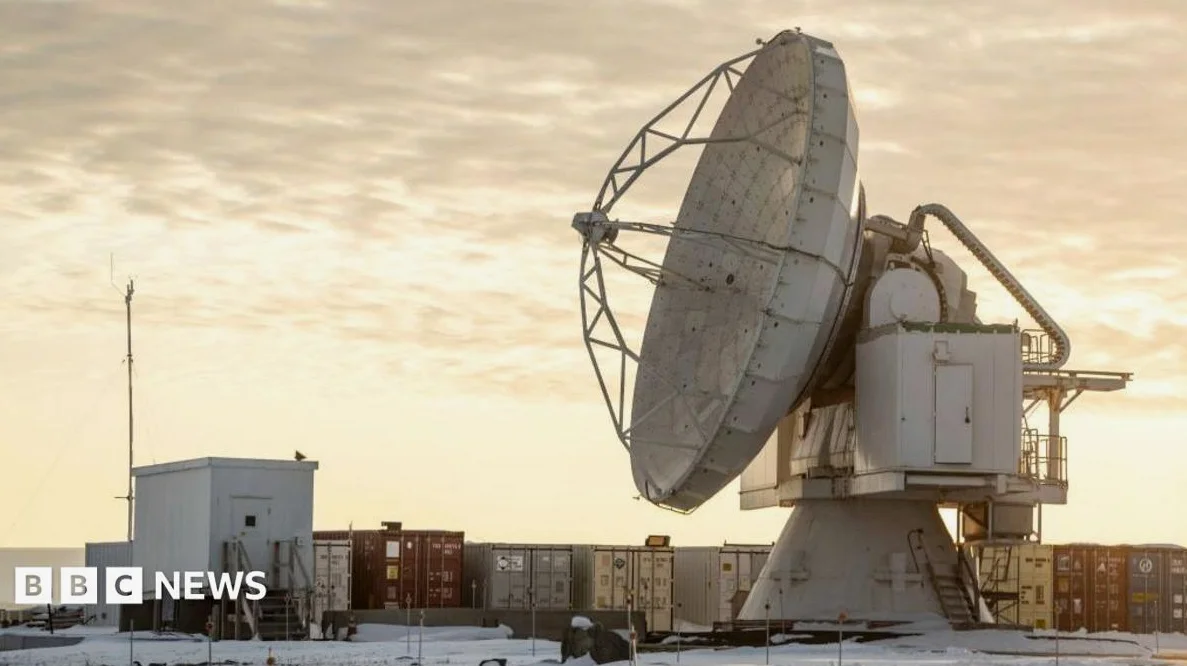
Secretary of the Air Force Troy Meink announced Monday that the Space Force has deployed weapons into space to combat adversary threats; this is the first time a Pentagon official has publicly confirmed the existence of U.S. space-based weapons. Meink made the announcement during his keynote speech at AFA’s annual Air, Space and Cyber conference.
Details of the U.S. Space Weapons
Meink did not specify the type or number of space control weapons deployed, but the Space Force’s warfighting framework outlines its interest in both kinetic and non-kinetic offensive weapons. These weapons could perform operations such as orbital strike and space link interdiction. Orbital strike refers to actions that can destroy, disrupt, or degrade adversary space platforms in the space domain, either through kinetic or non-kinetic effects.
Global Hypersonic Missiles in Conflict
While the U.S. announcement marks a new chapter in space-based defense, Russia and Iran have recently deployed hypersonic missiles in active conflicts. Russia used the Kh-47M2 Kinzhal hypersonic missile, known as “the Dagger” — to destroy an ammunition depot in western Ukraine. The missile can travel at Mach 5 or Mach 10, carry a conventional 1000-kilogram bomb or a nuclear warhead, and has a range of up to 2000 kilometers.
Separately, Iran reportedly used its Fattah-2 hypersonic missile for the first time in combat against U.S. forces in the Middle East. The missile can travel at speeds up to Mach 15, has a range of approximately 1500 kilometers, and carries a 200 kg explosive payload. Unlike traditional ballistic missiles, the Fattah-2 uses a hypersonic glide vehicle that allows it to maneuver unpredictably during flight.
U.S. Military Leadership and Modernization
Amid these developments, the U.S. Air Force is undergoing leadership changes. President Donald Trump has nominated Gen. John Lamontagne to serve as the next vice chief of staff of the Air Force. Lamontagne currently commands the Air Mobility Command and has held several key roles, including deputy commander of U.S. Air Forces in Europe-Air Forces Africa and chief of staff for U.S. European Command.
His nomination comes as the Air Force faces an inflection point, balancing the need to sustain its current fleet with the demand to modernize its aircraft and weapon systems. If confirmed, Lamontagne will work under Air Force Chief of Staff Gen. Kenneth Wilsbach to lead the service through its transformation, which includes major programs like the sixth-generation F-47 fighter jet and structural reforms proposed by Secretary of Defense Pete Hegseth.





Comments
No comments yet
Be the first to share your thoughts