

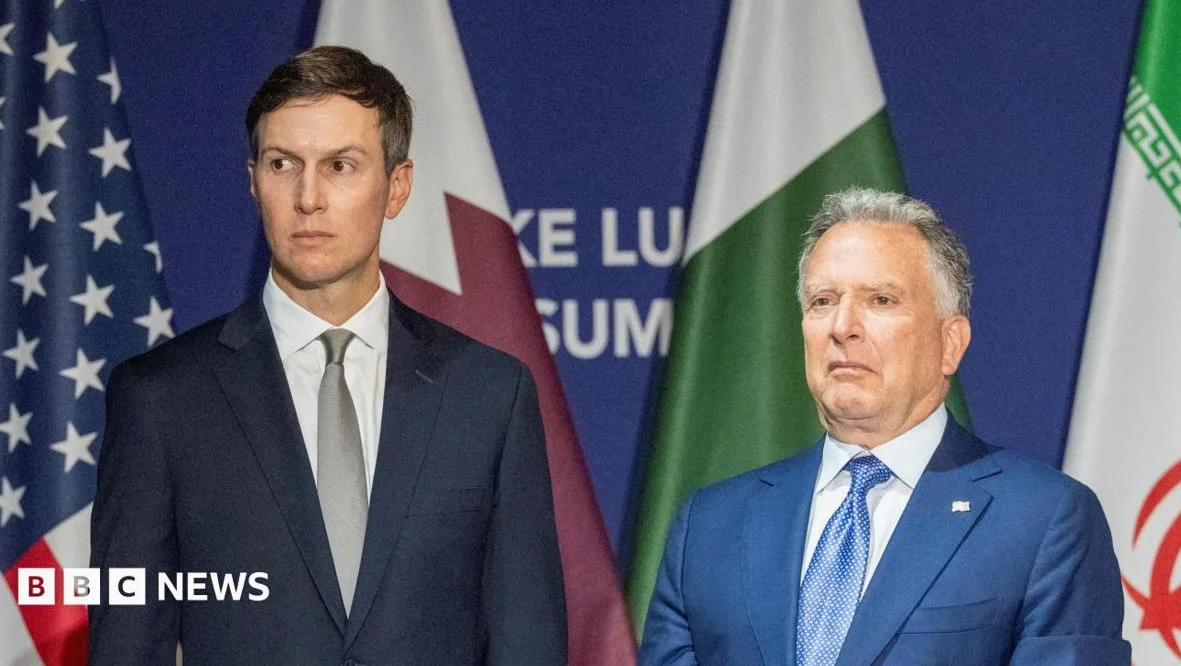
U.S. envoy Steve Witkoff and President Donald Trump’s son-in-law Jared Kushner are in Doha to meet with mediators but will not hold direct talks with Iranian officials, according to Qatar’s Foreign Ministry. The visit. Announced by Qatar’s Foreign Ministry spokesperson Majed Al-Ansari during a media briefing on Tuesday, focuses on regional issues including ongoing negotiations with Iran and the conflict in Lebanon.
During the trip. Witkoff and Kushner are also set to meet with Qatari Prime Minister Sheikh Mohammed bin Abdulrahman bin Jassim Al Thani, according to a senior administration official. Iran’s Foreign Ministry spokesperson Esmaeil Baghaei confirmed that an Iranian official would be in Doha but only to engage in talks with mediators regarding the interim peace agreement and the potential release of frozen Iranian assets.
Recent Violence Casts Doubt on Negotiations
Recent escalations in the Strait of Hormuz have raised concerns about the stability of the interim agreement; the U.S. and Iran exchanged fire after a Singaporean-flagged cargo ship was struck on Thursday, according to reports. Trump had initially claimed Iran had “requested” a meeting in Doha the following day, but Iranian officials quickly rejected the proposal.
Trump and Iranian officials had signed a Memorandum of Understanding on June 17, agreeing to an extended 60-day cease-fire to allow time for further negotiations; that agreement is set to expire around mid-August, yet there appears to have been little progress on technical talks.
Focus on Strait of Hormuz, Not Nuclear Issues
The Strait of Hormuz has become the central issue in negotiations between the U.S. and Iran, according to Iranian Deputy Foreign Minister Kazem Gharibabadi; he stated that Iran does not plan to hold “technical talks” in Qatar this week. The White House spokeswoman Karoline Leavitt confirmed to Fox News that Witkoff and Kushner will travel to Doha for high-level meetings, but she did not specify if these would include political encounters with mediators.
Iran has attacked two ships attempting to transit the strait without its permission and demands control over the crossing, interpreting Article 5 of the memorandum as granting it authority to organize traffic. This issue. Rather than Iran’s nuclear program, has become the focal point of the U.S.-Iran standoff.
Peace Agreement and Frozen Assets
Iranian officials have also discussed the release of frozen assets; a source reported that half of Iran’s frozen funds in Qatar may be released, though details remain unclear. The recent attacks led to U.S. retaliatory bombings and a sharp decline in maritime traffic through the Strait of Hormuz.
According to the White House. The U.S. remains committed to finding a resolution through the mediators in Doha, despite the lack of direct talks with Iran. The administration emphasized that the technical discussions and high-level meetings are ongoing and that progress is being made toward a broader agreement.

Comments
No comments yet
Be the first to share your thoughts