

 BBC
BBC 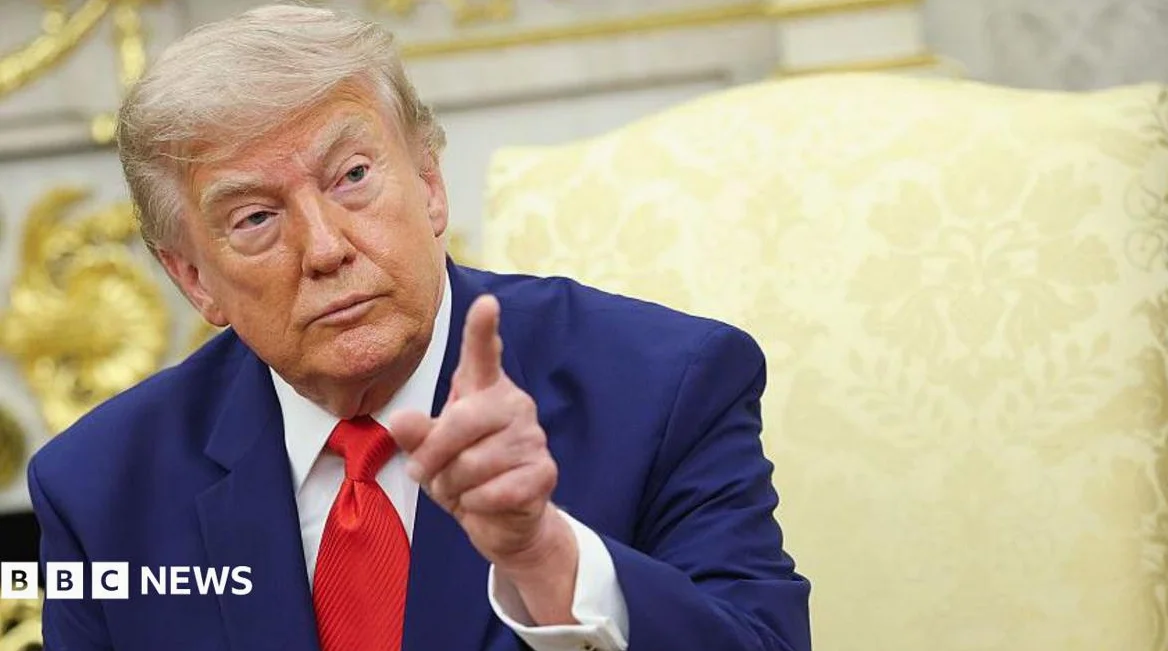
The US has imposed new tariffs on 60 trading partners, accounting for the vast majority of its imports, over claims they failed to properly stop forced labour. The duties. Ranging from 10% to 12.5%. Target key economic partners – including the UK, China, the European Union, Canada, Japan and India — they came into effect on Friday, as a temporary 10% tax on foreign goods introduced earlier this year expired.
Latest Escalation in Global Trade Tensions
The move is the latest escalation in the global trade war reignited by US President Donald Trump when he returned to office last year, while the US Supreme Court ruled earlier this year that many of the tariffs imposed globally under emergency powers were illegally enacted. The president has since sought other ways to pursue his flagship trade policy.
Last month. The White House proposed 10%-12.5% duties on imports from dozens of countries over concerns they were not doing enough to tackle forced labour, but On Thursday, US Trade Representative Jamieson Greer, acting under Trump’s direction, said those duties would now take effect. “Today’s action will begin to correct what is both a human rights abuse and distortive trade practice to improve the welfare of workers everywhere,” his statement said.
Legal Framework and Tariff Structure
Greer invoked Section 301 of the Trade Act of 1974, which governs US trade enforcement of practices that burden or restrict American commerce. Earlier this week. The Trump administration invoked a different statute, Section 338 of the Tariff Act of 1930, to impose 50% tariffs on products from Canada.
On Thursday, the Office of the US Trade Representative said the latest tariffs were being imposed on partners “for their failure to impose and effectively enforce a prohibition on the importation of goods produced with forced labour.” The new duties apply to the top 60 US trade partners covering 99.4% of US imports, it added.
The office said Trump had made adoption of a ban on imports produced with forced labour a “critical” part of reciprocal trade agreements with other nations. It said so far 10 trading partners had agreed to enact such a ban in these agreements, and other countries had implemented bans in response to its investigations in recent weeks.
Trading partners that have “made commitments to adopt, and effectively enforce” bans on forced labour imports will be subject to a 10% tariff, while those that have not will have the higher 12.5% rate, the office added. Greer said he was “encouraged by the trading partners who have moved quickly to adopt forced labour import prohibitions, and look[ed] forward to ensuring their effective enforcement.
Analysis and Reactions
The new levies show the Trump administration is “determined” to push on with its tariff strategy, said trade policy expert Deborah Elms from the Hinrich Foundation. It is unlikely countries hit with tariffs will be able to prove that they have sufficient measures to prevent forced labour imports, she told the BBC.
The levies are likely to raise costs for businesses and consumers, although its impact could be softened due to the number of exempted goods, said the Asia Society Policy Institute’s economic security expert Wendy Cutler. Most trading partners will be disappointed with the new levies and are likely to focus on ways to “reduce their dependence on the US market” by making deals with other countries, Cutler added.
Some countries have responded to the announcement, including Brazil. Its government called the move “unjustified” and “arbitrary.” Washington has chosen to “manipulate an issue of great importance” to workers’ rights to support its protectionist trade policy, Brazil’s government said in a statement. Brazil, which has been hit with a new 12.5% US tariff, added that it will respond with measures under its “reciprocity law” and consider other trading partners.
Earlier this month. The US imposed a separate 25% tariff on furniture, machinery, sugar and other imports from Brazil, while keeping exemptions of some goods, including beef and coffee. The Japanese government said on Friday that it “regrets” the new US tariffs, saying that its trade is conducted in line with international rules. Australian Trade Minister Don Farrell said the levies were “completely unjustified” and that he will continue to press Washington to lift all duties on his country’s goods.
China has previously said it opposed any form of unilateral tariff, and denied allegations of forced labour. “There is no so-called forced labour in China, and we oppose using this as an excuse for political manipulation,” Chinese foreign ministry spokesperson Mao Ning said. But several international human rights groups have said forced labour does exist in China, particularly among Muslim ethnic minorities in Xinjiang.
Trump has long argued that tariffs protect American workers and boost the US economy. In April 2025, Trump imposed tariffs of up to 50% on global trading partners on what he called “Liberation Day,” aiming to address what he saw as unfair treatment of the US. In February, the US Supreme Court struck down those tariffs and said the president had exceeded his authority, prompting tens of billions of dollars in refunds.
But the White House has since looked at alternative ways to impose import duties, including a sweeping 10% levy as part of a temporary solution that expired on Friday. Washington has also imposed other tariffs on countries like Brazil and Canada. The US and China have also been embroiled in a tit-for-tat tariffs war, which is currently on hold.
Trump has used tariffs to press countries, such as Mexico, on non-trade issues. The administration could be set to impose further tariffs as it is currently investigating 16 countries – accounting for the vast majority of US imports – over claims of manufacturing overcapacity.

Comments
No comments yet
Be the first to share your thoughts