

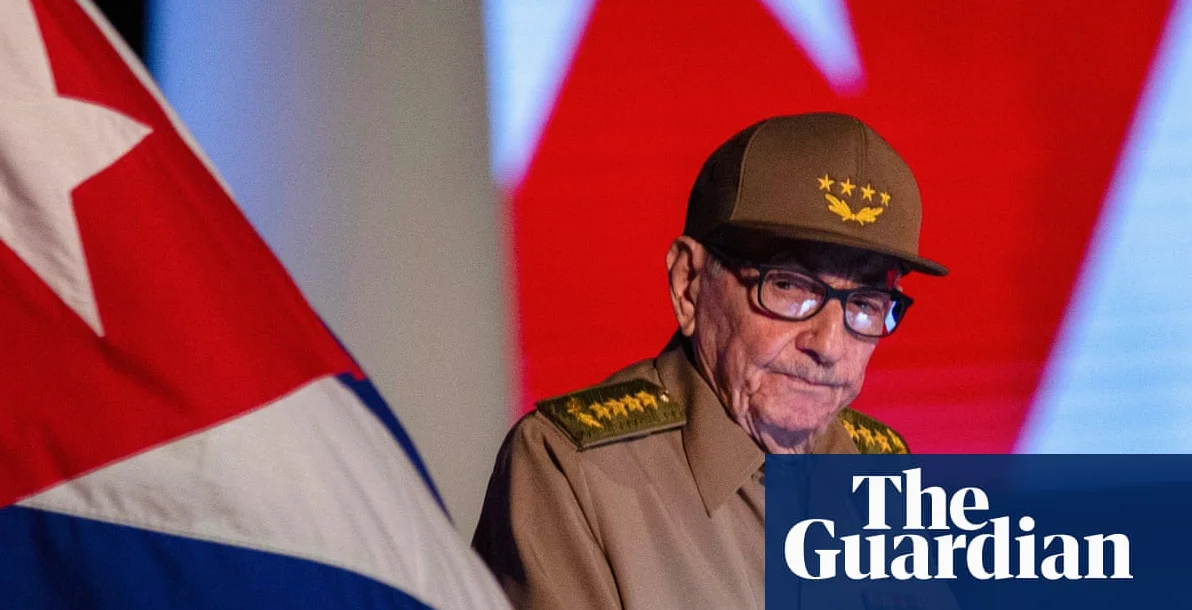
The U.S. Department of Justice has returned and unsealed a grand jury indictment against former Cuban leader Raúl Castro, now 94, charging him with seven counts, including conspiracy to kill U.S. nationals, destruction of aircraft. Murder for each of the four passengers aboard the planes operated by the Miami-based organization Brothers to the Rescue in 1996, according to the Justice Department. The indictment was returned on April 23 and unsealed on May 16, as acting Attorney General Todd Blanche announced in a press conference in Miami.
Charges and Context
Castro is accused of being responsible for the Cuban government’s decision to shoot down the two civilian planes, which were conducting humanitarian flights to search for Cuban migrants in distress. The incident occurred on February 25. 1996, when Cuban fighter jets fired on the aircraft, killing four American citizens, but the U.S. indictment marks a significant escalation in the Trump administration’s pressure campaign against the Cuban government.
According to the Justice Department. Brothers to the Rescue operated humanitarian missions in the Florida Straits, searching for Cuban migrants who had attempted to flee the country by sea. The planes were not armed. And the organization had no ties to political or militant groups, per the indictment — the U.S. has long maintained that the shootdown was a direct attack on American citizens and a violation of international law.
International and Political Reactions
The potential indictment was first reported by CBS News and later confirmed by U.S. officials. The move comes amid heightened tensions between the U.S. and Cuba, particularly following President Donald Trump’s order in January 2020 to cut diplomatic ties with the Cuban government. The Trump administration has also imposed an oil blockade on Cuba, worsening the island’s energy crisis and pushing for political reforms.
CIA Director John Ratcliffe led a delegation to Havana on May 14 to deliver a message from President Trump to Cuban officials, including Raúl Castro’s grandson, Raúl “Raulito” Guillermo Rodriguez Castro. This occurred hours before the indictment was made public, highlighting the coordinated diplomatic and legal pressure being applied by the U.S. government.
Historical and Legal Implications
The 1996 incident remains one of the most politically charged episodes in U.S.-Cuba relations, and some Republican lawmakers have long pushed for criminal accountability in the case, and the indictment represents a new chapter in the U.S. pursuit of justice. Acting Attorney General Blanche emphasized that this is the first time in nearly 70 years that senior Cuban leadership has been charged in the U.S. for violence against Americans.
Blanche stated. “The United States government has not forgotten these innocent men who were shot out of the sky.” He added that President Trump is committed to the principle that if Americans are killed abroad, the U.S. will pursue accountability regardless of time or status. However, it is unclear whether Castro will face trial in a U.S. court, as he is a foreign leader and the legal challenges of extraditing or prosecuting him are complex.
The indictment is part of a broader strategy by the Trump administration to pressure the Cuban government, including a “snatch-and-grab” operation on Venezuela’s former president Nicolás Maduro and the imposition of economic sanctions. The administration has made clear that Cuba is a key target in its efforts to promote political change in Latin America.




Comments
No comments yet
Be the first to share your thoughts