

 BBC
BBC 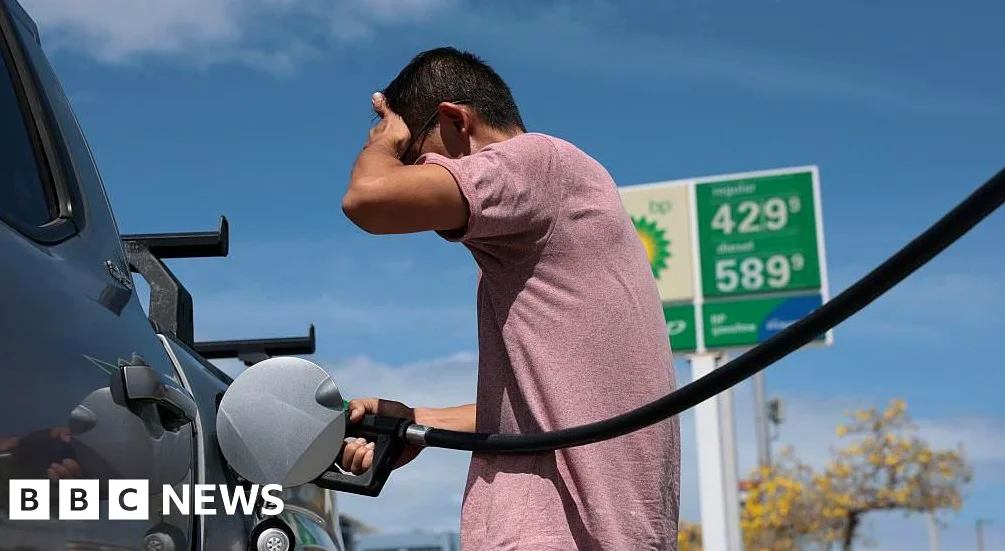
US inflation jumped to 3.8% in April, the highest rate since May 2023, as the war in Iran pushed up energy prices and affected consumers, according to the Bureau of Labor Statistics (BLS).
Energy Costs Drive Most of the Increase
Almost half of the inflation rise was attributed to surging energy costs, while housing and food costs also contributed. The BLS reported that the US-Israel war in Iran and the resulting closure of the Strait of Hormuz shipping lane led to a spike in oil prices, which in turn caused a surge in the price of gasoline in the US.
The national average price for a gallon of unleaded gasoline reached $4.50 in April, the highest level since July 2022, according to the AAA motoring group. Gasoline prices had risen by 28.4% since a year earlier, making the cost at the pump increasingly noticeable to consumers.
Impact on the Federal Reserve and Interest Rates
The rise in inflation from 3.3% in March to 3.8% in April makes it increasingly unlikely that the Federal Reserve will cut interest rates this year. Isaac Stell. An investment manager at the Wealth Club, said the inflation increase even left possible interest rate hikes ‘firmly on the table.’.
With the current chair of the Federal Reserve, Jerome Powell, set to be replaced by Kevin Warsh, Stell noted that the incoming chair would have ‘little room for manoeuvre’ and may be forced to take a more conservative approach. Warsh, a Trump appointee, has been expected to push for rate cuts, but rising inflation could make that more difficult.
Trump had previously clashed with Powell over his reluctance to cut interest rates — the president had hoped that lower rates would stimulate the US economy. However, with the current inflation rate, the Fed faces the challenge of maintaining its target inflation rate of 2%.
Broader Economic and Political Implications
The closure of the Strait of Hormuz also caused a spike in jet fuel prices, with US airlines passing these costs to customers — the average airfare rose by 20.7% in April, according to recent data. Essential costs. Including food prices. Also increased by 3.8% for the year, while energy services, such as electricity and utilities, rose by 5.4%.
April’s inflation data marked the first time in three years that paychecks no longer grew faster than prices; While prices rose by 3.8%, average paychecks increased by only 3.6%.
The US stock market reacted to the news, with the S&P 500 falling 0.6% and the Dow Jones Industrial Average dropping 0.7% on the day of the report. A recent survey from the University of Michigan found that consumer sentiment dropped in May compared to the same period the previous year, with similar levels of concern seen during the peak inflation periods of 2022.
The effects of the war are not limited to the US. Countries such as Australia. Canada, and South Korea have also reported rapidly rising inflation, while the UK faces a potential cost of living crisis, according to a new PwC survey. Asia’s manufacturing sector has already shown signs of strain and increasing costs.






Comments
No comments yet
Be the first to share your thoughts