

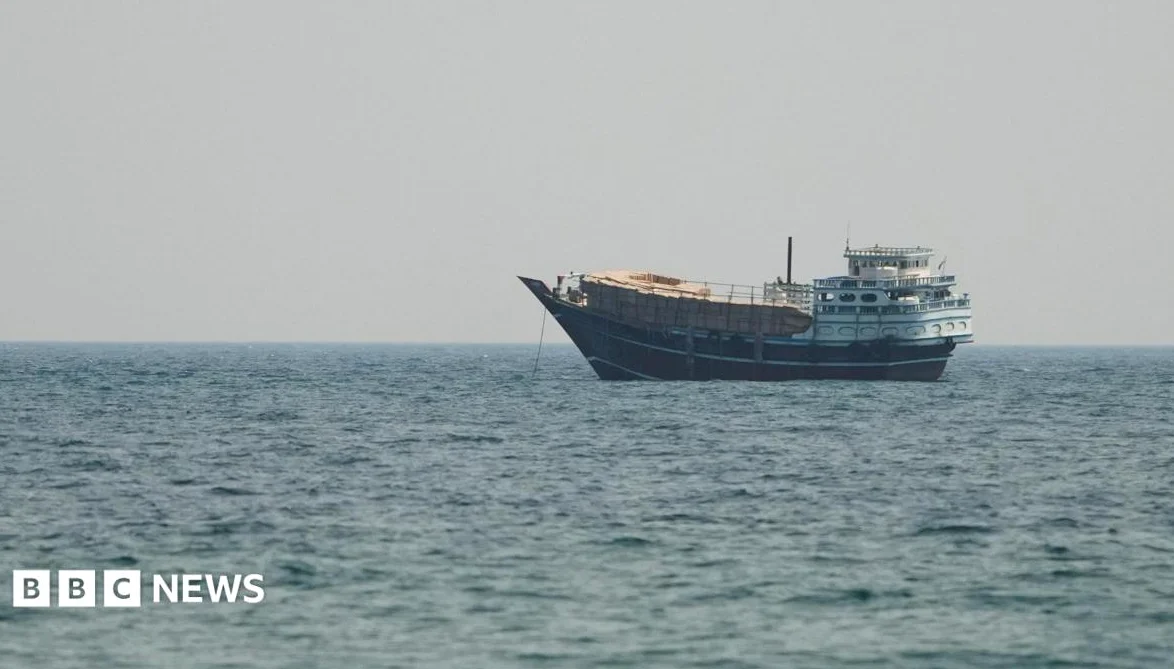
U.S. President Donald Trump has declared that the ceasefire between the U.S. and Iran is over, following attacks on three commercial tankers in the Strait of Hormuz. The U.S. military responded with strikes on around 90 targets across Iran, according to reports; Iran’s Health Ministry said 17 people were killed and 115 injured in the U.S. attacks. In response, Iran launched strikes on U.S. allies in the Gulf.
Strait of Hormuz: A Global Energy Lifeline
The Strait of Hormuz. A vital waterway through which approximately 20% of the world’s oil and liquefied natural gas flows, has become the focal point of the escalating tensions. Trump issued a 48-hour ultimatum to Iran on Saturday, demanding the reopening of the strait — he warned that if Iran did not comply, the U.S. would attack and destroy its power plants, starting with the largest. This marked a sharp escalation in the rhetoric from the U.S. president.
Iran responded with a warning that any attack on its energy infrastructure would lead to retaliatory strikes that could leave critical infrastructure in the U.S. and Israel in the dark. The crisis has now entered what some analysts describe as its most perilous phase, with global fuel prices spiking and fears of a potential energy crisis growing.
Behind the Scenes: Diplomatic Efforts and Internal Blame
Despite the military escalation, diplomatic efforts are ongoing. A delegation from Qatar traveled to Iran on Friday for talks aimed at de-escalating tensions and ensuring the safe passage of commercial vessels through the Strait of Hormuz. Trump stated on Truth Social that the U.S. has agreed to continue talks, but “in no uncertain terms” informed Iran that the ceasefire is over.
Senior U.S. officials told CBS News that Iran privately admitted the recent attacks on ships were a mistake and blamed a “rogue” internal group for the actions. The U.S. has accused Iran of violating the terms of a June ceasefire agreement, which included a commitment from Iran to allow safe passage for commercial shipping. Iran’s Foreign Minister Abbas Araghchi has accused the U.S. of violating the deal.
Regional and Global Market Impact
The renewed conflict has already begun to affect global markets, though Silver prices have climbed above $60.00 amid concerns over energy-driven inflation, while Dogecoin and other cryptocurrencies have seen volatility due to the heightened risk-off sentiment. The U.S. has also reinstated sanctions on Iran’s oil sales, citing the recent attacks on ships in the Strait of Hormuz.
Analysts warn that continued hostilities could force the U.S; Federal Reserve to maintain a “higher for longer” interest rate policy, which could further impact global economic conditions. The Strait of Hormuz remains nearly closed to international traffic, raising fears of a global energy crisis and economic instability.






Comments
No comments yet
Be the first to share your thoughts