

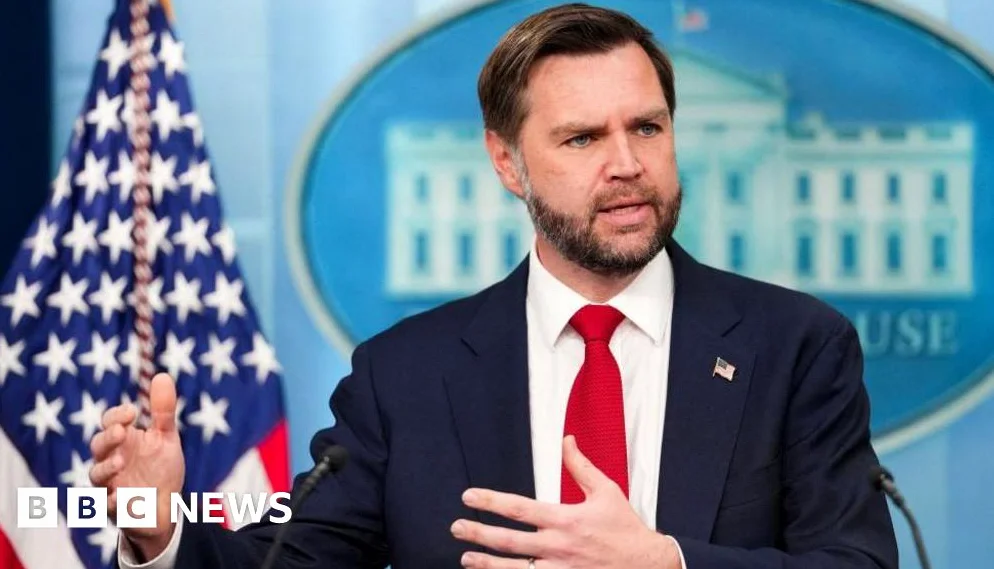
Vice President Vance’s trip to Switzerland,where U.S. and Iranian officials were to hold technical discussions,has been delayed, the White House confirmed. The move comes just days after a preliminary agreement was reached to reopen the Strait of Hormuz and end a months-long conflict between the two nations.
Logistical Delays and Unconfirmed Timelines
Vance expressed uncertainty about the timing of the trip during a White House briefing, and officials emphasized that the U.S. delegation remains prepared to depart at the first available opportunity. “The plans for the upcoming technical talks have not been finalized,” the White House said in a statement — “As of now the Vice President is not departing tonight.”
The White House acknowledged the complexity of the negotiations, saying the logistics of these talks have been “never been simple or predictable.” The administration stated it would provide an update as soon as one is available.
Controversial Preliminary Agreement
The preliminary agreement. Signed by President Trump on Wednesday. Includes a 14-point memorandum of understanding (MOU) outlining steps to ease tensions between the U.S. and Iran. The document includes provisions for sanctions relief and a $300 billion reconstruction fund for Iran; an extendable 60-day negotiation period began on Tuesday, according to Vance.
However, the MOU has drawn criticism from some Republican lawmakers, Iowa Senator Joni Ernst (R) raised concerns about the source of the funding for Iran’s reconstruction during a press briefing at the Capitol. “I have to know where that money is coming from because I don’t think my constituents are going to be really happy about it if that’s all U.S. taxpayer dollars,” she said.
Market Reaction and Global Tensions
Meanwhile, the KOSPI index in South Korea gave up its record rally amid investor caution and profit-taking, according to financial reports. Foreign and institutional investors sold a combined 2.4 trillion won ($1.75 billion) worth of shares on the main board, with foreigners selling a net 983 billion won and institutions offloading 1.45 trillion won. Retail investors absorbed much of the selling, purchasing a net 2.53 trillion won worth of shares.
The reversal came just a day after the KOSPI closed above 9,000 for the first time, though the benchmark had surged more than 10 percent in a single week, driven largely by semiconductor and technology stocks. However, the concentrated rally left the market vulnerable to profit-taking as investors questioned the sustainability of the gains.






Comments
No comments yet
Be the first to share your thoughts