

Kuwaiti forces mistakenly shot down three US F-15E fighter jets during an Iranian attack, according to the US Central Command. All six crew members safely ejected and were recovered, but the incident highlights the growing risks in the region as the conflict between Iran and its adversaries expands.
Escalating Conflict and Regional Fallout
The US and Israeli air war against Iran has widened dramatically, with no end in sight. Israel has launched attacks on Lebanon in response to strikes by Hezbollah, while Iran continues its missile and drone attacks on Gulf states. The situation has thrown global air transport into chaos and disrupted shipping traffic through the critical Strait of Hormuz, sending oil prices surging.
President Donald Trump, addressing a Medal of Honor ceremony at the White House, said a ‘big wave’ of further attacks was imminent. He also expressed uncertainty about the leadership situation in Iran, following the weekend killing of Supreme Leader Ali Khamenei.
‘We’re already substantially ahead of our time projections. But whatever the time is, it’s okay,’ Trump said. ‘Right from the beginning, we projected four to five weeks, but we have capability to go far longer than that.’
Domestic and International Reactions
Trump’s decision to launch the attack has been a major foreign policy gamble, especially as he faces growing discontent over domestic economic issues. According to a Reuters/Ipsos poll, only one in four Americans supports the operation, which could pose a significant political risk for Trump’s Republican Party ahead of the midterm elections.
Trump stated that the attack was aimed at thwarting Iran’s nuclear and ballistic missile programs, which he described as growing rapidly. ‘We haven’t even started hitting them hard,’ he told CNN. ‘The big wave hasn’t even happened. The big one is coming soon.’
In the first formal Pentagon briefing since the campaign began, General Dan Caine, chairman of the US Joint Chiefs of Staff, described a campaign that included hitting more than 1,000 targets in the first 24 hours. He added that more forces were still on their way to the region.
‘This is not a single overnight operation. The military objectives that CENTCOM and the Joint Force have been tasked with will take some time to achieve, and in some cases will be difficult and gritty work,’ Caine said.
Regional Impact and Human Cost
Western diplomats have expressed concern over the lack of clarity regarding the administration’s long-term plans for Iran. Turkey joined Russia and China in condemning the operation, with President Tayyip Erdogan calling it a ‘clear violation’ of international law.
Iran denies seeking a nuclear weapon and says it was offering to curb its nuclear program at talks when the United States launched an unprovoked assault. Meanwhile, residents in Iran have jammed highways to flee the bombing, with uncertainty about the future and a mix of emotions ranging from euphoria to apprehension and rage.
Many have celebrated the death of Supreme Leader Ali Khamenei, who had ruled since 1989 and directed security forces that killed thousands of anti-government protesters at the start of this year. However, conservative clerical leaders show no sign of yielding power, and military experts suggest that US and Israeli air power alone may not be enough to drive them out.
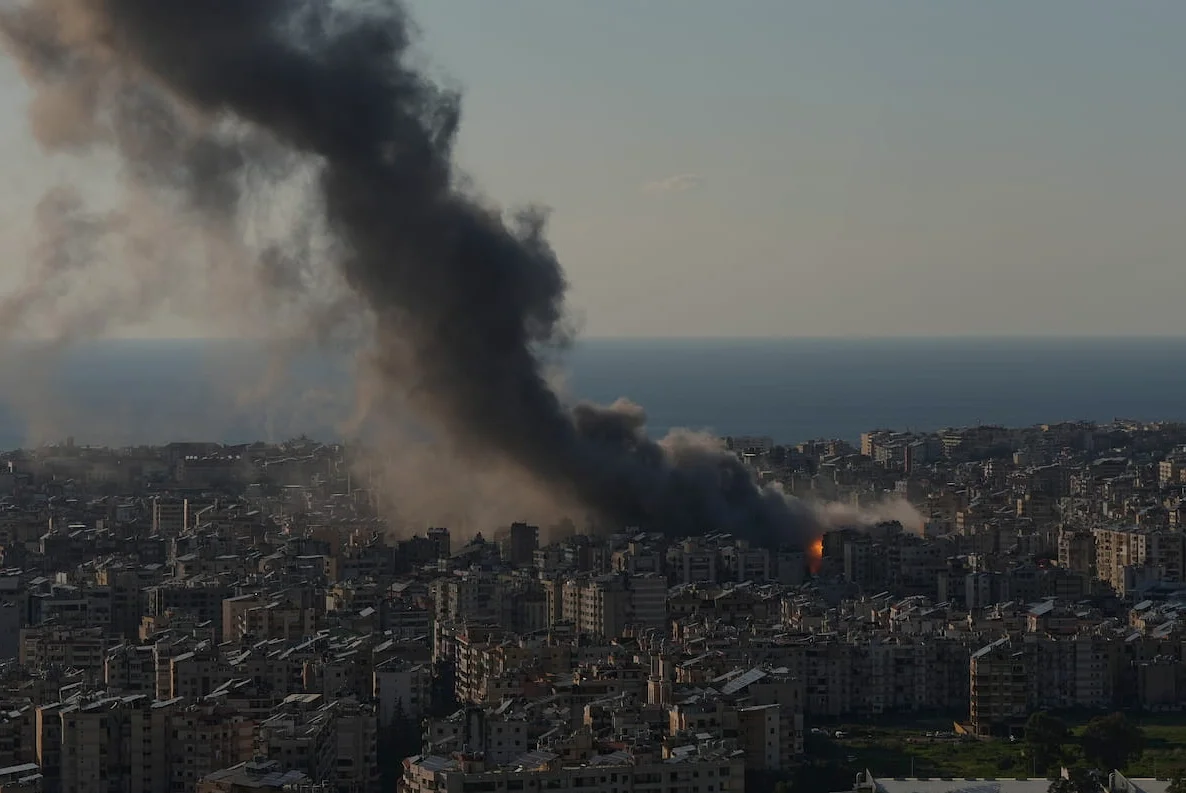
A new front in the war opened when the Lebanese armed group Hezbollah, one of Tehran’s principal allies in the Middle East, launched missiles and drones toward Israel. Israel responded with sweeping air-strikes, targeting the Hezbollah-controlled southern suburbs of Beirut and striking senior militants.
The Lebanese state news agency NNA reported that an initial tally showed 31 people killed and 149 injured. An Iranian Shahed missile, likely fired by Hezbollah from Lebanon, struck the British air force base at Akrotiri in Cyprus, marking the first strike to reach US allies in Europe.
As Washington’s allies in the Gulf came under renewed attack from Iranian missiles and drones, black smoke rose above the area around the US embassy in Kuwait. Loud blasts were reported in Dubai and Samha in the United Arab Emirates, and in the Qatari capital, Doha.
Qatar, one of the world’s biggest exporters of liquefied natural gas, halted production, with no prospect of safely shipping through the Strait of Hormuz. Saudi Arabia shut its biggest refinery after drone strikes caused a fire, one of several energy installations targeted in the region.
Ali Larijani, a powerful adviser to Khamenei, posted on X that Iran would not negotiate with Trump, who had ‘delusional ambitions’ and was now worried about US casualties.
The interruption to oil shipments through the Strait of Hormuz, where around a fifth of the world’s oil trade skirts the Iranian coast, jolted global economies. Oil prices leapt by double-digit percentages when trade opened on Monday, but later gave up half those gains. Shares fell, and the dollar surged.
Iran’s Major Guards claimed they had hit three US and British oil tankers in the Gulf and the Strait. Shipping data showed hundreds of vessels, including oil and gas tankers, dropping anchor in nearby waters.
Global air travel was also heavily disrupted as airstrikes kept major Middle Eastern airports closed. The incident involving the US jets being shot down by friendly fire has added to the already volatile situation in the region.





Comments
No comments yet
Be the first to share your thoughts