

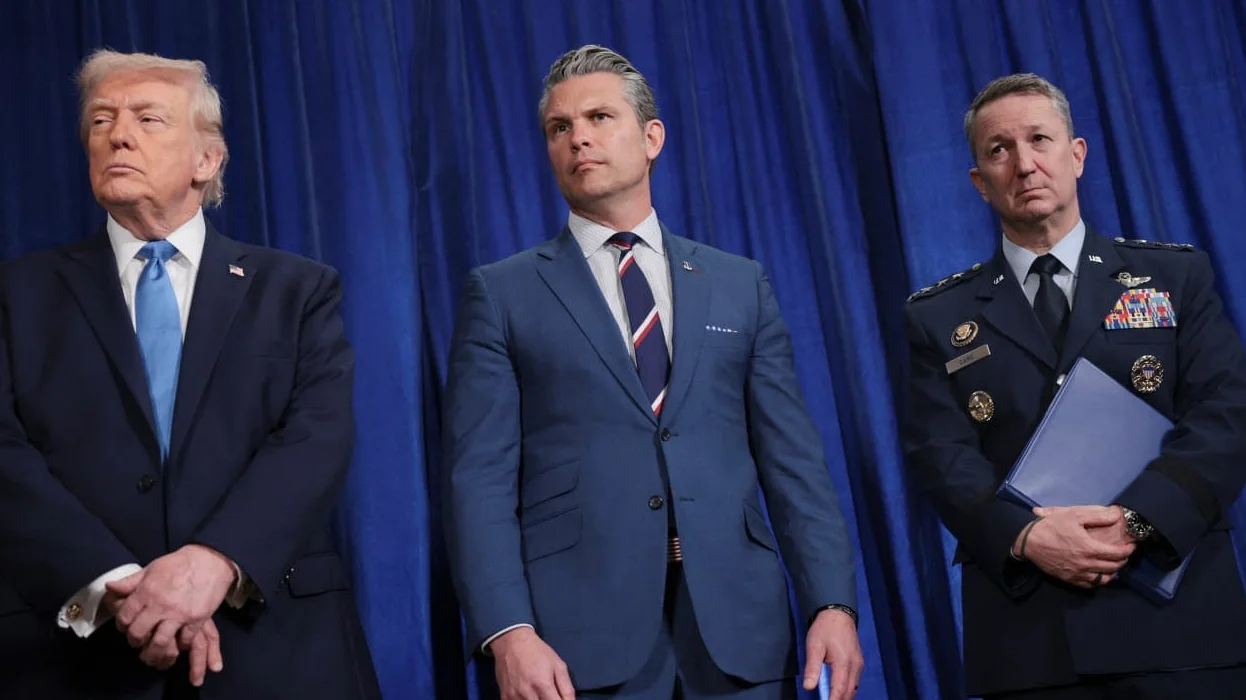
General Dan Caine, Chairman of the Joint Chiefs of Staff, has emerged as the most influential military advisor to President Donald Trump on Iran, a position he has held since the June 2025 Israel-Iran-US War, The Jerusalem Post has learned. This shift in advisory influence comes amid growing tensions and potential military scenarios involving Iran, with Caine’s strategic insights taking center stage.
Shift in Influence Since June 2025
While other high-ranking officials, including Vice President JD Vance, Secretary of State Marco Rubio, and envoys Jared Kushner and Steve Witkoff, are also involved, the focus of Trump’s attention has increasingly shifted to Caine. According to sources, this shift was deliberate, with officials making special efforts to align with Caine during the June 2025 conflict, even more so than with other advisors.
This marks a contrast with the Biden administration, where some officials believed that communication with CENTCOM chief General Erik Kurilla was more effective than with the then-Joint Chiefs chairman, General C.Q. Brown. However, the Post understands that the influence of Brown was not negligible, though he was known for being relatively low-key and not seeking media attention.
Direct Engagement with Key Advisors
Israeli officials, including IDF Chief of Staff Lt.-Gen. Eyal Zamir, Mossad Director David Barnea, and IDF Intelligence Chief Maj. Gen. Shlomi Binder, have recently visited Washington to directly engage with US officials, with a particular emphasis on Caine. This direct communication highlights the critical role Caine plays in shaping US military and strategic decisions.
On Tuesday, Trump posted about Caine on Truth Social, subtly acknowledging the general’s influence without explicitly endorsing or rejecting his views on potential military action against Iran. The post also suggested that Trump is not swayed by external characterizations of Caine’s stance.
Cooper’s Operational Role in Potential War
Admiral Brad Cooper, the current CENTCOM chief, who took over from Kurilla in August 2025, remains a key figure in planning any potential large-scale military operations against Iran. According to sources, Cooper is seen as the key operational mastermind, with his influence likely to be evident on the global stage should a conflict arise, even if he is not formally a policy advisor.
Cooper was recently sent to Iran in February by the White House to inject fear into Iranian leadership during initial negotiations with Kushner and Witkoff. As deputy CENTCOM chief, he played a significant role in US operations during the June 2025 conflict, demonstrating his deep involvement in both strategic planning and on-the-ground execution.
Cooper’s influence extends beyond Iran. In Gaza, he was instrumental in helping seal the Israel-Hamas ceasefire. In Syria, he was dispatched to ensure the safe withdrawal of the SDF and to manage the transfer of dangerous detainees, showcasing his broad operational responsibilities across multiple theaters.
Some analysts argue that comparing Caine’s influence under Trump to that of former Joint Chiefs chairman Mark Milley under Biden is not entirely fair, as different presidents rely on different advisors for different aspects of national security decision-making. This suggests that the dynamic between military leadership and presidential influence varies significantly depending on the administration.
Despite the ongoing debates about the influence of various advisors, all sources agree that President Trump will ultimately make the final decisions on any military actions. This highlights the complex interplay between military leadership, strategic advisors, and executive decision-making in shaping US foreign policy.






Comments
No comments yet
Be the first to share your thoughts