

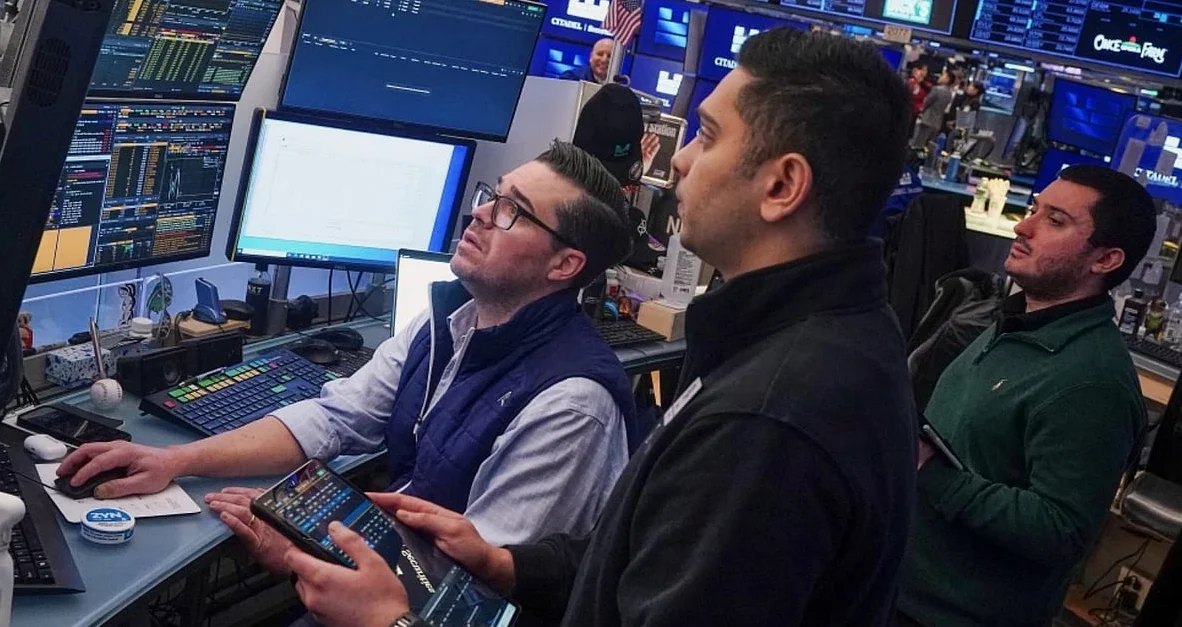
The S&P 500 dropped 0.8% on Monday as investors reacted to President Donald Trump’s announcement of a 15% temporary tariff on imports from other countries. This increase came just one day after Trump had initially proposed a 10% tariff in response to a Supreme Court ruling that invalidated his broader ‘reciprocal’ tariffs on global imports.
Escalation of Tariff Measures
The new 15% tariffs, which could last up to 150 days unless extended by Congress, represent a more aggressive stance from the Trump administration. The move follows the Supreme Court’s decision that the president had overstepped his legal authority in implementing the sweeping ‘reciprocal’ tariffs, which had targeted a wide range of imports.
According to the latest market data, the Dow Jones Industrial Average fell 659 points, or 1.3%, by 1:25 pm Eastern time. The Nasdaq Composite also closed 0.9% lower, reflecting investor concerns about the potential economic consequences of the new tariffs.
Global Trade Uncertainty
Trump’s quick pivot to higher tariffs has raised fears of further trade disruptions and economic volatility. The move has left trading partners worldwide on edge, particularly as the administration continues to explore alternative legal pathways to impose more permanent tariffs on countries and industries.
South Korea’s Minister of Trade, Kim Jung-kwan, warned that the situation could become even more uncertain if the Trump administration continues to impose new tariffs under different legal frameworks. ‘Uncertainty may worsen if the Trump administration continues imposing new tariffs under alternative laws,’ Kim said in a statement released on Monday.
Analysts have pointed out that the new tariffs could lead to retaliatory measures from other countries, which could further strain global supply chains and increase costs for American consumers and businesses. ‘This is a dangerous escalation that could lead to a trade war with far-reaching consequences,’ said John Smith, an economist at the Global Trade Institute.
What’s Next for Tariff Policy
The next key development will be how Congress responds to the potential extension of the 15% tariffs beyond the 150-day period. Lawmakers have already expressed concerns about the impact of the initial 10% tariffs, and the increased rate could trigger further legislative pushback.
According to a recent report by the International Monetary Fund, the global economy is already showing signs of stress due to trade tensions. The report states that the current trade policies could reduce global GDP growth by up to 0.5% in the next fiscal year.
Meanwhile, the Trump administration has not ruled out using other legal tools to justify additional tariffs. This has led to speculation that more countries could face new duties in the coming weeks, particularly those that have been critical of US trade practices.
For ordinary Americans, the impact of these tariffs could be felt through higher prices on consumer goods and increased costs for businesses that rely on imported materials. The uncertainty also adds to the broader economic anxiety, as the Federal Reserve continues to evaluate its approach to interest rates amid fluctuating inflation data.
With the new tariffs in place, the focus will now shift to how the global economy adapts to the changing trade landscape and whether the US and its trading partners can find a way to de-escalate tensions without further economic harm.



Comments
No comments yet
Be the first to share your thoughts