

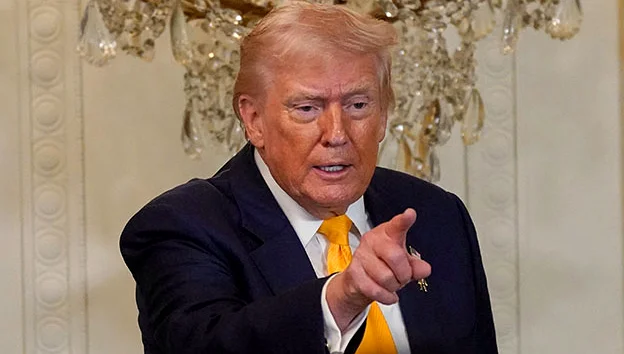
The U.S. Supreme Court delivered a sharp rebuke to President Donald Trump’s trade policy on Friday. Justices ruled 6-3 that Trump unlawfully used the International Emergency Economic Powers Act of 1977 to slap tariffs on imports from multiple countries. The decision upholds prior findings from federal district and appellate courts that deemed the emergency measures improper.
Chief Justice John Roberts wrote the majority opinion. He stressed the statute targets genuine national emergencies, not routine trade disputes. “The president cannot convert a trade imbalance into an emergency,” Roberts stated, according to the court’s document.
Trump reacted swiftly. At a White House news conference minutes after the ruling, he called it “deeply disappointing.” He vowed to explore other legal paths under existing trade statutes to protect American workers and industries.
By evening, Trump took to social media with his response. He announced an executive order for a blanket 10% tariff on goods from every country. A White House fact sheet confirmed the duties kick in Tuesday. Officials described it as a stopgap to fill the void left by the court’s action.
Markets felt the jolt immediately. The Dow Jones Industrial Average dropped 1.2% in afternoon trading. Asian indexes slid further overnight amid fears of renewed trade friction. Bond yields ticked up as investors braced for policy shifts.
The ruling carries massive financial stakes. Reuters estimated up to $175 billion in collected tariff revenue now faces refund claims from importers. Businesses from steelmakers to soybean farmers had challenged the duties, arguing they jacked up costs without congressional approval.
Lower courts had blocked sections of Trump’s tariff program earlier. A federal judge in Washington, D.C., halted duties on steel and aluminum from Canada, Mexico, and the European Union last year. The U.S. Court of Appeals for the Federal Circuit affirmed that stance in March.
Trump’s original tariffs, rolled out in 2018, targeted China, the EU, and others. He cited national security and trade deficits as justification under the emergency powers law. The Supreme Court rejected that logic outright.
International partners watched closely. The European Union signaled readiness to retaliate against any new U.S. barriers. Beijing officials stayed mum publicly but ramped up state media warnings about escalation.
Legal experts divided on next steps. Some predicted Congress might step in with fresh trade legislation. Others foresaw Trump leaning on Section 301 of the Trade Act of 1974, which allows unilateral duties for unfair practices.
The decision reshapes executive power in trade. For decades, presidents wielded broad tariff authority. Friday’s ruling narrows that lane, at least for emergency declarations. Administration lawyers now scramble to reframe their strategy.
Trump’s order tests the boundaries. The 10% across-the-board levy hits everything from German cars to Brazilian coffee. Importers face immediate compliance headaches. Customs and Border Protection alerted ports to prepare for the switch.
Business groups split. The U.S. Chamber of Commerce hailed the court for checking executive overreach. Manufacturers warned the new tariffs could spike inflation and slow growth. Retailers braced for higher prices at checkout lines.
Global supply chains, still fragile from the pandemic, absorb another hit. Auto parts, electronics, and apparel face the brunt. Analysts at Goldman Sachs projected a 0.3% drag on U.S. GDP if tensions persist.
Trump framed his pivot as defiant. “America First means we fight smart,” he posted on Twitter. Supporters cheered the quick countermove. Critics called it reckless improvisation.
The saga highlights deep trade divides. With midterm elections looming, tariffs remain a flashpoint. Voters in Rust Belt states track every development. Farm lobbies press for exemptions amid harvest season.
Courts now hold the gavel on trade wars. Future presidents face tighter reins on emergency powers. For now, Tuesday’s deadline looms large over ports from Los Angeles to New York.




Comments
No comments yet
Be the first to share your thoughts