

 The Guardian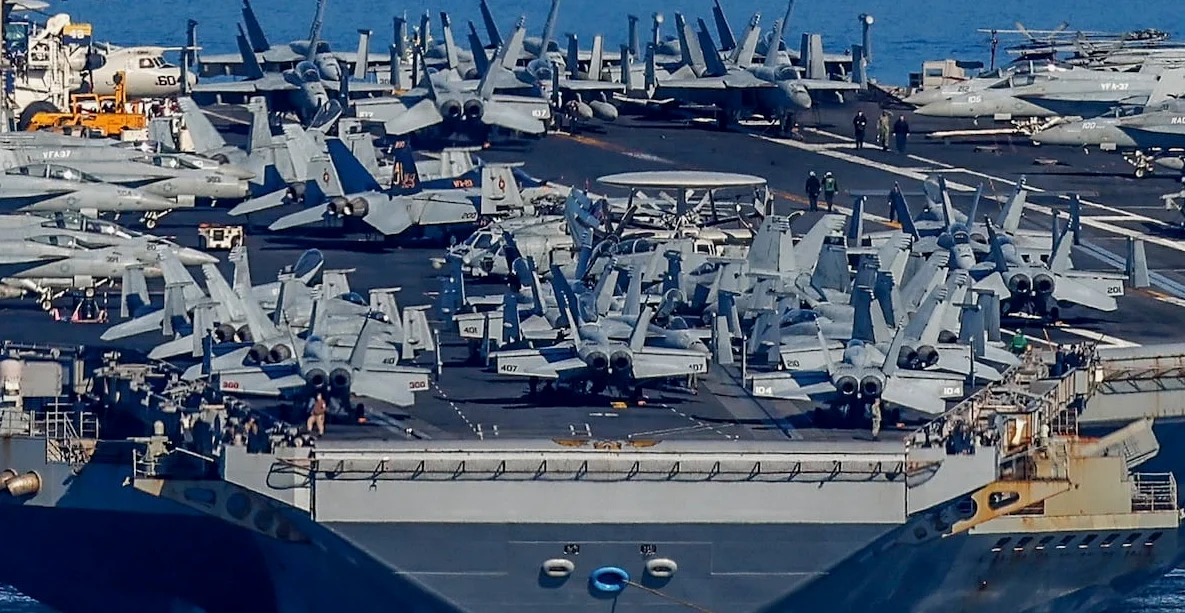
The U.S. government has authorized the departure of non-essential government workers and their families from Israel, citing heightened risks following inconclusive talks with Iran over its nuclear program. The U.S. Department of State issued an advisory urging American citizens to ‘consider leaving Israel while commercial flights are available’ and warned against travel to the country.
Escalating Tensions and Diplomatic Efforts
The warning comes after recent negotiations between the U.S. and Iran over the future of Tehran’s nuclear program ended without agreement. Discussions were scheduled to continue next week, but the lack of progress has raised concerns about potential military action.
President Donald Trump has reportedly assembled two carrier strike groups, signaling readiness for possible military action if Iran does not show willingness to scale back its nuclear activities. The U.S. Department of State’s advisory was accompanied by a message from Ambassador Mike Huckabee to U.S. embassy staff in Israel, urging them to leave ‘today’ due to the ‘high demand for airline seats.’
Huckabee sent the email at 12:04 a.m. local time, instructing embassy staff to book flights to any location from which they could then continue their journey to Washington, D.C. His message emphasized the need to ‘get expeditiously out of the country,’ highlighting the urgency of the situation.
Efforts to Prevent Military Action
Oman’s foreign minister, Badr Albusaidi, a key mediator in the U.S.-Iran talks, has flown to Washington in a last-ditch effort to dissuade the Trump administration from military action. Albusaidi is expected to brief Vice President JD Vance and argue that enough progress has been made in negotiations to warrant caution.
The urgency of Albusaidi’s visit, just hours after the Geneva talks concluded on Thursday evening, suggests he believes swift action is necessary to counter those advocating for military intervention. The Iranian leadership has called on the U.S. to soften its demands, but the U.S. negotiators, Steve Witkoff and Jared Kushner, issued no official statement after the talks, signaling a lack of clarity on their positions.
Vice President Vance, known for his opposition to military interventions, is expected to play a crucial role in determining the administration’s next steps. Albusaidi’s task is to convince Vance that a swift military strike will not change Iran’s negotiating stance.
Nuclear Disputes and Diplomatic Deadlines
In an interview with the Washington Post, Vance stated, ‘The idea that we’re going to be in a Middle Eastern war for years with no end in sight — there is no chance that will happen.’ However, he also expressed uncertainty about whether Trump would support a military strike.
Iran has refused to comply with U.S. demands to export its highly enriched uranium stockpile and has asserted its right to enrich uranium domestically. The Iranian parliament passed a law in July 2023 that banned cooperation with the International Atomic Energy Agency (IAEA) and requires recognition of Iran’s ‘right to enrich’ before inspectors can return.
Iran has indicated it would commit to needs-based enrichment, requiring only 20% or lower purity levels at its Tehran research reactor. The fuel for this reactor is supplied by Russia, although the site was heavily damaged in U.S. bombing in June 2023.
Iran also operates a Russian-built nuclear power plant at Bushehr on the Persian Gulf, which is supplied with Russian fuel. The issue of Iran’s 400kg stockpile of highly enriched uranium at 60% could be resolved through dilution or ‘downblending,’ as was done under the 2015 nuclear agreement.
The U.S. and Iran are scheduled to meet at the technical level next week in Vienna at the headquarters of the IAEA. The agency is due to hold its quarterly board meeting, and its director general, Rafael Grossi, is expected to provide an update on access to Iran’s nuclear sites.
Grossi, who is seeking to succeed António Guterres as the UN secretary general, sees a deal on Iran’s nuclear program as a key achievement in his career. The upcoming meetings may offer a critical opportunity to de-escalate tensions and find a diplomatic resolution to the ongoing crisis.





Comments
No comments yet
Be the first to share your thoughts