

 BBC
BBC 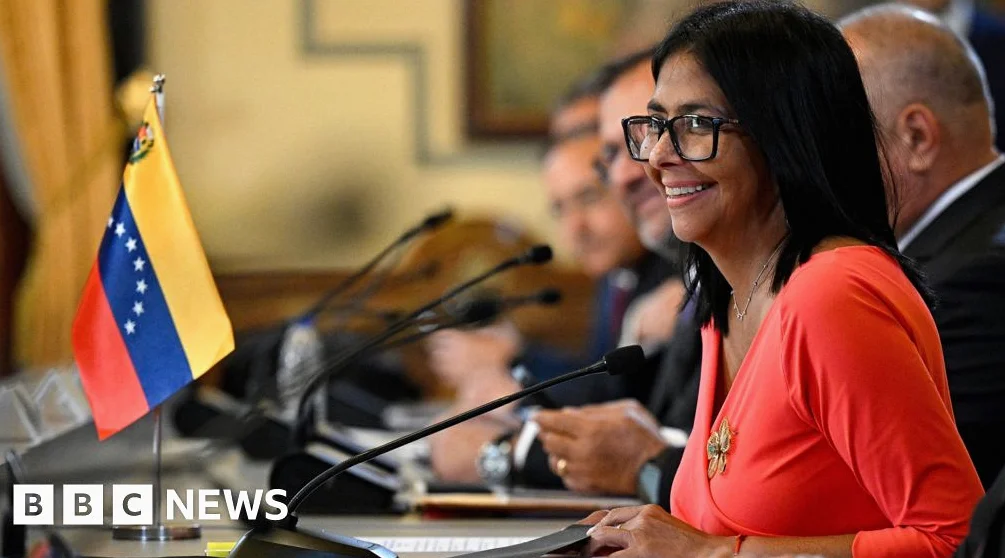
Human rights groups in Venezuela have criticized interim President Delcy Rodríguez for saying a scheme to release political prisoners was ‘coming to an end’, according to the BBC. The scheme, which had been in place for just nine weeks, has already seen the release of nearly 500 political prisoners under an amnesty law introduced by the National Assembly, according to prisoner rights group Foro Penal.
Amnesty Law and Ongoing Detentions
Foro Penal said that as of 20 April, 473 people it classifies as political prisoners had been released. However, more than 500 are thought to remain in prison. The group also stated that Rodríguez lacked the authority to end the releases, while watchdog Provea called the move ‘arbitrary and unconstitutional.’
The US president surprised many by backing Rodríguez over opposition leader María Corina Machado. The release of political prisoners, including Machado’s colleagues, was a key concession to the US by the interim administration. Rodríguez has enjoyed the support of Donald Trump since US forces seized Maduro in January.
Claims of Success and Criticism
In a meeting of justice officials in Caracas on Friday, Delcy Rodríguez claimed that 8,616 people had been freed under the amnesty law, which she described as ‘very successful in terms of its scope and the number of beneficiaries.’ She added that for cases not covered by the law, ‘there are other avenues through which they can be addressed.’
Foro Penal vice-president Gonzalo Himiob said only another legislative act or referendum could undo the amnesty law, which had no expiration date. He criticized the administration’s justice bodies for lacking the willingness or capacity to apply the law properly. Provea echoed these sentiments, stating that ending the releases ‘does not contribute to the process of co-existence and peace that has been announced.’
Justice, Encounter and Pardon group said the announcement was ‘a grave assault on the rule of law.’ They added that the law ended up being an exercise in political rhetoric rather than a genuine instrument to restore freedom to political prisoners. Maduro’s government used the detention of political prisoners to stamp out dissent and silence critics for years.
Political Dynamics and Future Outlook
Rodríguez, who previously served as Maduro’s vice-president, has sought to frame her interim administration as more permissive of political dissent while currying favor with the US. Trump’s decision to sideline Machado in favor of Rodríguez has been seen by analysts as choosing stability over democracy in the short term.
Recently, US Secretary of State Marco Rubio characterized the current situation in Venezuela as a ‘transition phase’ before ‘free and fair’ elections. Machado herself said she would lead the South American country ‘when the right time comes.’ However, critics of the interim administration have noted there has been little talk of democratic elections in the months since Maduro was seized by US forces and taken with his wife to New York to stand trial on drug trafficking charges.






Comments
No comments yet
Be the first to share your thoughts