

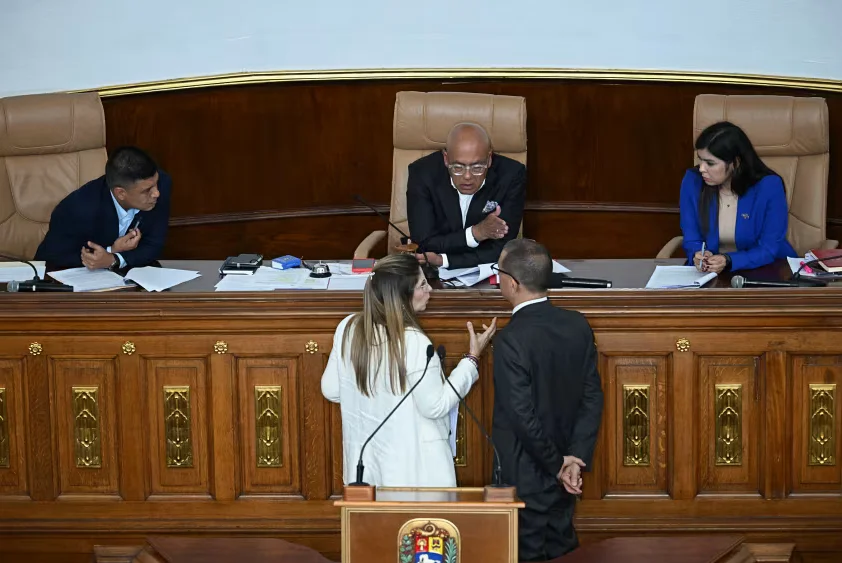
Venezuela’s National Assembly passed legislation Thursday granting amnesty to people prosecuted or convicted for political reasons since Hugo Chávez took power in 1999. The law targets opposition figures, activists, journalists and students arrested during protests in 2014, 2017, 2019 and later years.
National Assembly President Jorge Rodríguez announced Saturday that authorities received more than 1,500 amnesty requests. He predicted hundreds of releases in coming hours. Foro Penal, Venezuela’s leading human rights group, confirmed to CNN that two teachers, Luis Alberto Linares Sánchez and Milton José Hidalgo Mendoza, walked free Saturday from a prison in Barinas state. A court there dropped charges of inciting hatred and treason, citing the new amnesty law.
Rodríguez, who assumed acting leadership after the U.S. operation removed Maduro, signed the bill and called it an extraordinary door to reunite the nation, support democratic coexistence and embrace human rights. The assembly’s published text describes the measure as a way to repair wounds from political strife and encourage peace.
Exclusions apply. The amnesty skips those convicted or charged with homicide, drug trafficking, corruption, grave human rights violations, crimes against humanity or war crimes. Lawmaker Jorge Arreaza, who introduced the bill, stressed these limits to avoid protecting serious offenders.
Rights groups and opposition leaders offered measured support. Foro Penal President Alfredo Romero called the amnesty welcome if inclusive, non-discriminatory and free of impunity. He said it should help dismantle political persecution. The group tallied more than 400 releases since last month, when the government pledged to free a significant number under U.S. pressure. That figure trails official claims of over 800. Among those freed: a mother and her 6-month-old baby born in custody, opposition sources said Thursday.
No public list of releases exists yet. Rodríguez pledged to invite the UN High Commissioner for Human Rights office to verify them. The bill cleared unanimous first discussion earlier this month, public consultation and then final passage.
Opposition leader María Corina Machado credited U.S. pressure for the law, noting Washington’s demands since Maduro’s ouster. She hoped it would liberate hundreds but questioned Rodríguez’s ability to steer a true transition.
Doubts persist. Hundreds of political prisoners remain jailed, rights groups say. Many recent releases came with strings: travel bans, court check-ins and speech restrictions. Opposition figure Juan Pablo Guanipa, freed after eight months inside, faced re-arrest this month for allegedly urging street protests—a violation of his terms, Interior Minister Diosdado Cabello said. Guanipa now serves house arrest. His party, Alianza Bravo Pueblo, slammed the amnesty as false dialogue dead on arrival.
On February 12, thousands of students protested in Caracas during assembly debates, demanding unconditional releases and an end to dissident persecution. The Venezuelan Education-Action Program on Human Rights insisted amnesty isn’t state pardon; many detainees suffered arbitrary arrests for constitutional and international rights.
Foro Penal Vice President Gonzalo Himiob clarified amnesty implies no guilt admission. The government also plans to shutter El Helicoide, a spiral detention center in central Caracas once meant as a mall. It housed SEBIN intelligence headquarters and drew reports of overcrowding, filth, extortion and torture. Rodríguez said it will become a hub for social, sports, cultural and commercial services—a symbolic break from repression. Critics want it preserved as a victim memorial.
The moves unfold in Venezuela’s shaky post-Maduro era. Rodríguez’s administration juggles U.S. demands, economic woes and stability pleas. Smooth implementation, transparent releases and deeper changes will shape whether the law eases tensions for good.

Comments
No comments yet
Be the first to share your thoughts