

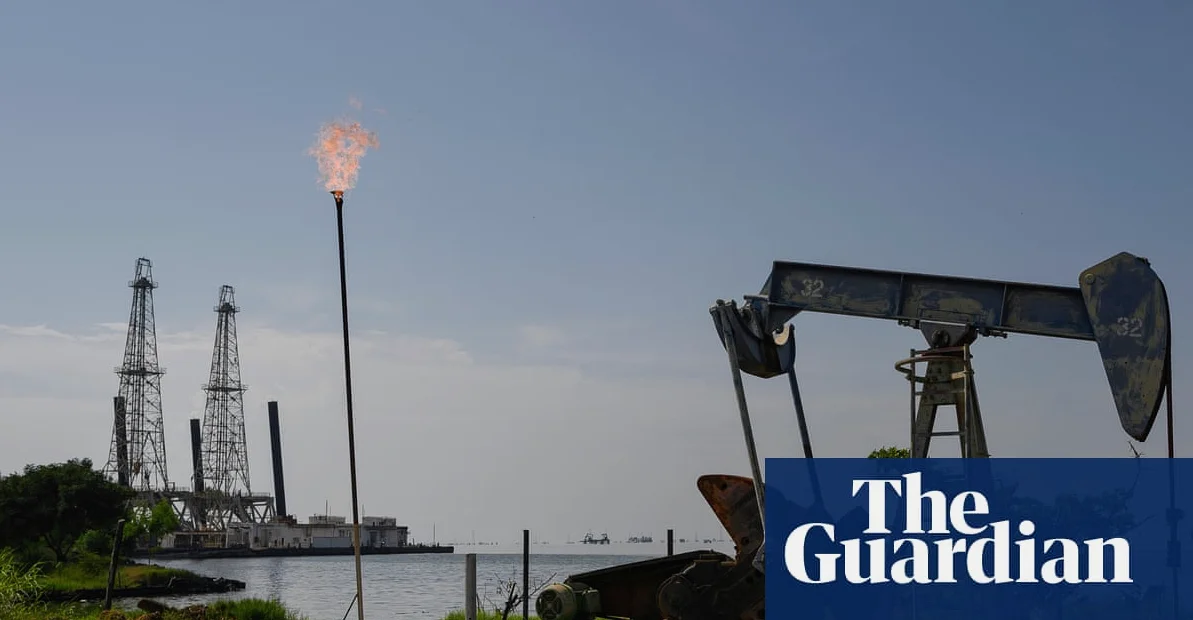
The Venezuelan opposition has expressed outrage over reports suggesting the United States is seeking a major stake in the country’s oil and gas resources. ‘It’s a land grab – a massive land grab,’ said one well-known opposition figure who asked not to be named due to the sensitivities of criticizing the US, according to The Guardian. ‘It’s revolting because this is not the United States one would have [expected]. This is not the United States of the Marshall plan. This is a rapacious, mafioso United States,’ they added.
Interim Government and Controversial Figures
Since January’s special forces raid on Caracas, Venezuela has been led by an interim president, Delcy Rodríguez, who was Maduro’s vice-president and minister of petroleum. Other key members of Maduro’s administration have also retained positions of power, including the interior minister, Diosdado Cabello, who has been collaborating with Trump officials despite having a $25 million US bounty on his head for alleged drug trafficking, according to The Guardian.
Meanwhile, the exiled opposition leader, María Corina Machado, whose movement is believed to have won the 2024 presidential elections, has been sidelined. Ricardo Hausmann, an exiled former minister and opposition supporter, wrote on X: ‘An illegitimate interim government with an illegitimate hydrocarbons law has no legitimacy to strike this unconstitutional deal. It will be a fiasco for all involved.’
Economic and Legal Concerns
The economist Francisco Rodríguez urged Venezuela’s national assembly to reject what he called a ‘predatory deal.’ ‘Handing over Venezuela’s oil wealth to the US contravenes the constitution and is not in the interest of the Venezuelan people, much more when it is done at gunpoint,’ Rodríguez said, according to The Guardian. Luz Mely Reyes, a prominent journalist and government critic, sarcastically called the ‘surrender’ of Venezuela’s natural riches ‘the deal of the century.’
On a different note, Paul Krugman discussed the implications of the US-China trade dynamics on oil prices. ‘The odd thing is that Trump seems to think that China buying more US oil is a good thing, which it is probably not from the point of view of the United States and definitely not for him,’ Krugman noted. The US, now a net exporter of oil since about 2020, has seen crude oil prices rise slightly due to the expected increase in Chinese purchases of US oil.
Broader Economic Context
The US oil production terrain is complex, with different regions importing and exporting oil simultaneously. For instance, the upper Midwest imports oil from Canada, while Texas exports oil to Europe. This mix creates large gross flows beneath the net transaction figures. Despite this, the broader picture remains that the US produces more oil than it consumes.




Comments
No comments yet
Be the first to share your thoughts