

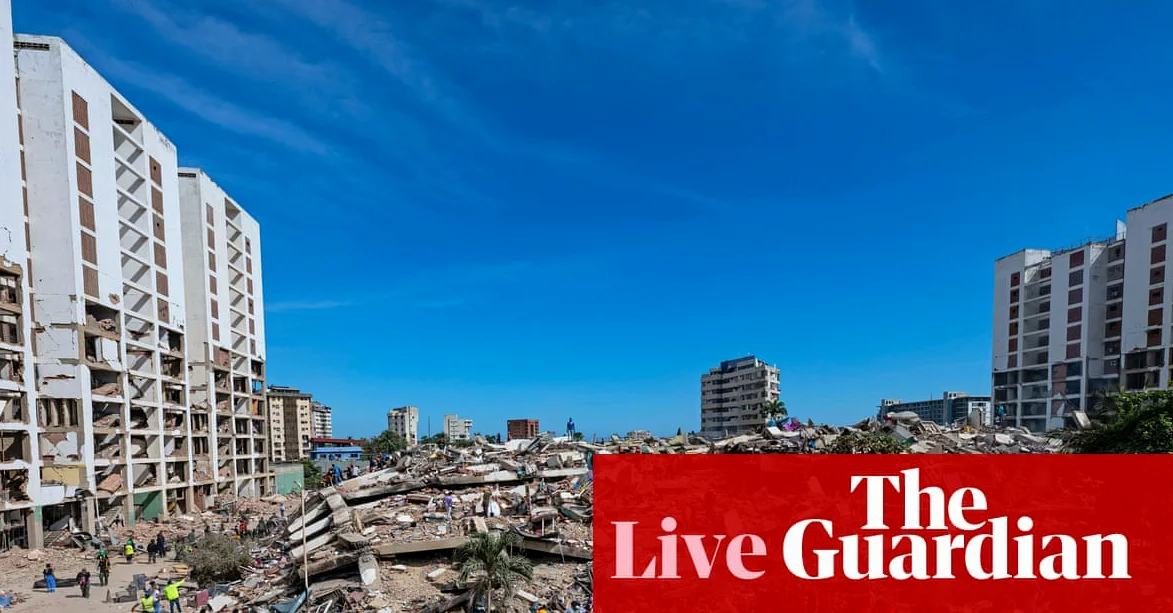
Venezuela’s emergency response teams are entering a new phase in the aftermath of two powerful earthquakes that struck the country; the 7.2- and 7.5-magnitude quakes, which hit on Wednesday evening, caused nearly 200 buildings to collapse and left 1,450 people dead, according to officials. The critical 72-hour window for rescuing survivors has now passed, but rescue teams from the United States, Mexico, and El Salvador continue efforts to locate the missing.
Rescue Teams Report Glimmers of Hope
Despite the passage of the critical 72-hour period, rescuers managed to pull several survivors from the rubble on Sunday, while a man and his teen son were found alive in Caraballeda by French and American teams. In a separate operation. A 60-year-old woman was rescued after being trapped for 86 hours in Carabayida; El Salvador’s President Nayib Bukele credited Peruvian Urban Search and Rescue (USAR) teams for helping in the operation, which took 11 hours.
Interim President Delcy Rodriguez said operations would not be suspended and that “we always maintain hope.” According to U.S. officials, an infant was also rescued from a collapsed building, while Colombian and Mexican officials confirmed the rescue of two 11-year-old boys in separate efforts. Rodriguez said 33 people had been rescued over the weekend.
Collapsing Infrastructure and Missing Residents
At least 774 buildings were damaged in the twin earthquakes, with 189 of them completely collapsed, National Assembly President Jorge Rodríguez reported. In La Guaira, one of the worst-hit areas, residents like Hector Aguilera continue to search for family members under the rubble. Aguilera said, “We don’t have the support to get our family out, we can’t do it alone. They are buried there, we know they are dead, but here we are.”
Millions of people are believed to be without access to sanitation and other basic services, compounding the crisis. Rodriguez announced the formation of a presidential commission to assess the habitability of buildings and said school operations would remain suspended for another week. Power has been restored to 75 percent of the affected areas.
International Support and Continued Search
Rescue operations are being supported by teams from the United States, Mexico, El Salvador, and Peru. In one notable effort, U.S. teams from Virginia pulled a man and his son from the ruins and carried them on a black tarpaulin into an ambulance. Volunteers and residents are also working with shovels and bare hands to dig through debris, hoping to find loved ones.
While the immediate rescue window has passed, officials have not ruled out the possibility of finding additional survivors. Rodriguez emphasized that hope remains a driving force in the efforts, even as the reality of the situation becomes clearer. The country, already grappling with economic instability, now faces a new humanitarian challenge as the scale of the disaster continues to unfold.




Comments
No comments yet
Be the first to share your thoughts