

 Bloomberg News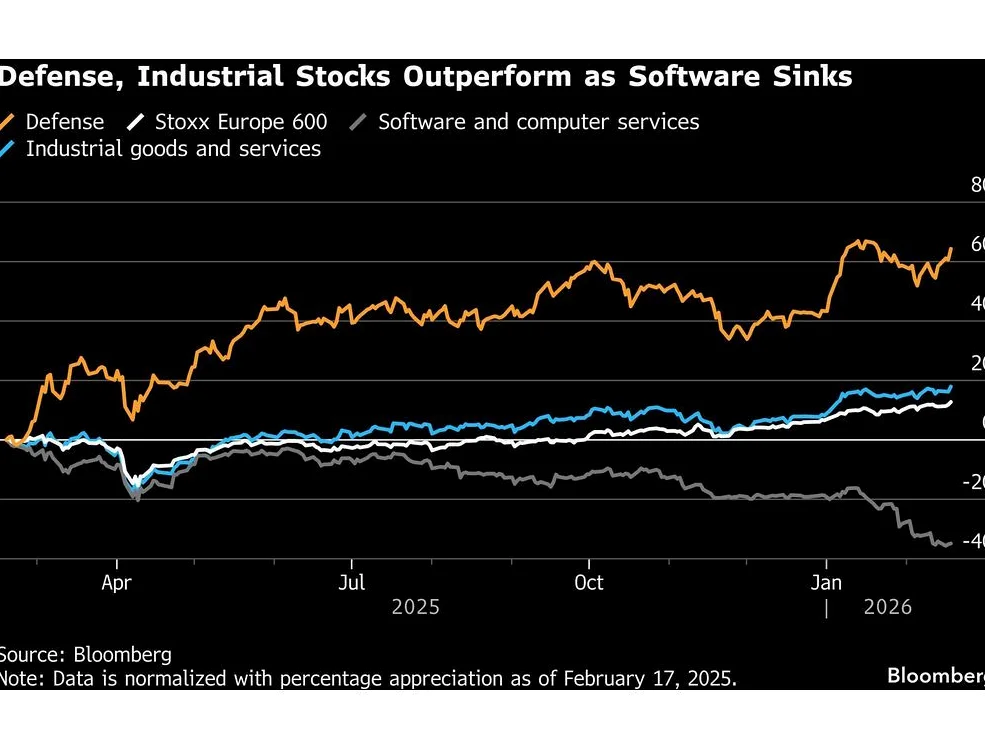
OSLO — Visma AS, a major Norwegian software provider, is considering pushing back its initial public offering in London until later this year. The delay stems from a brutal market rout battering technology stocks, according to Bloomberg News reporting last month.
Pressure on software companies has only intensified since then. Traders now worry that artificial intelligence tools will upend not just pure tech plays but also industries like travel technology and financial services. Shares in these areas have tumbled as investors race to gauge AI’s disruptive potential.
Visma had eyed a first-half listing on the London Stock Exchange. The firm, which serves businesses across northern Europe with accounting and payroll software, boasts annual revenue exceeding €2 billion. But a broader selloff in high-growth tech names has soured sentiment. European software stocks dropped more than 20% in the past month alone, dragged down by U.S. giants like Nvidia and fears of overvaluation.
The pain spread quickly. Amadeus IT Group, a Spanish travel tech leader, saw its shares slide 15% in a single week. Intercontinental Exchange, operator of the New York Stock Exchange, shed value amid questions over AI’s role in trading and data processing. Even staid financial intermediaries felt the heat as algorithms promised to automate back-office tasks.
Europe’s IPO market, already dormant, now pivots toward so-called old economy plays. Companies in manufacturing, energy and consumer goods draw investor interest as safe havens. Atlas Copco, the Swedish industrial tools maker, priced a €1.2 billion share sale in Stockholm last week at a premium. German chemicals firm Covestro launched a €1.65 billion IPO in Frankfurt, tapping demand for steady earners over speculative tech.
“Investors crave predictability,” a London-based fund manager said. “AI hype fueled a bubble. Now they’re hunting for cash flows that won’t vanish overnight.” Data from Dealogic shows European IPO volumes down 40% year-to-date, with tech deals nearly halted.
Visma isn’t alone in rethinking plans. Sweden’s Sinch AB, a messaging software provider, scrapped its expansion ambitions after a 30% share plunge. Denmark’s Netcompany, fresh from a 2021 IPO, trades 50% below its peak. These setbacks highlight Europe’s struggle to build a tech champion amid U.S. dominance in AI.
Regulators watch closely. The European Commission’s digital markets act aims to curb Big Tech power, but startups suffer from capital flight. Bankers note London’s appeal persists despite Brexit—its listings raised $5 billion this year, outpacing Paris and Amsterdam combined.
For Visma, the calculus shifts. A later IPO could fetch a higher valuation if markets stabilize. The company, backed by private equity giant HgCapital, reported 20% revenue growth last year. Still, executives weigh risks. “Timing is everything,” one adviser close to the deal said.
Broader markets reflect the unease. The STOXX Europe 600 Technology Index fell 12% over six weeks. Goldman Sachs analysts cut price targets on a dozen software firms, citing AI commoditization risks. JPMorgan warned that 30% of enterprise software jobs could automate by 2027.
Old economy IPOs fill the void. Norway’s Equinor eyes a spin-off of its renewables unit. Italy’s UniCredit floats bond-like hybrids. These moves signal a revival strategy: bet on tangible assets over intangible code.
Visma’s fate highlights the shift. Once a poster child for Nordic tech ambition, it now handles AI’s long shadow. A second-half debut offers breathing room. But with volatility high, nothing is certain.






Comments
No comments yet
Be the first to share your thoughts