

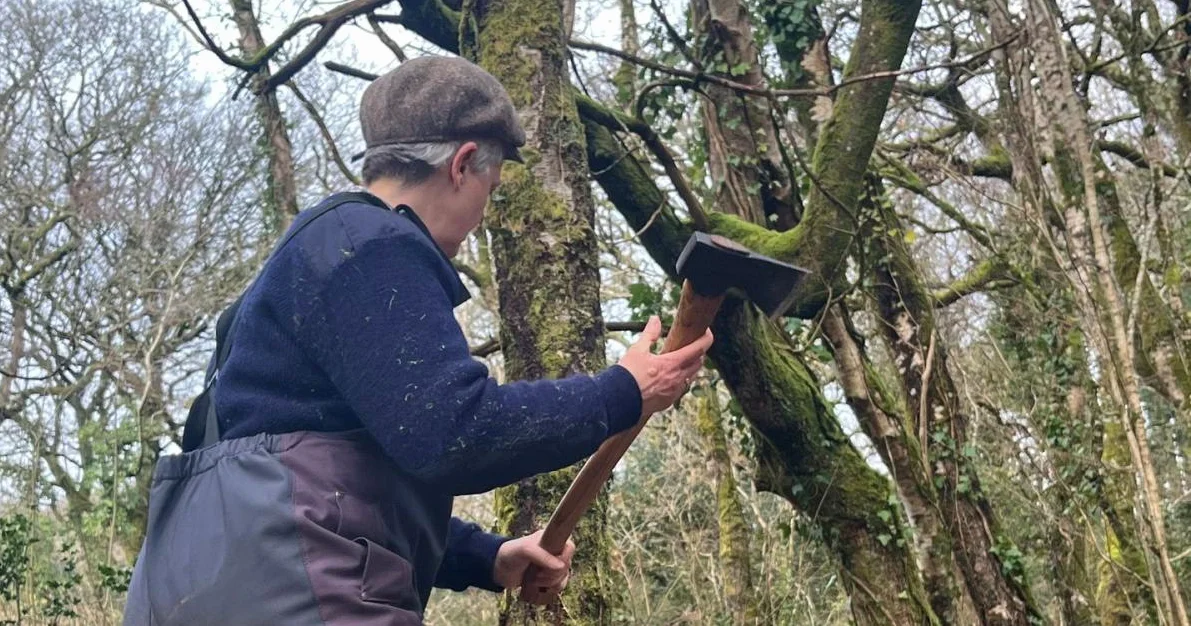
Pengelli Woods rang with the sharp cracks of axes and the steady pull of saws as volunteers dove into coppicing, a traditional method of woodland management. Participants joined forces with instructors from Cwm Arian and Coppicewood College for a full day of cutting trees near their bases to spur fresh growth.
The technique, rooted in west Wales history, yields a reliable harvest of rods and poles. Communities once relied on it for firewood, fencing, tools and crafts. Forests rebound naturally in this cycle, ensuring long-term renewal without heavy machinery.
Experienced demonstrators felled trees with billhooks and double-sided saws. Volunteers then stepped in, sorting the timber by size. Thin rods went toward bread oven kindling and riverbank reinforcements. Thicker poles became garden stakes or fuel. Larger pieces awaited shaping into furniture.
One volunteer described the work as a bridge to the past. “The session reminded us how ancestors stewarded the land,” she said. “These low-tech ways proved practical and sustainable—skills that matter more now than ever.”
Quiet moments broke the rhythm. Birdsong filled pauses between cuts. Participants noted the woods’ seasonal shifts, forging ties to the local heritage and ecology.
The event falls under the CoedUNO project run by Cwm Arian. Organizers plan more sessions across north Pembrokeshire in February and March to spread these heritage techniques.
Tree planting takes place February 25 from 9:30 a.m. to 12:30 p.m. at Felindre Farchog. The lineup features fruit, nut and native species.
Agroforestry work follows on March 4, 1:30 p.m. to 4:30 p.m., at CoedUNO Tegryn.
Pengelli Woods hosts a full day March 12, 10 a.m. to 4 p.m., focused on processing felled trees with billhooks and saws.
Spots remain open. Interested parties should email Kevin, Cwm Arian volunteer organizer, at [email protected] for details or bookings.
Coppicing revives interest amid pushes for eco-friendly land care. The practice supports biodiversity by creating varied habitats. New shoots draw wildlife, while open glades let light reach the forest floor.
Cwm Arian, based in Pembrokeshire, champions community-led conservation. The group pairs traditional knowledge with modern needs, from carbon storage to habitat restoration.





Comments
No comments yet
Be the first to share your thoughts