

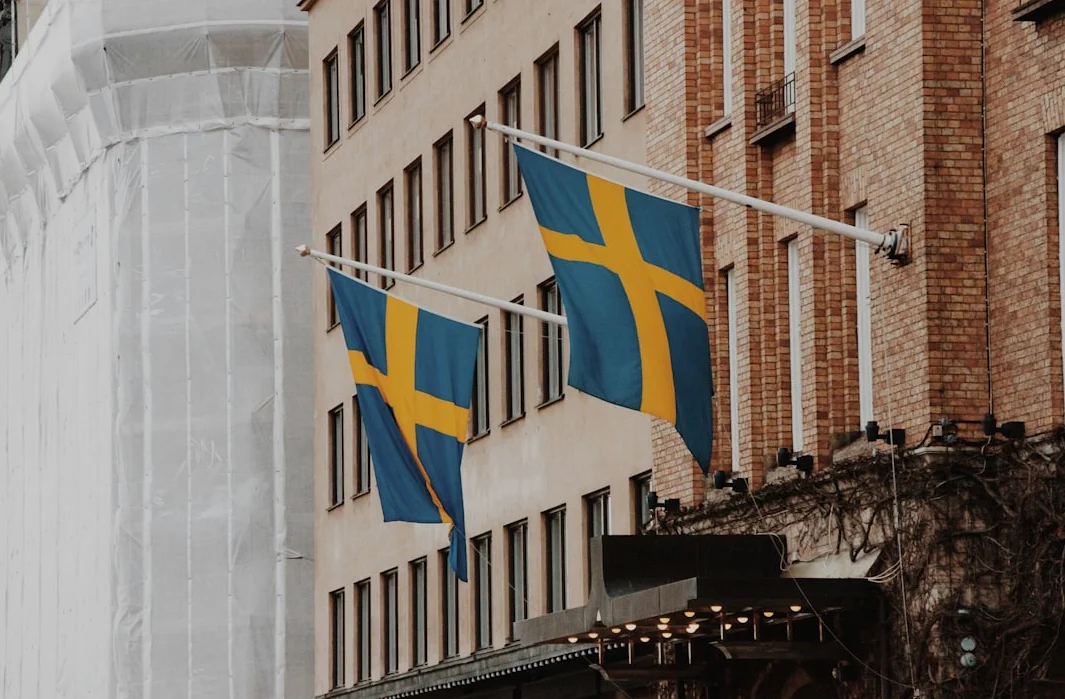
Voting is underway in Sweden’s general election, where the far-right Sweden Democrats (SD) could enter government for the first time, according to The Guardian and Al Jazeera. The outcome could shift Sweden’s global image from a champion of human rights to a more conventional European state, as noted by analysts, With polls extremely tight and record early voting expected, smaller parties may play a decisive role in forming the next government.
Election Dynamics and Party Positions
Sweden’s Social Democratic leader, Magdalena Andersson, has shifted right on crime, immigration, and integration in an attempt to win back voters, according to The Guardian; However, this means a left-wing government is unlikely to reverse hardline policies. Andersson emphasized in a statement: “It is now up to the Swedish people to decide which direction our country should take — Should we have a government entirely dominated by the Sweden Democrats? Something that has never happened in Sweden before?”
Outgoing Prime Minister Ulf Kristersson is seeking a second term with his center-right coalition, which includes the Sweden Democrats for a parliamentary majority, as reported by Al Jazeera. Kristersson has pledged to continue the government’s enforcement action on organized crime and immigration, aiming to “improve the lives of ordinary people” and “make Sweden great again.”
The Sweden Democrats, which have neo-Nazi roots, gained 20.5 percent of the vote in the 2022 election and are now the largest party on the right. Kristersson announced earlier this year that his Moderate Party would allow the SD into government if the right-wing bloc wins a majority, though he would remain prime minister even if the SD becomes the stronger party.
Coalition Possibilities and Smaller Parties
Smaller parties could prove critical in forming the next government, according to The Guardian; the Liberals, who are part of the current governing coalition, could be key for the right’s ability to form a coalition. Their leader, Simona Mohamsson, has recently engaged in a controversial relationship with the SD’s leader, Jimmie Åkesson, On the left, the Centre Party’s turnout could also play a significant role.
The Left party (Vänsterpartiet) has shown some polling gains, particularly in Stockholm, where it hopes to become the second-largest party; However, it remains to be seen whether this momentum will translate into a broader surge on election day.
Broader Electoral Context
International IDEA has highlighted the global challenges facing elections in 2024, including disinformation, climate disruptions, and loss of public trust, Credible elections are seen as foundational to democracy, as they provide a mechanism for democratic forces to reclaim ground in countries experiencing democratic backsliding. With half the world’s population having voted in 2024, the institute emphasized the importance of learning from these elections to strengthen democratic institutions.
Though not directly related to Sweden’s election, the global context reveals the significance of maintaining democratic integrity. In a world where democratic norms are under threat, Sweden’s election could serve as an indicator of how European democracies are evolving,or retreating,under the influence of far-right movements.


Comments
No comments yet
Be the first to share your thoughts