

The economic ripples of the ongoing conflict with Iran are spreading rapidly, with Europe and Asia bearing the brunt of the damage, according to experts and industry reports. While the U.S. is not immune, the impact on economies reliant on energy imports and maritime trade is becoming more pronounced.
Europe and Asia Face Higher Vulnerability
“Europe and Asia are heavily dependent on energy imports, so that alone makes them more vulnerable to negative macroeconomic spillovers from the Iran war,” said Maurice Obstfeld, former chief economist for the International Monetary Fund.
Geographical proximity to the conflict zone adds to the vulnerability. “Being closer geographically to the hostilities also makes Europe and Asia more vulnerable to shock waves from the war,” Obstfeld added.
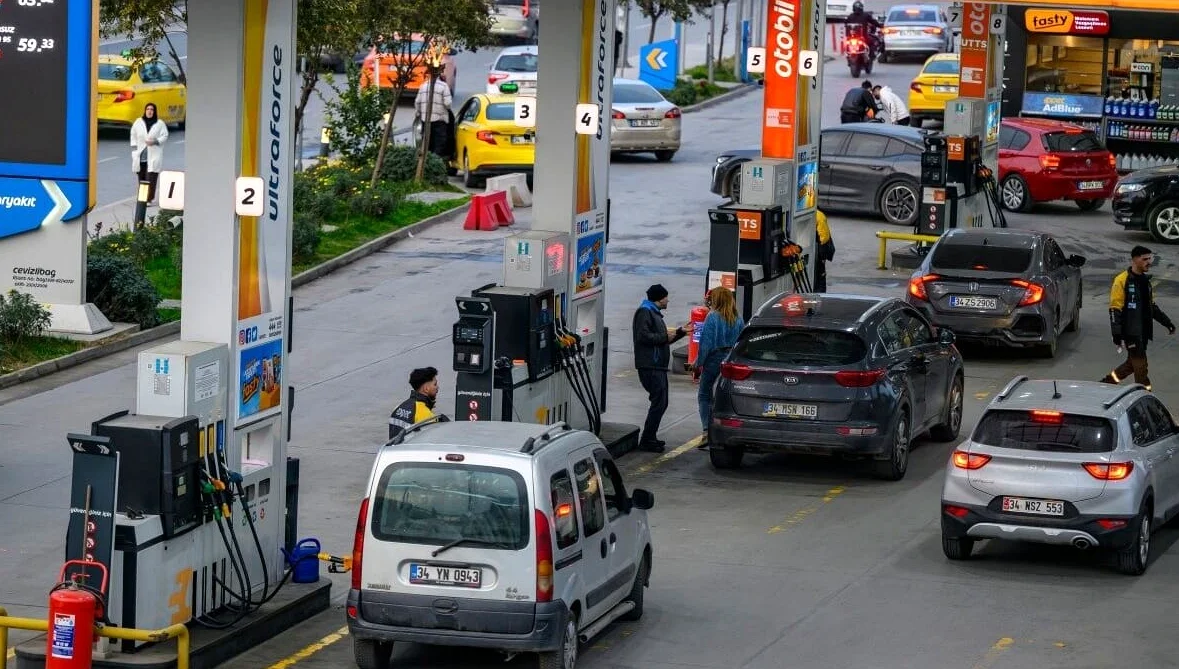
The war is already affecting global markets. Petrol prices in the U.S. have risen to an average of $3.41 a gallon, up from $2.98 a week earlier, according to AAA. Farmers are also feeling the strain with higher costs for fertilizers and supply chain issues looming if the conflict persists.
Supply Chain Disruptions and Energy Prices
Countries like Italy, Belgium, China, India, and South Korea, which heavily rely on oil and gas shipments through the Strait of Hormuz, are experiencing some of the worst effects of the conflict.
In February, inflation in the euro zone was already hotter than expected, and further increases are anticipated due to war-related energy costs. The disruption of QatarEnergy’s liquefied natural gas production following Iranian attacks has triggered a potential “bidding war” for available gas supplies, according to TS Lombard.
MarineTraffic, a maritime tracking service, reported that tanker traffic through the Strait of Hormuz has dropped 90% from pre-war levels. On last Thursday, an oil tanker near Kuwait reported a large explosion that caused ballast water and a small amount of oil to spill into the Persian Gulf, according to the UK Maritime Trade Operations Centre.
Flexport reported that 57 container ships carrying goods for Middle Eastern customers or bound for global markets are trapped inside the strait. While the immediate impact is modest, the backlog is beginning to ripple through global supply lines.
Disruptions in Air and Sea Freight
Maersk, one of the world’s largest ocean carriers, has suspended new bookings on almost all cargo in and out of the United Arab Emirates, Oman, Iraq, Kuwait, Qatar, Bahrain, and Saudi Arabia. The decision means containers will remain at origin ports and not be loaded, according to Flexport’s analyst, Petersen.
Fresh disruptions have emerged after reports of an Iranian drone attack on Oman’s largest port, Salalah, and a civilian airport in Azerbaijan. MSC, another major carrier, has redirected containers in transit to the Gulf to “next safe ports,” potentially causing unexpected storage costs for businesses.
Unlike container ships, air cargo is more affected by the conflict. Several countries, including the UAE, Qatar, Bahrain, Kuwait, Iraq, and Iran, have closed their airspace amid missile, drone, and aircraft bombardments. Limited flights have resumed, but this has drastically reduced cargo capacity.
Oscar de Bok, CEO of DHL Global Forwarding, said that for every week air shipments are suspended, cargo carriers need at least a week and a half to catch up. “It all depends on the stability and how many drones are getting in,” he said. “We need to constantly replan.”
The growing gap between airfreight capacity and demand is leading to backlogs in Southeast Asia and China. Stefan Paul, CEO of Kuehne and Nagel Management, said the situation is “similar to the Covid times.”
While cargo aircraft continue to fly between Asia and Europe, planes that normally stop in Dubai or Qatar must take longer, roundabout routes that require more fuel. This further reduces freight capacity.
Jet fuel prices have soared, with one European gauge up 72% since the war began. Spiking airfreight costs on the Asia-to-Europe route are creating a “surge pricing on Uber” effect, drawing aircraft from other routes like Asia-to-US, which could also see price increases, according to Brian Bourke of SEKO Logistics.
While supply chain managers are used to handling crises, airlines face constraints in airport runway and warehouse capacity when reshuffling airfreight operations. Chris Rogers of S&P Global said airports have finite capacity to handle cargo from other areas.
The freight market upheaval could be exacerbated by changes in U.S. tariffs. Indian goods are now subject to a 10% tariff, down from as high as 50% before a recent Supreme Court ruling. This may lead to an increase in demand for airfreight from India, potentially driving shipping costs higher.
Farmers are likely to be among the first Americans to feel the financial jolt from the war, as three of the world’s top 10 producers of urea and anhydrous ammonia fertilizer are located in the conflict zone: Saudi Arabia, Qatar, and Iran. Urea prices have jumped by roughly one-quarter, and further increases are expected if the strait remains closed.





1 Comment