

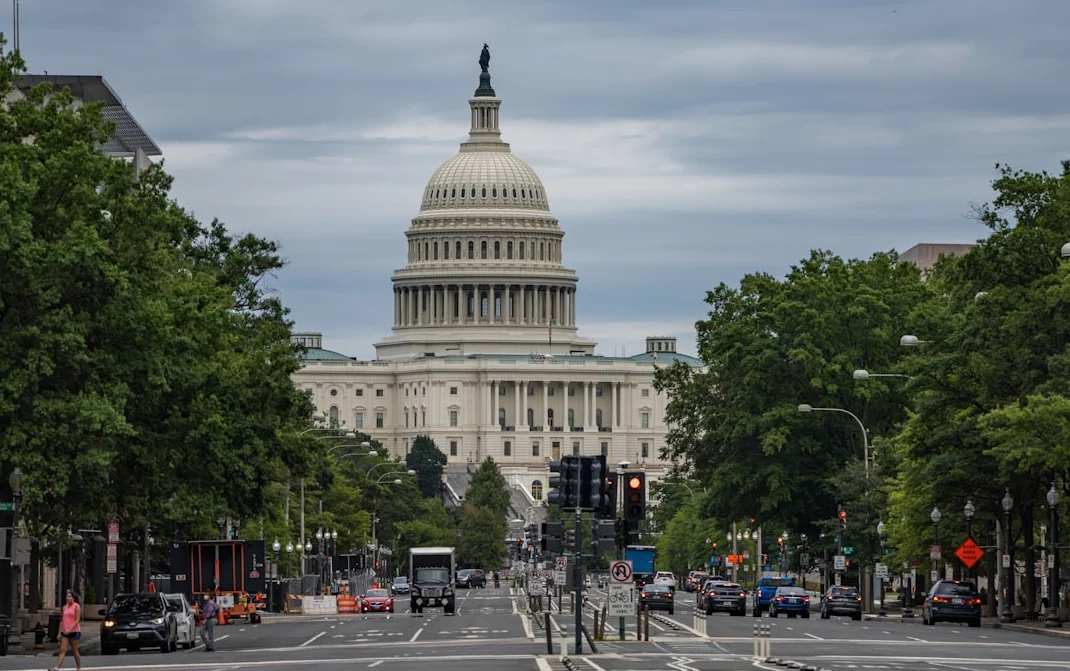
A sprawling heat dome is baking much of the U.S, while East Coast, with over 165 million people facing ‘major’ or ‘extreme’ heat risk through the July Fourth weekend, according to the National Weather Service. Washington DC and other major cities are seeing record-breaking temperatures. The heat wave threatens to set new records in the mid-Atlantic and Northeast, with feels-like temperatures expected to reach 110 degrees or more in some areas.
Heat Risk Spreads Across Eastern Half of U.S.
More than 180 million people are in a Level 3 of 4 “major” or Level 4 of 4 “extreme” heat risk across the eastern half of the U.S., according to the National Weather Service. This includes Washington DC. New York. Philadelphia, and Boston — Triple-digit heat indices are expected for many, and daily low temperatures won’t drop below the mid-80s for some, offering little relief at night.
Over 300 record warm overnight lows could be challenged through the weekend, according to CNN, but the heat dome will peak by Friday, bringing restrictive heat and humidity to the Interstate 95 corridor. Emergency room visits for heat-related illness surge on ‘major’ and ‘extreme’ risk days, according to the National Weather Service.
Uneven Access to Cooling Compounds Risks
In the affected areas. More than 100 million people are at risk of dangerous heat, according to DIE ZEIT; the national weather service warned of ‘unusually strong heat’ with nearly no nighttime cooling. This is particularly concerning for people without air conditioning and those who cannot drink enough water; According to US Census data, while nine out of ten households have air conditioning on average, access is uneven, especially in poorer communities.
In New York City, the first 100-degree temperature since 2012 was recorded in Central Park. The city has designated libraries and other public buildings as cooling centers and extended public pool hours. Volunteers are also being deployed to visit at-risk residents. Similar measures are being taken in other major cities to provide relief.
Heat as Deadliest Weather in U.S.
Heat is the deadliest type of weather in the U.S., with a higher annual average death toll than tornadoes, hurricanes and lightning combined, according to weather service statistics. The National Weather Service has issued numerous extreme heat warnings and advisories for the eastern half of the country this week. An extreme heat warning means that dangerous heat is either happening now or imminent.
The heat wave is part of a global trend of more intense and frequent heat waves driven by human-caused warming from fossil fuel pollution. Recent examples include record-shattering heat waves in Europe last week and in the western U.S. in March. The current event exposes the growing risks of climate-driven extreme weather events in the U.S.






Comments
No comments yet
Be the first to share your thoughts