

 BBC
BBC 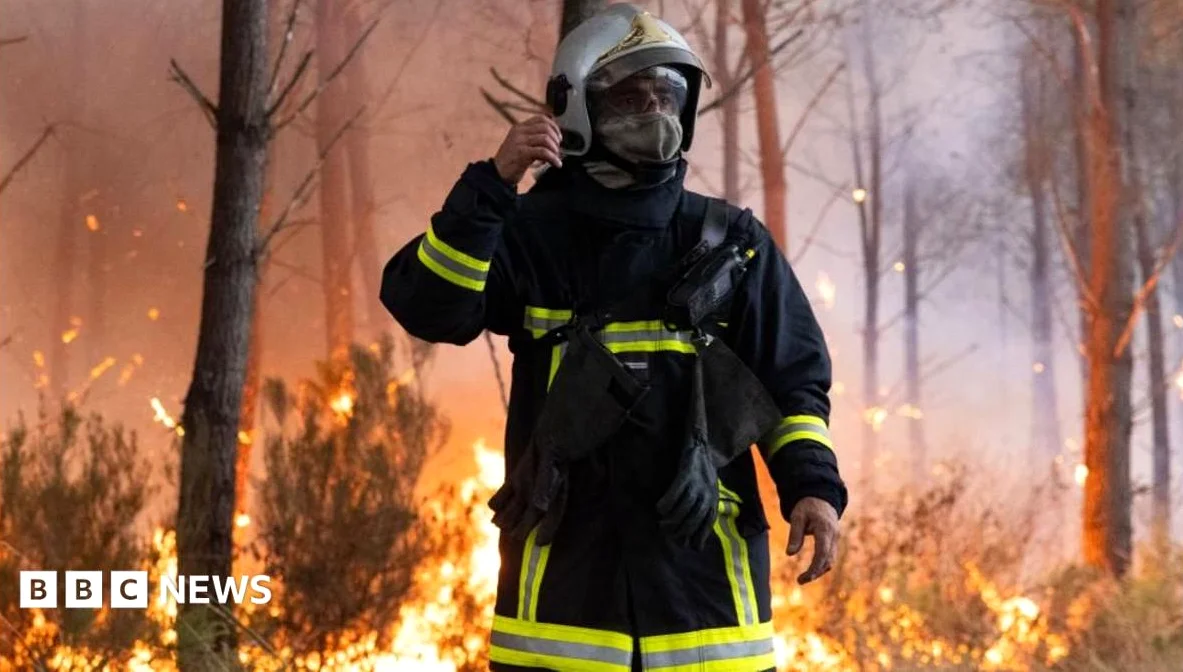
Mayor Warns of Evacuation Possibilities
The mayor of Bordeaux, Thomas Cazenave, said he is preparing for “all eventualities” as the wildfire continues to threaten the south-western city, and he mentioned that the city is ready to accommodate a large number of people should further evacuations be necessary.
Historic Fire Situation
President Emmanuel Macron described the wildfire as the “toughest since World War Two” during his visit to the Gironde region, which has been severely affected by the fires. He emphasized the scale of the crisis, noting that 220,000 people have been evacuated in France, with over 100,000 in Spain, where fires remain uncontrolled west of Madrid.
Interior Minister Laurent Nuñez said the fire “has a life of its own,” highlighting the unpredictable nature of the blaze. Meanwhile, the mayor of Cestas, Jerome Steffe, described the situation as “catastrophic,” noting that 17,000 residents were evacuated from his town during the night when the fire swelled two days ago.
Environmental Impact and Climate Concerns
Steffe reported that the region has seen 42,000 hectares (103,000 acres) of land burned and 240 houses destroyed. While the fire is no longer moving as quickly, he warned that the risk remains due to flying embers or a sudden change in wind direction. He emphasized the efforts made to create protective firebreaks, stating, “we are all scared in front of this situation.”
French Prime Minister Sébastien Lecornu noted that the country is experiencing an “rare fire season,” with 116,085 hectares (286,852 acres) burned and 13,566 fire starts recorded since January. He also highlighted that nine out of 10 fires are human-caused, with many resulting from carelessness such as a cigarette butt, a barbecue, or work carried out without precaution.
Lecornu added that not all fires are accidents, with some being deliberately set — Since 6 July, 162 arrests have taken place in connection to these incidents. Wildfires are also burning in several other French regions, including Var and Landes, as well as Haute-Corse on the island of Corsica.
Meanwhile, Spain entered its fifth day of a national emergency due to wildfires west of Madrid; BBC Verify analyzed satellite imagery showing the spread of the wildfire in that area, which has now affected more than 27,000 hectares. Images captured on 24 and 26 July reveal how the fire spread over two days after several blazes in the Almorox, Villa del Prado, and San Martín de Valdeiglesias areas merged into one large fire.
Local officials in Spain have warned that the region is facing the “worst fires in its history.” Climate change is driving up global temperatures, with Europe experiencing the fastest warming rate—twice as fast as the global average, according to the Copernicus Climate Change Service. This has led to increased summer heatwaves, greater pressure on water supplies, and more intense wildfires across the continent.





1 Comment