

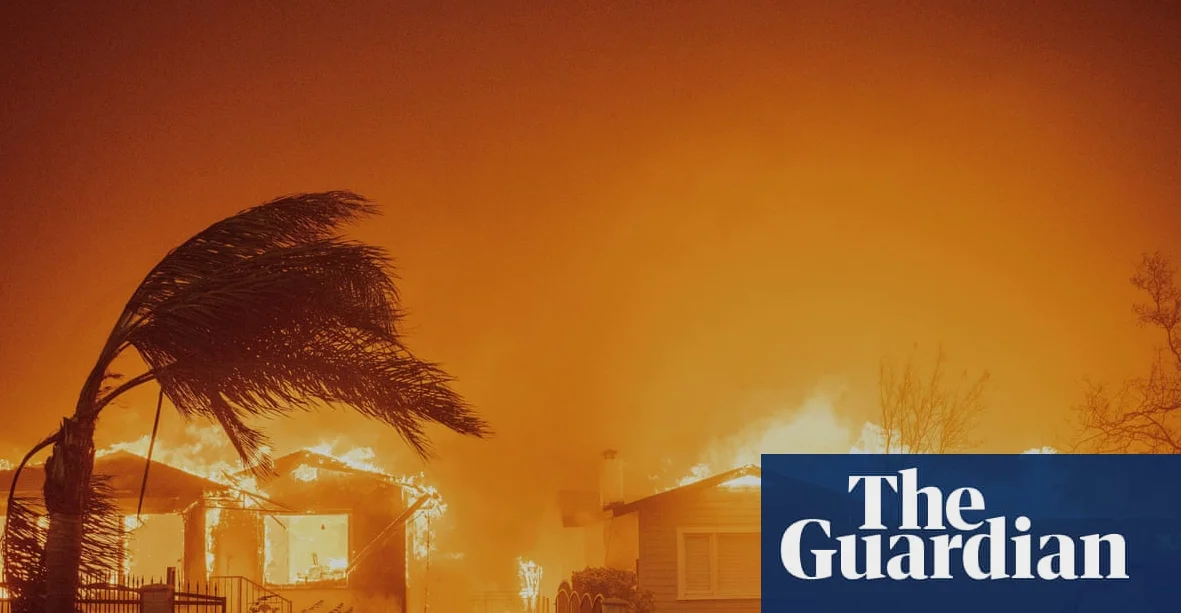
Wildfires in 2025 were among the most devastating on record for developed areas, even as the total global area burned dropped to 335 million hectares,the second-lowest since 2002, according to a study led by the University of East Anglia. The review noted that this decline was largely due to changes in land use in Africa, where expanding farms have fragmented areas and limited the spread of large savannah fires.
Costliest Blazes in Wealthier Nations
Catastrophic fires in California. Canada, Europe, and South Korea caused significant damage to homes, livelihoods, and infrastructure, and a “megafire” in Scotland burned over 100,000 hectares, contributing to the UK’s record for burned area. The Palisades and Eaton fires in Los Angeles were among the most destructive in U.S. history, while Spain and Portugal saw more than half a million hectares burned. South Korea experienced its deadliest and most extensive wildfire season on record.
These disasters accounted for more than 38% of insured losses from weather-related events in 2025, the study found. Matthew Jones. A climate scientist at the University of East Anglia and lead author, noted that “2025 shows that a ‘quiet’ fire year globally can still be devastating,” emphasizing the growing disconnect between total area burned and real-world impacts.
Climate and Land Use Shifts
While total global burned area has declined due to changes in land use, global heating has created conditions that allow fires to spread more easily in the wildland-urban interface—the area where people live closest to natural areas and are most at risk. Adverse weather patterns, fueled by carbon pollution, turned some fires into explosive infernos.
High winds and dry vegetation in southern California and South Korea, for example, pushed fires through densely populated areas, leading to exceptional mortality, mass evacuations, and major infrastructure losses. The study also found that population growth along the wildland-urban boundary increased exposure, while firefighting resources became strained due to simultaneous emergencies in multiple regions.
Environmental and Carbon Impacts
Global fire-related carbon emissions dropped to 11 billion tonnes of CO2 in 2025,the third-lowest level since 2002. However, researchers warned that this decline masked a concerning trend: savannah fires are decreasing, while extreme and destructive wildfires are increasingly occurring in temperate and high-latitude regions.
Canada’s boreal forests recorded extreme fire activity for the third consecutive year, with more CO2 emitted between 2023 and 2025 than during the entire preceding 15 years. Unusually high emissions in 2025 were concentrated in Saskatchewan, Manitoba, and Ontario, though these ecosystems, historically known for infrequent fires, are now experiencing rare activity, raising concerns about environment degradation, weak forest recovery, and long-term carbon loss.
Over 300. 000 people were evacuated and more than 90 lives were lost due to wildfires in 2025, according to the study. Researchers emphasized the need for improved fire management strategies and greater attention to the interface between urban and wild areas, where the risk of catastrophic fires is highest.






Comments
No comments yet
Be the first to share your thoughts